An electric aircraft has completed a test flight in Florida with a solid-state battery for the first time. At 410 watt hours per kilogram, the new cell technology achieves almost twice the energy density of previous lithium-ion batteries and charges to 80 percent in under 15 minutes. What this means for the future of electric aviation and why the team is now aiming for the stratosphere.
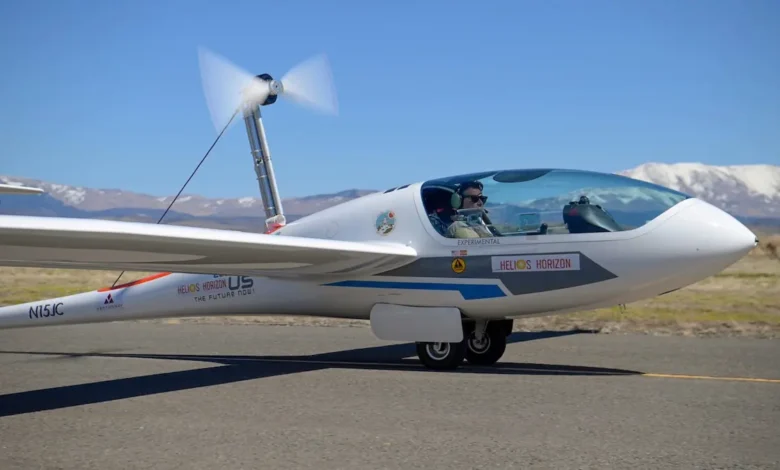
pilot Miguel Iturmendi, founder of the Helios Horizon development project, completed a test flight with an electric aircraft with a solid-state battery for the first time. The flight from Zephyrhills Municipal Airport, Florida, was to check the balance after installing the new battery.
A Helios Horizon team used a modified Pipistrel Taurus airframe as the basis for the test aircraft. For this project, the machine was additionally equipped with wing extensions and solar cells.
First electric aircraft with a solid-state battery: what happened during the test
The aircraft has unique systems for power delivery, battery management, propulsion and thermodynamic control. Unlike traditional lithium-ion batteries, next-generation solid-state batteries replace some or all of the liquid with solid materials.
This reduces the risk of fire as the cells have greater resistance to damage, overheating and thermal runaway. In addition, new solid-state batteries are smaller and promise higher energy density.
410 instead of 260 Wh/kg: This is how much more power the new battery has
The test flight carried out on June 5, 2026 took place against the following background: One The previously used lithium-ion battery delivered an energy density of 260 watt hours per kilogram. The new solid-state cells should achieve 410 watt hours per kilogram. ToThe battery can be charged to 80 percent in less than 15 minutes. Miguel Iturmendi says:
For the first time, we have battery technology that delivers the range and charging times necessary to make commercial electric aviation viable, while providing the safety that the flying public will demand.
Higher than passenger aircraft: flight planned into the stratosphere
The electric aircraft already holds a world altitude record in its specific weight class. On previous flights, the aircraft reached an altitude of 24,000 feet (approximately seven kilometers). The stated goal of Helios Horizon is to reach altitudes of over 40,000 feet (around twelve kilometers) in the future. This would allow the aircraft to fly higher than most conventional passenger aircraft.
By integrating solid-state batteries into electric aircraft’s power management and propulsion systems, Miguel Iturmendi expects stratospheric flights to be effortlessly accomplished on a single charge. Further test flights are planned for later this year.
Also interesting: