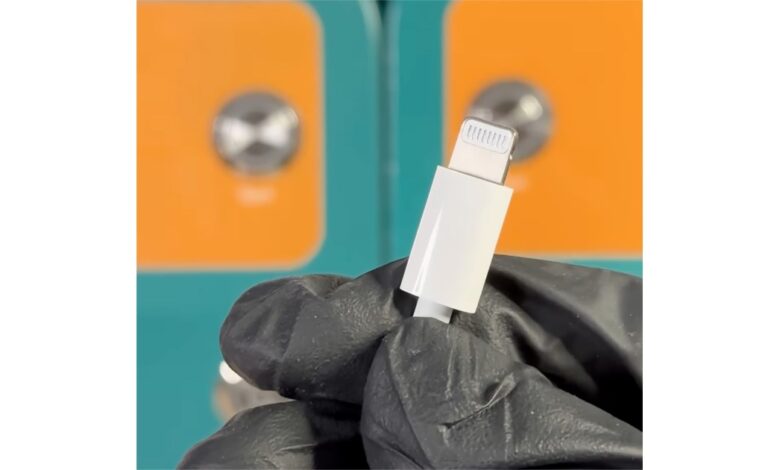
 It took a long time for Apple to make the switch to USB-C: From the iPhone 5 to the iPhone 14, Apple used Lightning for power and data connections. Only since 2023 and the iPhone 15 have all newly introduced Apple smartphones relied on USB-C – and thus on a uniform charging plug for the entire product portfolio equipped with a battery. For older devices, Swiss robotics engineer Ken Pillonel developed a case that converted the centrally located Lightning port into a USB-C port on the corner. For April 1st this year, he wanted to fulfill the joking wish of many YouTube commenters: an iPhone case for current smartphones that accepts a Lightning cable. He documented the project in a YouTube video.
 The case with a functioning Lightning port was created in less than a week. To do this, he designed miniature versions of a USB-C plug and a Lightning socket, which he connected to each other using a specially created circuit board. This should fit in the bottom edge of a custom-made case. He made them from thermoplastic polyurethane (TPU). The Formlabs 3D printer used for this creates objects from fine powder using selective laser sintering (SLS). This resulted in a flexible, textured case with cutouts for speakers and a Lightning port.
Pressed-in MagSafe ring
There was a recess in the flat bottom of the smartphone case for the magnetic elements that are necessary for MagSafe. In order to be able to press them in precisely, a template was created on the Prusa filament printer. The electronic components were finally covered with another flexible element before the iPhone 17 Pro found space in the unique case. Charging via Lightning worked immediately. Pillonel does not want to offer the Lightning case as a product – unlike the USB-C case. Finally, he asks the audience what he should build next – and enticingly holds a mini jack cable in front of the camera.