Haitang Bay in Sanya, China, is rapidly emerging as a global wellness destination. Fueled by visa-free access, advanced healthcare infrastructure, and traditional Chinese medicine, it attracts international travelers seeking warmth, recovery, and integrated health tourism beyond a typical tropical escape.
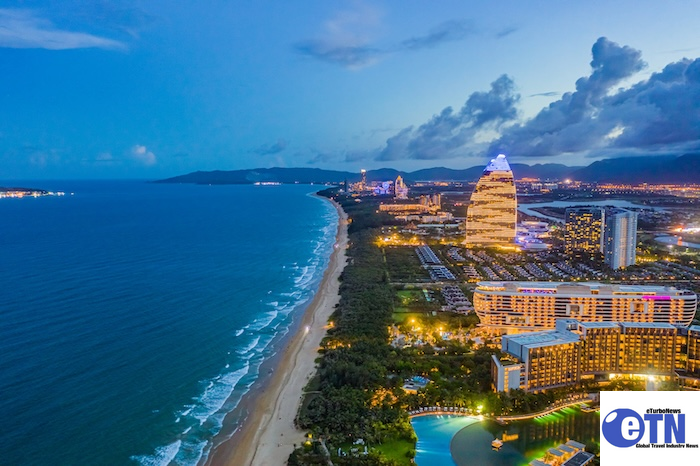
Haitang Bay is a premium coastal district located in the northeastern part of Sanya, on China’s southern island province of Hainan. Facing the South China Sea, it is known for luxury resorts, pristine beaches, and its fast-growing role as an international medical and wellness tourism hub.

The early success of the visa-free corridor between China and Russia has done more than reshape a single travel route. It has offered a proof of concept — that Haitang Bay can function not merely as a regional escape, but as a global destination.
Now, attention is shifting outward.
Tourism planners and healthcare operators in Sanya are beginning to position Haitang Bay for a wider international audience: travelers from Europe, Southeast Asia, the Middle East, and beyond, each with distinct expectations but a shared appetite for wellness, climate, and convenience.
Building Access: Air Routes, Policy, and Seamless Entry

At the heart of this ambition lies connectivity.
Sanya Phoenix International Airport has steadily expanded its international reach, with routes linking key cities across Asia and exploratory pathways toward Europe and the Middle East. Seasonal charter flights — first proven effective with Russian travelers — are increasingly viewed as a flexible model to test new markets, from Almaty to Dubai.
Policy has kept pace. The broader visa facilitation framework of Hainan Free Trade Port — including visa-free entry schemes for multiple nationalities — reduces friction for first-time visitors. For medical tourists, streamlined approval channels and cross-border insurance pilots are under discussion, aiming to make healthcare travel as straightforward as leisure tourism.
Maritime routes, too, are part of the equation, with Sanya positioning itself as a node for international cruise itineraries in the South China Sea.
Infrastructure for a Global Clientele

When access opens the door, infrastructure determines whether travelers stay.
Haitang district has begun refining what local planners describe as a “multi-language, multi-service” ecosystem. Hotels and clinics are expanding Russian-language services into broader multilingual support — including English, Arabic, and Korean — while digital translation tools are becoming standard across resorts and medical facilities.
Wellness Center in Sanya | Fairmont Sanya Haitang Bay
Our recreation team customize various activities, such as golf putting, boat riding on Yun River, to bring more vitality and pleasure to moments staying at Fairmont Sanya Haitang Bay.
Healthcare infrastructure, already a defining feature, is being calibrated for international expectations. Facilities such as CSPC Medical Park and Ruizhi International Medical Center are aligned with global accreditation standards, while concierge-style medical services — from airport pickup to post-treatment recovery stays — are being packaged into seamless itineraries.
Even the beach has been subtly internationalized: dining options, recreational programming, and spa offerings increasingly reflect a global palate.
Target Markets: Wellness as a Universal Language
Unlike traditional sightseeing destinations, Haitang Bay is marketing something less tangible — and more transferable.
Wellness travels well across cultures.
For Southeast Asian visitors, proximity and familiarity with traditional medicine create an easy bridge. For Middle Eastern travelers, privacy, high-end accommodation, and family-oriented resorts align with existing travel patterns. European visitors, particularly from colder northern regions, mirror the motivations seen among Russians: escape, sunlight, and health.
The unifying proposition is not a single attraction, but a system — one that integrates climate, care, and comfort.
First Outreach: Tourism Diplomacy in Action

The pivot towards global audiences has already begun, quietly but deliberately.
Tourism delegations from Haitang district and Sanya have increased their presence at international travel fairs and medical tourism conferences, from Southeast Asia to Europe. Partnerships with overseas travel agencies and wellness operators are being cultivated, often beginning with familiarization trips that allow foreign professionals to experience Haitang firsthand.
Digital outreach has followed. Campaigns emphasizing “winter sun plus wellness” — a formula validated by Russian demand — are being adapted for different markets, with localized messaging and influencers.
There is also a growing emphasis on storytelling: positioning Haitang not just as a beach, but as a destination where traditional Chinese medicine meets modern global lifestyles.
Planning the Next Phase
Looking ahead, planners envision Haitang Bay as a flagship of what China’s next-generation tourism might look like.
Integration is the guiding principle:
- Transportation and healthcare linked into unified booking systems
- Resorts and hospitals operating as coordinated ecosystems
- Traditional and modern medicine presented as complementary, not competing
- Tourism and residency blending through long-stay wellness communities
Collaboration with Boao Hope City is expected to deepen this model, particularly in introducing advanced therapies to international patients.
From Corridor to Crossroads

Haitang Bay-Sanya Tourism Board
Away from the hustle and bustle, it boasts pristine beaches and crystal-clear waters. A collection of the world’s top luxury hotels lines the coast, complementing the CDF Sanya International Duty Free Shopping Complex—Asia’s largest single duty-free store—to create Sanya’s ultimate holiday paradise.
The Russian influx offered Haitang Bay a beginning — a focused, measurable success.
What comes next is more ambitious.
If the district can translate that success across cultures, languages, and expectations, it may evolve from a seasonal refuge into a true crossroads of global wellness travel.
A place where people from different continents arrive for different reasons — but find, in the same stretch of coastline, a shared sense of restoration.