Chinese car manufacturers are entering the African market. They secure entire value chains and are already ahead of the competition.

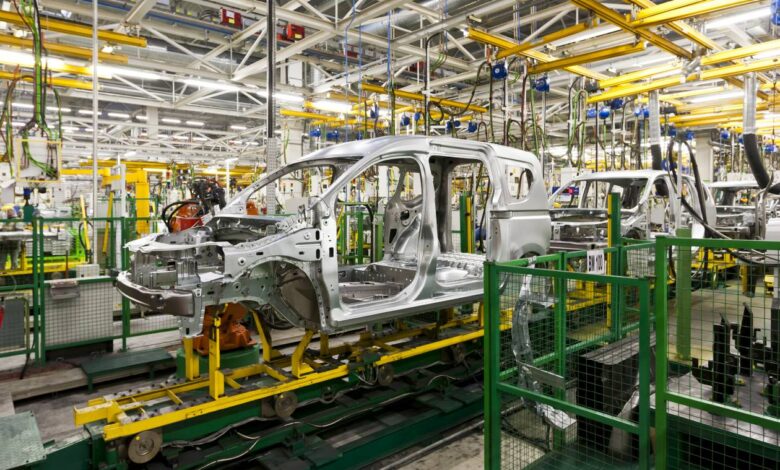
When people talk about the global adoption of electric vehicles, one rarely thinks of the African continent. But there is a small revolution taking place. The background is a new idea from Chinese manufacturers. Assembly lines for electric vehicles are being built in Nigeria and Kenya – not as complete factories worth billions, but as a clever modular solution. The vehicles arrive in the country disassembled, are assembled on site and are therefore considered locally produced.
The principle is strategically as simple as it is effective: the kits enable market entry without tying up a lot of capital. Technological control remains with the manufacturer, local politicians gain jobs and an industrial perspective, and the provider secures market share at an early stage.
China is securing future markets
Manufacturers like BYD consistently use this model. Africa is at the beginning of an electrical transformation, combined in many places with decentralized solar energy and digital payment systems. Whoever sets standards now defines the infrastructure of tomorrow. It’s not just about cars, but about platforms, battery logic, software and data structures.
So China exports not just vehicles, but industrial architecture. Local value creation is limited but sufficient to secure political support. At the same time, the key technology remains in the country of origin. This reduces risks and creates dependencies – both economically and geopolitically.
And Germany? German manufacturers continue to focus on their core markets. Africa is considered too small, too insecure, and not purchasing enough. BMW and VW only operate smaller plants in Egypt and Rwanda, respectively, that complete kits. This is strategically short-sighted. Because markets don’t just come into being when they are perfect. They arise when someone is willing to design them.
The Chinese modular strategy shows how this works: low investments, quick scalability, combined financing models for fleet operators, taxi companies or delivery services. Mobility is sold as a system, not as a premium product.
Germany is losing out on platforms
This is exactly where a German strength lies. Medium-sized companies are world champions in highly specialized components, in system integration and in industrial scaling. A modular export model for electrical platforms, charging infrastructure or energy management would be compatible. Instead, the classic logic of the finished vehicle that is exported from Europe dominates – including all cost structures.
What is emerging in Africa is therefore more than a regional phenomenon. It’s a geopolitical pattern. Whoever supplies platforms today defines technical standards. Whoever supplies batteries shapes supply chains. Anyone who integrates software controls data rooms. China uses these levers systematically.
The difference lies not in technological competence, but in strategic thinking. Some view mobility as a globally adaptable system. The others defend existing markets. Africa will not become the world’s largest sales market tomorrow. But it is becoming an experimental field for new industrial policy. Anyone who shows a presence there builds relationships, standards and trust.
China supplies kits today. Tomorrow it will deliver ecosystems. And Germany risks getting stuck in a debate about local conditions while the rules of the game are being written elsewhere.