Boeing Battles Safety Concerns, Airbus Surge, and Political Fallout in Fight to Restore Trust

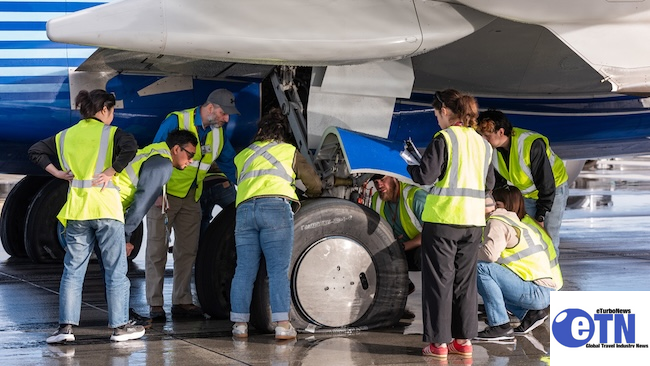
Boeing faces renewed scrutiny after safety failures and production issues, while Airbus gains ground globally. Political tensions during the Donald Trump era further buyers shifted towards Europe. Now, Boeing is working to rebuild trust, highlighting rigorous testing like its 737-10 brake trials to prove its aircraft remain safe.
Seattle, WA: The Boeing Company, long a pillar of American aerospace, is facing a defining moment. Years after deadly crashes and more recent production failures shook public confidence, the aircraft manufacturer is now navigating a complicated recovery—one shaped not only by engineering challenges but also by political and market pressures.
Lingering Fallout from Safety Crises
Boeing’s reputation was deeply damaged by the 2018 and 2019 crashes of its 737 MAX aircraft, which killed 346 people and triggered a global grounding. Investigations revealed design flaws and regulatory shortcomings that prompted sweeping reforms across the industry.
More recently, a 2024 mid-air incident involving a door plug failure on a 737 MAX 9 Reignited concerns about manufacturing quality. US regulators imposed production caps and intensified oversight, citing “widespread production safety and quality lapses.”
Certification delays continue to plague newer variants like that 737 MAX 10with regulators still reviewing key systems and security upgrades.
Airbus Gains Ground as Boeing Stumbles
As Boeing worked through safety issues and certification delays, its European rival Airbus strengthened its position in the global market. Airlines frustrated by delays—such as the postponement of the MAX 10—have explored or expanded Airbus orders, particularly for the competing A321neo.
Production figures also highlight the gap: Airbus is producing significantly more single-aisle jets per month and plans further increases, while Boeing remains focused on stabilizing output after safety setbacks.
Political Winds and Market Shifts

Boeing’s challenges have not occurred in a vacuum. Trade tensions and shifting policies during the administration of Donald Trump added complexity to global aircraft sales. Analysts and industry observers have noted that strained international relations and tariff disputes created openings for Airbus in key markets, particularly where buyers sought to avoid geopolitical uncertainty.
These dynamics, combined with Boeing’s internal struggles, contributed to a period in which some prospective customers leaned towards European alternatives.
Boeing’s Response: Safety Campaign and Technical Demonstrations
Facing skepticism, Boeing has launched a renewed effort to demonstrate its commitment to safety and engineering rigor. In a recent feature, the company showcased extreme brake testing on its upcoming 737-10simulating worst-case scenarios to validate performance under maximum stress.
The company frames such testing as part of a broader cultural shift—prioritizing safety, quality, and transparency over speed and production targets. Executives have emphasized that rebuilding trust requires “getting it better at the right pace,” rather than rushing output.
A Long Road to Restored Confidence
Despite these efforts, Boeing still faces significant hurdles. Certification delays, regulatory scrutiny, and ongoing comparisons to Airbus continue to shape perceptions of the company.
At the same time, leadership insists that progress is being made: production quality has improved, internal accountability has increased, and new safety systems are being integrated across aircraft lines.
Whether those changes will be enough to fully restore public and airline confidence remains uncertain. But one thing is clear—Boeing’s future will depend not just on building planes, but on convincing the world they are unquestionably safe.