
Barcelona’s proposed increase in tourist taxes for short-stay cruise passengers has reignited the debate about overtourism versus economic competitiveness. While city leaders argue the levy will help manage visitor pressure, the World Travel & Tourism Council warns it could undermine Barcelona’s position as Europe’s leading cruise hub and threaten local jobs.
Barcelona’s long-running battle over mass tourism has entered a sharper new phase, after political groups in the city backed a steep increase in the levy paid by short-stay cruise passengers — a move the World Travel & Tourism Council warns could weaken one of Europe’s most valuable cruise hubs.
The proposal targets cruise passengers who stop in Barcelona for 12 hours or less. Under the plan now moving through the political process, the municipal surcharge could rise from €8 to €24, on top of Catalonia’s €6 regional tourist tax, bringing the total charge to €30 per passenger for a brief call in the city.
For Mayor Jaume Collboni and allied left-wing parties, the logic is simple: Barcelona should prioritize visitors who stay longer, spend more widely, and contribute more visibly to the city’s economy. The short-stop cruise model, they argue, concentrates thousands of people into already crowded areas around the Gothic Quarter, La Rambla, and major landmarks, while delivering too little benefit to neighborhoods bearing the strain.
“Barcelona is not a souvenir,” has become the political shorthand for that view.
WTTC Encourages Barcelona to Reconsider Proposed Cruise Tourist Tax Increase
But the WTTC says the measure risks confusing management with deterrence. Gloria Guevara, the organization’s President and CEO, warned that sudden tax hikes rarely deliver the intended results and could push cruise itineraries toward rival Mediterranean ports. In WTTC’s view, Barcelona’s position as a leading homeport is not guaranteed; it depends on stable policy, industry confidence, and the city’s ability to remain competitive.
The debate cuts to the heart of Barcelona’s tourism dilemma. The city is both a global success story and a warning sign. Tourism supports a large share of local businesses and employment, but residents have become increasingly vocal about overcrowding, housing pressure, noise, pollution, and the reshaping of neighborhood commerce around visitors rather than locals.

WTTC Encourages Barcelona to Reconsider Proposed Cruise Tourist Tax Increase
WTTC Encourages Barcelona to Reconsider Proposed Cruise Tourist Tax Increase
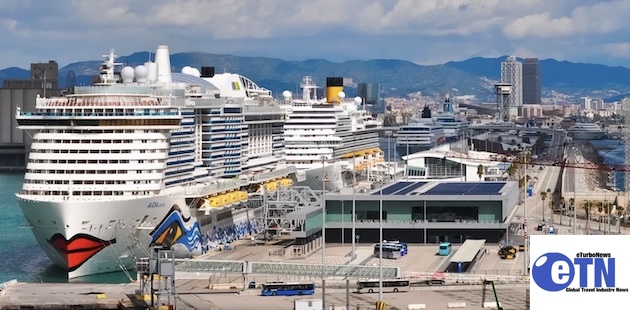
Cruise tourism sits at the center of that contradiction. Barcelona is not merely a port of call; it is one of Europe’s great cruise gateways. Homeport passengers often arrive before departure or stay after disembarkation, using hotels, restaurants, taxis, shops, and airport connections. Industry studies point to significant local spending from these travelers, and cruise bodies argue that ships also act as a “sampling” mechanism: many passengers later return independently to destinations they first discovered on a cruise.
That is the case against the tax increase. Cruise operators, ports, travel advisers, and tourism bodies fear that a sharp surcharge aimed at one segment could ripple through the wider ecosystem. Fewer calls may mean less revenue for port services, guides, attractions, transport operators, suppliers, and hospitality businesses. It could also reduce fiscal income if ships simply choose other ports.
Yet the case for action is equally forceful. Barcelona’s own tourism indicators show resident patience is thinning. Fewer locals now say tourism is beneficial, and a growing majority believes the city is approaching its visitor capacity. Cruise stopovers are highly visible: thousands arrive at once, many follow similar routes, and their stay can be measured in hours rather than days. For critics, that makes the sector an obvious target for a city trying to shift from volume to value.
The environmental argument adds another layer. Cruise lines and the Port of Barcelona point to shore-power investment, fleet upgrades, and studies showing cruise emissions are a limited share of overall city pollution. Environmental groups counter that cruise ships remain major emitters in port cities and that reducing traffic remains one of the fastest ways to ease local pressure.
Barcelona has already chosen a broader path of intervention. The city and port have agreed to cut cruise terminal capacity by 2030, reducing the number of terminals from seven to five and prioritizing ships that begin or end their journeys in Barcelona. The city has also moved against tourist apartments, increased other visitor charges, and framed tourism policy around residents’ quality of life.
The open question is whether the cruise tax becomes a calibrated tool or a blunt instrument. Supporters see it as a necessary price signal: if visitors use scarce public space, they should contribute more to maintaining it. Opponents see it as a politically satisfying measure that may reduce competitiveness without solving the deeper causes of overtourism, especially housing costs and the concentration of visitors in a few districts.
What both sides increasingly accept is that the old model is under pressure. Barcelona does not want to stop being a tourism capital. It wants to decide what kind of tourism capital it will be.
The WTTC’s intervention is therefore more than a defense of cruise passengers. It is a warning from the global industry that destination management cannot rely on tax hikes alone. The city’s response is just as clear: unmanaged growth is no longer politically viable.
Barcelona’s next move will be watched across the Mediterranean. If the tax works, other ports may follow. If it drives ships away without easing local frustration, it may become a cautionary tale of its own.