
The Dish That Won Her Over
The late afternoon sun is hitting the spice rack just so, making the jar of smoked paprika glow. It’s quiet, except for the low hum of the dishwasher finishing its cycle and the gentle *thump-thump-thump* of a tail against a cabinet. That would be Pretzel, my 70-pound Border Collie Lab mix, who is currently stationed by the fridge, convinced that the slightest creak of the door is a universal signal for a cheese tax. This quiet moment, this specific angle of light, reminds me of the first time I made Spaghetti Carbonara for my wife. It’s her favorite dish, a fact she dropped casually on our third or fourth date. For me, a guy whose cooking skills at the time were limited to grilling things and assembling LEGO sets with our son, Sebastian, this felt like a final boss battle. Carbonara. The famously finicky, deceptively simple pasta that separates the home cooks from the egg-scramblers. I accepted the challenge. I remember our small apartment kitchen, barely big enough for one person, let alone two. The air was thick with the scent of rendering pork fat from the guanciale, a smell that’s somehow both rustic and deeply luxurious. There was the constant, nervous *clatter* of my whisk against a ceramic bowl as I beat the egg yolks and Pecorino Romano into a thick, golden paste. I remember checking my phone constantly, not for a work alert from some n8n workflow I’d built to automate a boring task, but for the recipe I had pulled up, terrified of making a mistake. The sound I remember most, although, was the sizzle stopping. The moment I pulled the pan of glistening pork off the heat, the sharp hiss giving way to a gentle crackle. That brief silence was the signal. It was time to perform the magic trick: combining everything without creating a disaster. I held my breath, tossed the pasta, and watched as a sauce was born from nothing but fat, starch, and protein. When she took her first bite, she closed her eyes and smiled. I knew then, as I know now, that some of the most powerful things are built from just a few, perfect components.
The Holy Trinity: Pork, Eggs, and Cheese
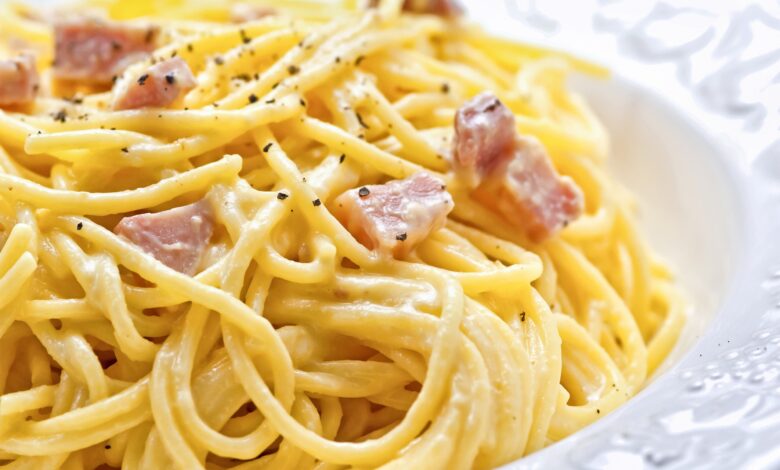
Let’s get the most important public service announcement out of the way first: Authentic Carbonara has no cream. Not a drop. The incredible richness, the sauce that coats every single strand of pasta you see in this photo, comes from an emulsion. It’s a beautiful bit of kitchen science, a perfect marriage of three key players: guanciale, eggs, and hard cheese. First, the pork. The gold standard is guanciale, which is cured pork jowl. It has a higher fat-to-meat ratio than its cousins, and its fat renders into a liquid gold that is intensely flavorful and fundamental to the dish. If you can’t find guanciale, good quality, thick-cut pancetta will do the job. Just don’t tell my grandma; She’s very particular about her cured pork products and believes substitutions are a slippery slope to chaos. Bacon is not a suitable substitute here. Its smoky flavor is overpowering and will completely change the character of the dish. You want the pure, savory flavor of the cured pork itself. Next, the eggs. This is where the magic happens. We’re primarily using the yolks for their fat and emulsifying power, with maybe one whole egg for body. The yolks are what give the sauce its velvety texture and rich, yellow hue. When you whisk them vigorously with grated cheese, you create a thick paste. This paste, when introduced to the hot pasta and rendered fat at the right temperature, transforms. The proteins in the egg begin to set ever so slightly, thickening the sauce without scrambling. It’s a delicate dance, but it’s what creates that signature creaminess. Finally, the cheese. The classic choice is Pecorino Romano, a hard, salty cheese made from sheep’s milk. It has a sharp, tangy flavor that cuts through the richness of the pork fat and egg yolks. You can use a high-quality Parmigiano-Reggiano, or a blend of the two, but the distinct bite of Pecorino is what makes it a true Roman carbonara. The key is to grate it as finely as possible, almost into a powder. This allows it to melt evenly and dissolve into the egg mixture, ensuring a smooth, homogenous sauce rather than a stringy, clumpy one. These three ingredients, combined with the starchy water the pasta cooked in, are all you need. No cream, no garlic, no onions. Just simplicity, executed perfectly.
The Off-Heat Technique and Other Secrets
The single most critical moment in making Carbonara happens in about 30 seconds, and it happens entirely off the heat. This is the secret. This is the difference between a silky, glossy sauce and a plate of spaghetti with scrambled eggs. **Pro-Tip: Master the Pan-Off-the-Stove Method.** Once your pasta is nearly al dente and your guanciale is rendered, turn the heat off under the skillet. Let it cool for just a minute while you drain the pasta (reserving at least a cup of the starchy water!). The pan and the rendered fat will still be very hot—hot enough to cook the egg sauce, but not so hot that it will shock it into a solid. Add the drained, steaming hot spaghetti directly to the skillet with the guanciale and toss everything vigorously to coat the pasta in the fat. Now, working quickly, pour into your egg and cheese mixture. Stir, toss, and shake the pan like your life depends on it. If it looks too thick, add a tablespoon or two of the hot pasta water. The starch in the water helps emulsify the fat and egg, while the heat gently cooks the egg into a creamy sauce that clings to every strand. It’s a frantic, beautiful process. **The “Why” Behind the Method** Why this obsession with temperature? Egg yolks begin to coagulate and scramble around 160°F (71°C). A pan directly off a hot burner can easily achieve that. By taking it off the heat, you’re using the residual thermal energy of the metal and the pasta itself to gently raise the temperature of the egg mixture, allowing it to thicken into a custard-like sauce without seizing up. The starchy pasta water is non-negotiable. It’s the bridge that connects the fat from the pork and eggs with the liquid element. Without it, you’d have a greasy, separated mess. **Common Pitfalls:** 1. **Scrambled Egg Syndrome:** The most common mistake. Your pan was too hot. Always, always, *always* combine the pasta and egg mixture off the direct heat. 2. **The Soupy Sauce:** You either added too much pasta water at once or didn’t work quickly enough to emulsify the sauce. Add the water one tablespoon at a time until you reach the desired consistency. 3. **A Greasy Finish:** You didn’t use enough pasta water, or your pork-to-pasta ratio was off. The starchy water is essential for binding the fat to the pasta. 4. **The Wrong Salt Level:** Guanciale and Pecorino are both very salty. Salt your pasta water, but taste the finished sauce *before* adding any more salt at the end. You probably won’t need it.
The “Hero” Shot: A Study in Texture and Tone
When you finally plate this dish, it should look exactly like the hero shot we captured. It’s not just a bowl of pasta; it’s a composition of textures and tones that speaks to comfort and care. The first thing you’ll notice is the way the light catches the sauce. Each of the **spaghetti strands present a visibly supple and smooth texture**, glistening with a **desirable glossy sheen**. This isn’t the result of oil or butter added at the end; it’s the sign of a perfect emulsion, where the rendered fat, egg yolk, and starchy water have become one cohesive, luxurious coating. Look closer, and you’ll see the stars of the show nestled among the pasta: the **tender cubes of cured pork**. Notice how they have a **soft, yielding exterior rather than a crisp crust**. This is intentional and crucial. The goal is not to create crunchy bacon bits, but to gently render the fat while leaving the meat succulent and tender. To achieve this specific look, with those **subtle, delicate hints of rendering and faint browning along the edges**, you must cook the guanciale low and slow. Start it in a cold pan over medium-low heat. This allows the fat to melt away gradually, bathing the meat and crisping the edges just slightly without drying out the interior. Patience here pays off with morsels of pork that are bursting with flavor and have a satisfying, tender chew. The overall color palette is a warm and inviting spectrum of yellows and creams, punctuated by the deep rosy hue of the guanciale and the sharp black of freshly cracked pepper. It’s a dish that looks as rich and satisfying as it tastes.
Storage & Reheating
Let’s be honest with each other. Carbonara is a dish best eaten immediately. The delicate egg-based sauce does not enjoy being refrigerated and reheated. It tends to break, scramble, or become greasy. However, if you find yourself with leftovers, everything is not lost. The microwave is your enemy; it will turn your beautiful sauce into a rubbery mess. The best method is to use a non-stick skillet over low heat. Add the pasta to the cold pan with a small splash of water or milk (about a tablespoon). Gently heat, stirring constantly, to try and coax the sauce back to life. It won’t be as perfect as it was fresh, but it will be a respectable second-day version.
From Our Kitchen to Yours
There it is. More than a recipe, it’s a technique. It’s a dish that proves how a few humble ingredients can come together to create something truly special. It’s the meal that has marked birthdays, anniversaries, and countless quiet weeknights in our home. It’s the power of doing something simple, perfectly. From my kitchen to yours, Michael (and a sleepy “woof” from Pretzel) Now I want to hear from you. What’s one dish you ate while traveling that you still think about? Drop it in the comments below