
CEO Mati Staniszewski explains why everyone in the company will “vibe code” in the future and what tasks engineers have.

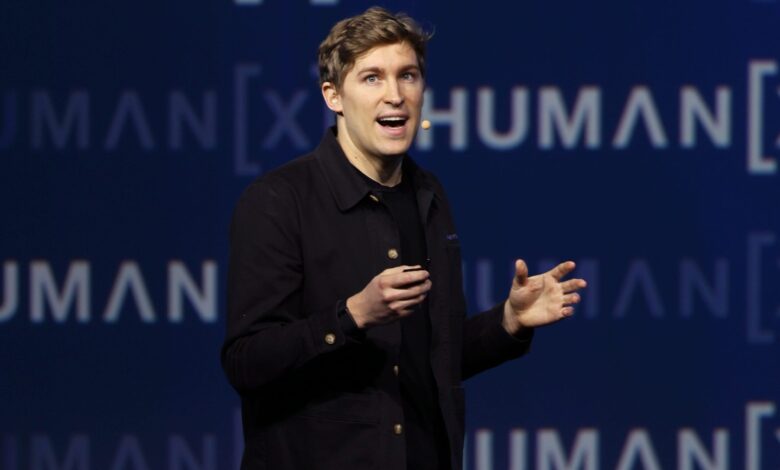
There’s one thing you need before you can program anything: an engineer to show you how to do it. Speaking at Sequoia Capital, ElevenLabs CEO Mati Staniszewski said he is adding an engineer to each non-technical team within the voice AI startup.
“Our HR team, our go-to-market team and our legal team will each have an engineer in their ranks to help develop automation and improve the skills of the rest of the staff,” he said. “This has been very helpful lately as everyone will be doing a lot of vibe coding and programming.”
Entire teams build their own AI tools
Staniszewski, who co-founded ElevenLabs in 2022, said non-technical teams across the company are already building tools. “You can achieve so much with it, whether it’s scraping talent and recruiting or analyzing what worked in the past to make improvements in the future.”
The company “recently implemented a rating system for go-to-market or sales associates.” The rating system saved a lot of negotiations with the sales team.
Read too

In February, ElevenLabs announced that it had raised $500 million in a Series D funding round, increasing its valuation to $11 billion. The startup, founded in London, employed around 350 people in November, according to investor Andreessen Horowitz.
End-to-end responsibility
The company appears to be following an increasingly popular organizational model in which teams are expected to take more ownership and work independently. This means that the development teams are responsible for everything – from product design to marketing their developments. At the same time, non-technical teams are expected to develop their own tools to improve workflows.
ElevenLabs’ employees are divided into about 20 micro-teams of five to 10 people each, Staniszewski said in an interview in September. Each of these teams is responsible for a product area, such as a studio interface or voice assistants, in order to move forward quickly.
Read too

“You see a problem – and solve it”
Executives at AI coding startups, including Cognition and General Catalyst-backed Kilo, told Business Insider that they view ownership as essential for current and potential employees. “You see a problem, you solve the problem,” said Emily Cohen, who oversees human resources and operations at Cognition. “We’re not the typical company that just says, ‘Oh, well, that’s what this team does.'”