 A survey of the clock frequencies of the latest Apple chips shows how Apple’s chip developers continuously adapt the computing cores to modern requirements. The MacBook Neo takes on a special role with its iPhone chip, but is similar to previous M models.
 The Apple silicon Macs released since the end of 2020 have always built on the experience in chip design that Apple has gained since the iPhone 4: The division into energy-saving efficiency cores and fast performance cores originated here. Nevertheless, Apple has always clearly differentiated its Mac processors from those built into smartphones. The MacBook Neo is the first to use an iPhone veteran as a laptop calculator. An analysis of the frequency distribution of the core variants shows how similar the two chip series have remained to each other.
For years, Howard Oakley has kept detailed statistics on various processor metrics that Apple does not publicly document. One focus is on the frequency steps at which the different computing cores work. Over the past five years, Apple has made consistent fine-tuning. Oakley relies on the cooperation of its readers: via the command line command
sudo powermetrics -n 1 -s cpu_power
a Mac user can read the frequency levels of his own hardware.
M5 Pro & Max continue trends
This is also evident in the M5 Pro and Max, which Apple presented in March: The lowest and highest frequencies of all core variants are higher than the corresponding variants of the predecessor. The distribution of the individual steps shows an increasingly pronounced S-curve for the performance and super cores: many individual steps in the upper frequency range, rapid increase at low clock speeds. The introduction of the new core type changes this only slightly, says Oakley: S-cores are similar in distribution to the previous P-cores, and the P-cores, which are used as a new intermediate stage, are similar to the established E-cores in terms of the distribution of frequency steps – albeit with a higher clock rate and more gradations. In this respect, the Pro and Max versions do not differ.

The frequency steps of the M cores are becoming increasingly differentiated.
A18 Pro: Between M2 and M3
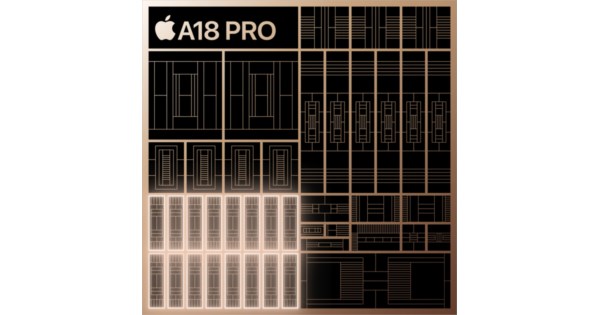
With the iPhone, Apple traditionally lets you look at the cards much less than with the Mac. The MacBook Neo therefore offers the first chance to find out a little more about how the A chip works. When it comes to frequency distribution, Oakley sees parallels to previous M chips: the efficiency cores are roughly similar to those of the M2 chip, while the performance cores are similar to those of the M3. When making a comparison, however, you should note that the A18 Pro of the MacBook Neo only uses two performance cores, while the M1 to M4 each had four of them.

Super cores in the M5 Pro and Max clock up to 4.6 MHz, the P cores in the A18 reach a maximum of 4.0 MHz.