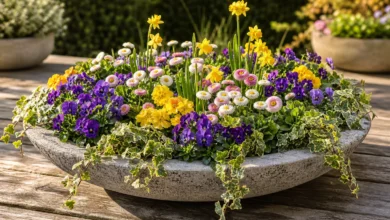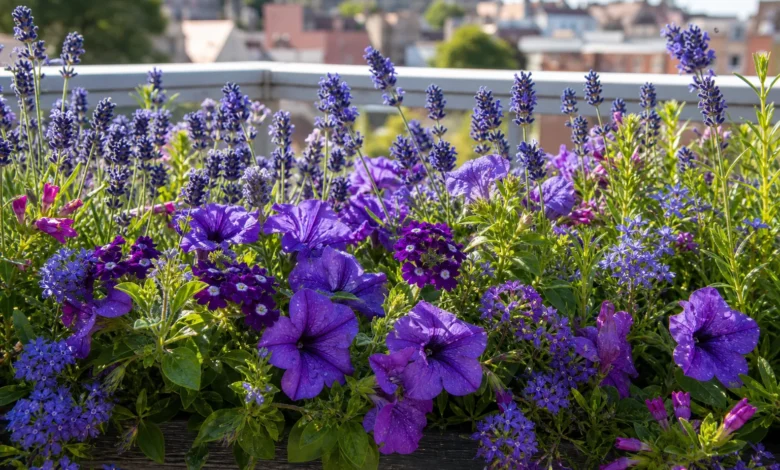
A balcony in blue and purple immediately appears calmer and more elegant than a mixture of red, yellow and orange. The cool tones make even a small box appear larger and tidier – and they almost get along with each other. Blue-purple balcony flowers are therefore the relaxed choice for everyone who wants color but doesn’t want a color fight. Between fragrant lavender tips, hanging petunias and a clematis on the wall, the palette is large enough for every location – from the blazing southern sun to the shady northern corner.
So that you can quickly find the right plant for your space, the selection is sorted by location: perennials for permanent beds, annual summer bloomers for quick color and a climbing plant for verticals. Ten varieties made it onto the shortlist, plus two extras for the start of spring and the shade balcony. The comparison table at the end summarizes the sun, flowering time and watering requirements at a glance.
Perennial blue-purple balcony flowers for permanent beds
Perennials come back year after year – once planted, they carry the color concept over several summers. Four varieties are particularly suitable for this in the bucket.
lavender is the classic among the blue-purple balcony flowers – and one of the easiest to care for if the location is right. The Mediterranean perennial wants at least eight hours of sun a day and prefers too little rather than too much water: it doesn’t tolerate waterlogging. A drainage layer in the bucket is mandatory for her. But it smells all summer long and can be wonderfully combined with other sun children – for example with the right companion plants for lavender.

Catnip Lavender fans usually like it just as much. Their purple-blue flower spikes open at the beginning of summer, exude a spicy scent and attract bees. It copes with full sun just as well as a spot with some shade and is a grateful partner for roses and peonies. We have written down in more detail elsewhere how catnip can be combined in the bed.
Blue hydrangeas bring lush abundance to the balcony. Its large umbels consist of many small, light purple to blue individual flowers and appear from spring to summer. The price for the splendor is thirst: on hot summer days, hydrangeas need to be watered daily, and for this they need humus-rich, loose soil. Our companion plants for hydrangeas provide a few ideas for the right neighborhood in the pot.

Perennial peonies set the dramatic accent in this group. Depending on the variety, they bloom light to dark purple, usually in early summer, and need loamy, permeable soil. It is better to water it thoroughly twice a week rather than superficially every day – this way the roots grow deeper and the plant can survive a heat wave better.
Annual summer bloomers for quick color
Annuals make no long-term promise, but they do provide full color in the same season. Ideal if you want the box to bloom now and not next year.
Verbena Remains nicely compact at a maximum of 40 centimeters and produces spherical, purple flower umbels from July to October. Water regularly for the first two to three weeks after planting, then water as needed. An uncomplicated permanent bloomer for boxes and hanging baskets.
Petunias are probably the best-known summer bloomers – and are particularly elegant in violet. Its large, slightly fragrant funnel flowers appear from May to September, preferably in direct sun. They have two requirements: water every day in summer, but never wet feet. Waterlogging causes them to be taken care of quickly.

Zinnias bloom in strong purple and are also suitable as cut flowers for the vase. They like full sun and thrive on humus-poor, well-drained soil. Watering is done sparingly – too much of a good thing results in rotten spots on the roots.
Cornflowers bring a classic, strong blue-purple to the balcony and bloom from June to September. They are wonderfully undemanding: sun or partial shade, water only as needed. Their delicate flowers appear airy and light – a nice contrast to the dense petunias.

Blue-purple flowers for partial shade and shady corners
Not every balcony is in the blazing southern sun. There are candidates for semi-shady and shady places that really thrive there.
The bluebell is the star for the partial shade. Easy to care for and at home in a cottage style, it thrives in shade to sunny conditions as long as the soil is permeable and nutrient-rich. Water regularly and it will reward you with clouds of purple bells.

What’s Hot
Garden and plants
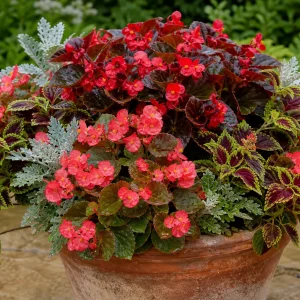
The same location makes ice begonias good plant partners
Two extras round off the location question. The Dwarf iris (such as the “Abbey’s Violet” variety) blooms early in the year, from mid-May to early August, and brings violet to the balcony when the summer bloomers are still asleep. And this is for the real shade balcony in the north Hardworking Lieschen First choice: It blooms purple from May to October, likes partial shade to shade and only needs to be watered sparingly.
Clematis as a vertical eye-catcher
When space on the floor becomes limited, it goes up. The clematis comes from East Asia and does not climb vertically in a pot, but rather on a trellis or a climbing aid. It is therefore not suitable for flat flower boxes. It needs at least six hours of light and water once a week in the starting phase; After flowering begins, two waterings per month are sufficient. As a blue-violet eye-catcher on the balcony wall, no other plant can beat it.

All varieties at a glance
So that you don’t have to scroll, the ten varieties presented are listed here with their most important requirements next to each other.
| plant | Location | flowering time | Watering needs |
|---|---|---|---|
| lavender | Full sun (min. 8 hours) | Whole summer | Thrifty |
| Catnip | Sun to sunny | From the beginning of summer | Moderate |
| Blue hydrangea | Partial shade | Spring–summer | High (daily in summer) |
| Perennial peony | Sun to partial shade | Early summer | Penetrating twice a week |
| Verbena | Sun | July–October | Regularly at first, then as needed |
| petunia | Full sun | May–September | High (daily in summer) |
| zinnia | Full sun | Summer | Thrifty |
| Cornflower | Sun to partial shade | June–September | As needed |
| Bluebell | Sunny to sunny | Summer | Regularly |
| Clematis | Min. 6 hours of light | Summer | Once a week, later twice a month |
Avoid waterlogging and combine blue-purple balcony flowers correctly
Two mistakes cost most balcony plants their blooms early on – and both can be easily avoided. The most common is waterlogging. A two to three centimeter high layer of expanded clay or gravel at the bottom of the pot, plus a drainage hole in the pot, drains away excess water. Lavender, petunias and busy lilies are particularly sensitive to wet roots.
The second error concerns the optics. Blue and purple look most elegant when you don’t mix them with every other color. In addition to silvery foliage – such as grey-felt leaves – or pure white, the cool tones appear calm and harmonious, while a rainbow of colors quickly looks restless. Two to three silver leaf plants per box are sufficient as a connecting link. You can find further ideas for balcony plants in our large overview.

What’s Hot

Garden and plants
These plant partners feel really at home next to lavender
Professional tips for boxes and buckets
- Drainage: Two to three centimeters of expanded clay or gravel underground and a drainage hole – this saves lavender and petunias in particular.
- Stagger the watering rhythm: Thirsty ones like hydrangea and petunia should be put in their own pots, thrifty ones like lavender and zinnia, otherwise you’ll always be watering one variety incorrectly.
- Cleaning out: Regularly pluck out the wilted petunia and verbena, so both will continue to bloom until October.
- Color anchor: One or two silver leaf plants per box visually tie the cool blue and purple tones together.
- Check the location honestly: The north balcony is called bluebells and busy lilies, the south balcony is called lavender and zinnia – if you plant them against the lighting conditions you will only cause trouble.
If you get started now, plant the perennials first – they need a summer to grow in properly – and fill the gaps with annual summer bloomers for instant color. So the balcony is already in full blue-violet this season and will come back all by itself next year.