
Why destinations are investing in dance, festivals, and cultural performances to build tourism, preserve heritage, and create understanding across borders
The first thing visitors often bring home from a journey isn’t a souvenir. It’s a song.
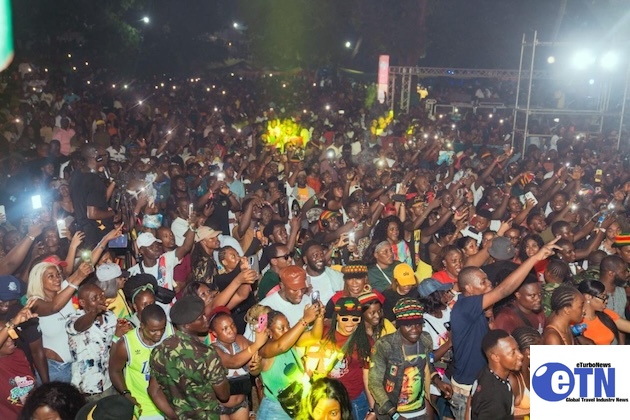
Whether it’s flamenco echoing through the streets of Seville, reggae drifting across Jamaica’s beaches, a gamelan orchestra in Bali, jazz in New Orleans, or a spontaneous folk dance in rural Georgia, music becomes the soundtrack of travel memories—and perhaps the most enduring ambassador of a destination.
As global tourism rebuilds and travelers increasingly seek authentic experiences over traditional sightseeing, music and dance tourism has emerged as one of the industry’s fastest-growing cultural assets. More importantly, it may be tourism’s greatest tool for promoting understanding in an increasingly divided world.
- Unlike politics, music doesn’t require agreement.
- Unlike diplomacy, it doesn’t require negotiation.
- It simply requires listening.
The Economic Soundtrack of Tourism
Culture and heritage tourism account for an estimated 40% of global tourism activityaccording to widely cited estimates by UNESCO and industry researchers. Within that sector, music festivals, performing arts, cultural celebrations, and dance experiences generate billions of dollars annually through accommodation, transportation, restaurants, local guides, retail, and event spending.
The global live music industry itself generates well over US$30 billion annuallywhile major music festivals attract millions of international visitors each year.
From the annual SXSW in Austin to Tomorrowland in Belgium, Carnival in Brazil, the Edinburgh Festival Fringe, the Montreux Jazz Festival, and countless indigenous cultural celebrations across Africa, Asia, Latin America, and the Pacific, music has become a major travel motivator rather than simply entertainment.
Increasingly, destinations are designing tourism strategies around their musical identity.
Music Is the Language Everyone Speaks
There are nearly 7,000 spoken languages worldwide. There is only one universal language. Music.
No translator is needed to appreciate a traditional Maori haka in New Zealand, West African drumming, Native American flute music, Korean percussion, Irish folk music, or an opera in Vienna. Visitors may not understand every lyric. They understand every emotion.
“Culture creates places people remember. Music creates emotions they never forget,” notes tourism scholar Professor Greg Richardswhose research on cultural tourism has influenced destinations around the world.
- Unlike museums, music is alive.
- Unlike monuments, it evolves.
- Unlike political speeches, it invites participation.
Tourism’s Greatest Form of Soft Power
- Governments invest millions in diplomatic missions.
- Destinations invest millions in advertising.
- Artists often achieve both objectives without trying.
- South Korea’s global tourism boom has been accelerated by the worldwide popularity of K-pop.
- Jamaica’s international image remains inseparable from reggae.
- Ireland’s traditional music has become one of its strongest tourism brands.
- Argentina exports tango as both culture and national identity.
- Austria continues to welcome visitors inspired by Mozart, centuries after his death.
Music doesn’t simply market destinations.
It defines them.
As Louis D’AmoreFounder and President Emeritus of the International Institute for Peace Through Tourism (IIPT), has often emphasized, tourism is fundamentally a peace industry.
“When people sing together, they stop seeing each other as strangers. Tourism begins where fear ends.”
What Politicians Often Cannot Do
History demonstrates that governments negotiate peace.
People create it.
Music succeeds where political messaging frequently fails because it reaches people emotionally rather than ideologically.
A visitor attending a Kurdish music festival, listening to Palestinian musicians, enjoying Israeli jazz, experiencing Ukrainian folk traditions, or dancing during Colombian Carnival encounters human stories—not political headlines.
- Stereotypes begin to disappear.
- Empathy begins to grow.
- Tourism has always been called the world’s largest peace industry.
- Music gives that concept its heartbeat.
Dance turns visitors into participants
Modern travelers increasingly reject passive tourism. They want participation.
Dance tourism transforms spectators into contributors.
Visitors travel specifically to learn tango in Buenos Aires, salsa in Havana, flamenco in Andalucía, Bharatanatyam in India, hula in Hawaii, capoeira in Brazil, traditional African dances, and indigenous ceremonial dances throughout Oceania.
- Every lesson supports instructors, musicians, costume designers, venues, and local communities.
- Unlike manufactured attractions, dance creates authentic interaction.
- A dance floor rarely asks where someone comes from.
- It simply asks them to join.
Why Every Tourism Commercial Uses Music
Destination marketers have long understood what neuroscience increasingly confirms. People remember feelings better than facts.
Music activates multiple regions of the brain associated with emotion, memory, and anticipation.
That is why nearly every tourism promotion—from the smallest destination management organization to national tourism campaigns—relies heavily on carefully selected music.
Beautiful scenery attracts attention. Music creates desire. The combination inspires travel.
Preserving Living Heritage
Cultural sustainability is no longer limited to protecting monuments and landscapes.
It includes safeguarding intangible heritage.
- Traditional songs.
- Folk dances.
- Oral storytelling.
- Ceremonial performances.
- Community celebrations.
Without audiences and economic support, many traditions risk disappearing within a generation.
Tourism provides financial incentives for younger generations to preserve these practices while sharing them respectfully with visitors.
Authenticity becomes an economic asset rather than an obstacle to modernization.
The Role of International Organizations
International organizations increasingly recognize music and culture as essential components of sustainable tourism development.
UN Tourism continues to promote cultural tourism through policy guidance, research, technical cooperation, and programs supporting communities in protecting their intangible cultural heritage. The organization encourages destinations to integrate local music, performing arts, festivals, and creative industries into tourism strategies that create employment while preserving cultural identity.
The World Travel & Tourism Council (WTTC) represents the global private sector and consistently highlights culture, creativity, and authentic visitor experiences as drivers of economic growth. WTTC research demonstrates that today’s travelers increasingly seek meaningful experiences rather than simply visiting famous landmarks, encouraging governments and tourism businesses to invest in cultural assets that differentiate destinations in a competitive marketplace.
UNESCO perhaps provides the strongest international framework through its Convention for the Safeguarding of the Intangible Cultural Heritage. Hundreds of musical traditions, dances, festivals, rituals, and performing arts have received international recognition, helping destinations preserve their cultural identity while attracting responsible tourism.
The International Institute for Peace Through Tourism (IIPT) has spent nearly four decades promoting tourism as a “Global Peace Industry.” Its philosophy—that every traveler can become an ambassador for peace—perfectly aligns with the role of music in creating dialogue, friendship, and understanding among cultures. Music festivals, cultural exchanges, and international performances remain among the strongest examples of tourism serving peace rather than politics.
The Pacific Asia Travel Association (PATA) has increasingly emphasized community-based tourism and the creative economy, encouraging destinations across Asia and the Pacific to use authentic cultural experiences—including music and dance—to diversify tourism products while ensuring that local communities benefit directly from tourism revenues.
Equally important is the role of the World Tourism Network (WTN)which was established during the COVID-19 pandemic to ensure that small and medium-sized tourism enterprises have a voice in global tourism discussions. SMEs account for an estimated 80 percent of travel and tourism businesses worldwideyet they are often underrepresented in international policy debates. Representing more than 34,000 members and supporters in 133 countries and territoriesWTN advocates for independent hotels, tour operators, destination management companies, tour guides, restaurants, transport providers, artists, musicians, and community entrepreneurs whose businesses create the authentic experiences visitors seek. Through advocacy, networking, education, and initiatives such as its SME.travel program, WTN promotes the principle that sustainable tourism begins with strong local businesses. In the field of music and dance tourism, this means recognizing that many of the world’s most memorable cultural experiences are created not by multinational corporations but by local performers, family-owned venues, community festivals, and cultural entrepreneurs who keep traditions alive for future generations.
Together, these organizations demonstrate that music tourism is not merely entertainment. It is economic development, heritage preservation, community empowerment, and international cooperation.
Looking Beyond Entertainment
Music tourism is no longer a niche.
- It is economic development.
- It is heritage preservation.
- It is destination branding.
- It is education.
- It’s diplomacy.
- Most importantly, it is human connection.
Artificial intelligence may personalize itineraries. Virtual reality may preview destinations. Digital marketing may inspire travel.
But no technology can replace the experience of hearing local musicians perform beneath an open sky or being invited into a community dance by complete strangers.
That moment cannot be downloaded. It can only be lived.
The Lasting Legacy
Tourism’s greatest export has never been souvenirs. It has always been understood.
Years after travelers forget hotel names, airline schedules, or even famous landmarks, they often remember the melody that accompanied a sunset, the rhythm of a village celebration, or the song strangers sang together.
- Those memories become stories.
- Those stories become friendships.
- Those friendships become peace.
Perhaps that explains why every successful destination continues to invest in music.