
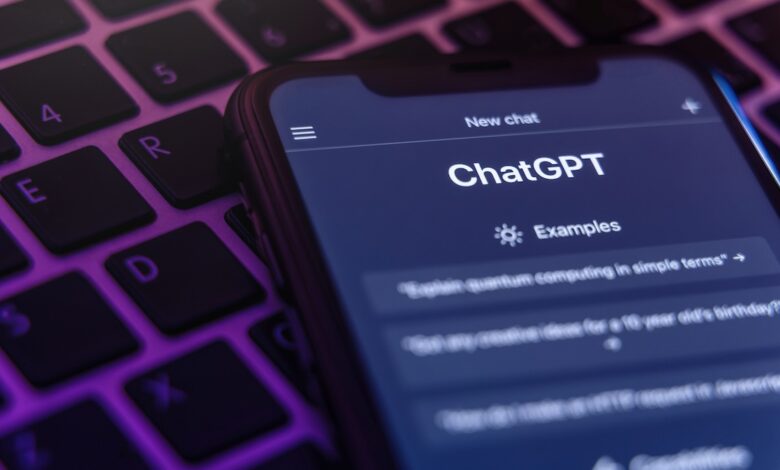
On June 26, 2026, OpenAI introduced its latest model GPT-5.6 Sol. But users will have to wait for now, because the US government has once again banned the use of a new AI model. The risks of abuse are too great. But the real question is: Is this where the first AI power games begin?
What can ChatGPT-5.6 do?
- According to its own statements, GPT-5.6 Sol is the most powerful model from OpenAI to date. The focus is on three security-relevant subject areas: programming, biology and cybersecurity. Code reviews, vulnerability research, patch development and defensive testing are among the strengths of the new model. The primary aim is to find weak points. In the Carrying out technical attacks The new model is not as strong on systems – according to the marketing department.
- In response, the US administration led by Donald Trump initially stopped the release through a political decision. Only selected groups and so-called trustworthy partners get access for now. This means that OpenAI suffers the same fate as its competitor Anthropic. Its new models “Fable 5” and “Mythos 5” were initially confiscated by the US government in mid-June – only to be published a short time later. The trigger was an alleged security gap that Amazon boss Andy Jassy had discovered.
- In this context, the Allianz Risk Barometer is also exciting. Through a company survey, the insurer found that cyber incidents and artificial intelligence two biggest risks for companies are. As AI empowers more and more people – especially criminals – to find security vulnerabilities, the two biggest business risks combine to create a mega-risk that endangers the international economy.
Security or power play? Why Europe needs to wake up
Donald Trump is no ordinary US president. He is actually a manager from the private sector who ended up in one of the most important political offices in the world as a part-time job. In 2025 alone, the US President earned more than two billion US dollars – over a billion through cryptocurrency transactions. Those who still believe that their statements are purely political in nature may be tending to be naive. Trump also set up a click keyboard.
The next level of abuse of power is another form of market manipulation. Because Donald Trump has now prevented the publication of a new AI model by decree for the second time, he is taking Europe into the digital headlock. The US President knows exactly how dependent the old continent is on new technologies from the USA and Asia.
Because it artificially delays the global rollout of GPT-5.6, US government agencies and US corporations have a knowledge advantage. You have time to deal with innovations earlier and more intensively. By “testing” the supposedly critical technology, they can unnoticed identify vulnerabilities among international competitors – anything below that cover of national security.
For us in Germany and Europe, this behavior should be a final warning shot. We suffer from an AI dependency that is difficult to free ourselves from. There are some initial attempts. However, the big players don’t come from Europe – and that won’t change overnight. The ultimate goal of European states must therefore be digital sovereignty – whether through the AI Act or in other ways.
Voices
- Although the choice of words is very reserved, GPT-5.6 resonates in the public imagination OpenAI with some frustration: “We do not believe that such a government access process should become the standard in the long term. It deprives users, developers, companies, cyber defense teams and global partners of the best tools they need. We are taking this short-term step because we believe it is the best path to broader availability in the coming weeks. At the same time, we are working with the US administration on the Cyber Executive Order Framework and a repeatable process for future model releases.”
- Opinions vary on Reddit. User Yubario believes there is a tactic behind the releases: “It looks like Anthropic discovered a cheat code to release models faster. Don’t even bother announcing it beforehand, just release it; get banned, then work with the government for almost three weeks to get it released again.” Reddit user RedTheRobot However, I think the big problem was that Amazon used the product to show the government that it was too dangerous. I think Anthropic needs to update its terms of service to prevent this kind of corporate sabotage. Make Amazon pay for the delay. Not only would that be good advertising, but it would also discourage others from doing the same thing next time – and there will be a next time.”
- Fabian Peters, editor-in-chief of BASIC thinkingtakes a critical look at the current development in the podcast “Break the Week”: “The dangerous thing about it is what power this Trump administration has. It could theoretically switch off social media, cloud providers or AI models and use them as a means of pressure, for example against Europe. That’s why European sovereignty is important. The paradox is that the USA is often against regulations, but is now regulating out of self-interest. (…) Maybe everything is being hyped up a bit too much in the media, politically and socially.”
Will we soon need to put the brakes on AI?
If a very powerful AI falls into the wrong hands, our society is at risk. Attacks on our power grid or our bureaucratic infrastructure are becoming more likely. And the Security measures in German companies and authorities are not yet as mature as would be desirable. Attackers with appropriately intelligent software could cause major damage in a largely automated manner. This means that new AI models actually pose a threat.
However, it is much more important to continue this line of thought. In 2022, ChatGPT was a better chatbot that could answer simple questions. Just four years later prevent first governments the releases of new AI versions. Or to put it another way: Within a very short period of time, technology has developed so rapidly that our legal and socio-political measures have become obsolete. We already no longer have the means to keep up with the new features.
If this trend continues, it can be assumed that sooner or later we will have to slam on the brakes. Then we have to ask ourselves the question: Are we ready for that? Artificial intelligence overtakes human intelligence in passing has?
Also interesting: