SANTO DOMINGO, Dominican Republic — Jamaica’s Minister of Tourism, Hon. Edmund Bartlett, has unveiled the country’s Tourism 3.0 Framework, describing it as a next-generation development model designed to maximize tourism’s contribution to national prosperity while encouraging Caribbean nations to embrace “co-petition” as the foundation for the region’s future competitiveness.
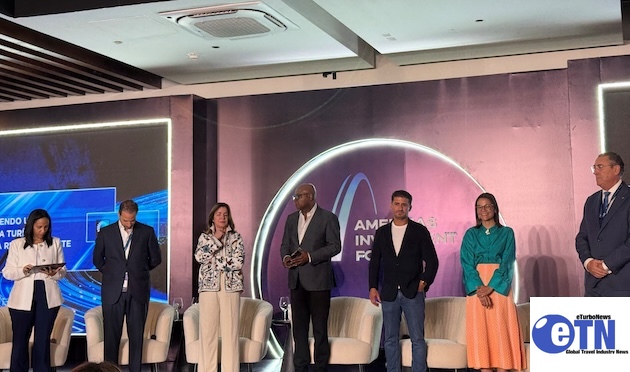
Addressing delegates at the Americas Investment Forum 2026 during a leadership panel on “Building a Regionally Integrated Tourism Strategy,” Bartlett said the global tourism industry is entering a new era in which destinations will be judged less by visitor numbers and more by the value tourism generates for their people and economies.
Americas Investment Forum 2026 | AIF Santo Domingo
Americas Investment Forum 2026 — July 1, 2 and 3 in Santo Domingo, Dominican Republic. International investment gathering connecting investment promotion agencies (IPAs), governments and business leaders across the Americas.
“The future of tourism will be defined not by the number of visitors destinations attract, but by the value tourism creates for their people,” Bartlett told government officials, international investors, tourism executives, and representatives from UN Tourism gathered in Santo Domingo.
He explained that Jamaica’s Tourism 3.0 Framework shifts the country’s tourism strategy beyond traditional measures of success such as visitor arrivals and earnings toward increasing tourism’s contribution to productivity, resilience, local ownership and long-term national development.
“Jamaica’s Tourism 3.0 Framework recognizes that the future of tourism is not simply about growing visitor arrivals, but about growing the value tourism creates for workers, businesses, communities and the wider economy,” Bartlett said. “The destinations that will lead tomorrow are those that invest not only in hotels, but in people, partnerships, productivity, resilience and trust.”
The minister noted that the framework represents the next phase of a decade-long tourism policy agenda rather than a new standalone initiative. Since 2016, Jamaica has pursued a series of reforms that have strengthened the country’s tourism ecosystem and enhanced its competitiveness within the region.
According to Bartlett, that foundation has been built on five long-term policy priorities: investing in human capital through the Jamaica Center for Tourism Innovation (JCTI), partnerships with HEART and the Tourism Workers Pension Scheme; maintaining a sustainable policy framework that reinvests in destination development, product innovation and community enhancement; modernizing infrastructure and visitor experiences; expanding air connectivity and travel facilitation; and embedding destination assurance and resilience throughout the tourism sector.
He argued that these initiatives have strengthened not only tourism but Jamaica’s broader investment climate.
“Those are not simply tourism policies. They are investment policies because they reduce risk, improve productivity and strengthen confidence,” Bartlett said.
Building on those achievements, Tourism 3.0 seeks to reposition tourism as a driver of broader economic transformation by strengthening local linkages, encouraging innovation, increasing local ownership, improving productivity, enhancing resilience and expanding prosperity across communities.
Bartlett said competitiveness in today’s tourism marketplace is increasingly determined by the quality of governance and the visitor experience rather than physical attractions alone.
“Competitiveness today is no longer determined by what a destination has,” he said. “It is determined by what a destination enables. Luxury travelers increasingly choose destinations that deliver authenticity, seamless experiences, and confidence. Those outcomes are created through sound public policy, strong institutions, and continuous investment.”
He added that investors are also placing greater emphasis on destinations that demonstrate institutional stability, resilient infrastructure, skilled workforces and effective governance.
“Investors today are looking beyond beautiful landscapes,” Bartlett said. “They are investing in destinations that are predictable, resilient, well-managed and capable of delivering long-term sustainable returns.”
Beyond Jamaica’s national strategy, Bartlett used the forum to advocate for greater regional collaboration through what he described as “co-petition”—a model in which Caribbean destinations maintain their unique tourism identities while collaborating in areas where collective action delivers greater value.
“The Caribbean has reached the point where collaboration is no longer optional,” Bartlett said. “I call it co-petition—the ability to compete where our uniqueness creates value while collaborating where our collective strength creates advantage.”
He said destinations should continue to distinguish themselves through their music, culture, gastronomy, heritage and people, while working together on issues such as air connectivity, visa facilitation, climate resilience, destination assurance, digital innovation, workforce development and investment promotion.
“Our music, culture, gastronomy, heritage, and people are what make each destination unique. Those are the experiences we should continue to compete on. But when it comes to air connectivity, visa facilitation, climate resilience, destination assurance, digital innovation, workforce development, and investment promotion, we are stronger when we work together,” he said.
Bartlett also highlighted Jamaica’s leadership in tourism resilience as an example of how national innovation can generate regional and global benefits. He pointed to the establishment of the Global Tourism Resilience and Crisis Management Center (GTRCMC), along with Jamaica’s internationally recognized COVID-19 Resilient Corridors, as initiatives that have positioned the country as a global thought leader in tourism resilience while strengthening the Caribbean’s overall competitiveness.
Concluding his address, Bartlett said Tourism 3.0 represents a broader shift from a visitor-driven economy to one focused on creating lasting value for citizens.
“Tourism 3.0 is ultimately about moving from a visitor economy to a value economy,” he said. “When tourism creates greater opportunity for workers, stronger businesses, more resilient communities and better lives for our people, then we will know we have truly succeeded.”
He added that regional success will depend on balancing competition with collaboration.
“The future does not require the Caribbean to become one destination. It requires us to become one competitive tourism ecosystem—built on co-petition, where we collaborate where scale matters and compete where authenticity matters.”
The leadership panel formed part of the Americas Investment Forum 2026, which brought together senior government officials, international investors, tourism executives, and UN Tourism leaders to explore strategies for strengthening tourism investment, sustainability, and regional integration across the Americas.