Angola Tourism Summit 2026 Delivers Major Investment Success Despite Limited International Media Access

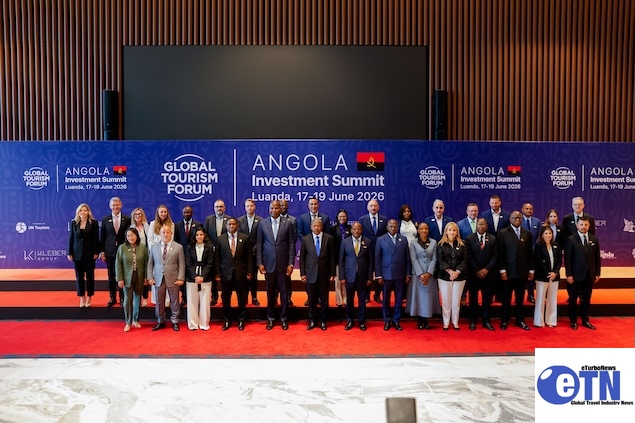
LUANDA, Angola – The Global Tourism Forum (GTF) Angola Investment Summit 2026 concluded as one of Africa’s most significant tourism investment gatherings in recent years, producing a substantial pipeline of investment agreements, attracting nearly 1,500 international delegates and securing high-level political support from across the continent.
Yet despite the scale of the World Tourism Forum Institute event and the participation of heads of state, ministers, global hotel companies and international investors, the summit received remarkably little coverage in the international travel trade media. Unlike most major tourism investment conferences, and despite the appointment of the Germany-based Kleber Group as the summit’s international public relations agency, no Western travel trade publications were invited. There were no organized opportunities for international journalists to interview summit organizers or senior hosts before or during the event, and it remains unclear whether an international press conference was held. Access to senior officials, including representatives of UN Tourism, was not arranged for the international media.
The reasons for the limited media engagement were not explained by the organisers. The summit coincided with the participation of UN Tourism Secretary-General Shaikha Al Nuwais, who has maintained a notably low public media profile since assuming office on 1 January 2026, although it is not known whether this influenced the media arrangements for the summit.
Consequently, reporting on the summit has relied almost entirely on the official information, speeches, and documentation released following the event.
Based on those official outcomes, however, the summit can only be regarded as a major success for Angola and for Africa’s growing tourism investment agenda.
Turkish-based Bulut Bağcı, the president of World Tourism Forum Institute, was widely praised for this event, also receiving an invitation by WTTC CEO Gloria Guevara for her upcoming Summit in Malta.
Held from 17–19 June in Luanda, the summit was organised by the World Tourism Forum Institute (WTFI) in cooperation with Angola’s tourism leadership and brought together presidents, ministers, international financial institutions, investors, destination developers, hospitality executives and tourism organisations to position Angola as one of Africa’s emerging tourism investment destinations.
Global Tourism Forum
World Tourism Forum Institute organizes several initiatives aiming to promote the hosting country internationally. As an initiative of WTFI, Global Tourism …
The summit opened with a welcome reception at Fortaleza de São Miguel, where delegates were welcomed by Bulut Bağcı, President of the World Tourism Forum Institute; H.E. Shaikha Al Nuwais, Secretary-General of UN Tourism; and H.E. Márcio Daniel, Angola’s Minister of Tourism.
The following day, the official opening ceremony, themed “Shaping the Future of Tourism in Emerging Destinations,” featured addresses from Luanda Governor Luís Manuel da Fonseca Nunes, WTTC President & CEO Gloria Guevara, Bulut Bağcı, Shaikha Al Nuwais, Minister Márcio Daniel and culminated with the Presidential Welcome Address by H.E. João Lourenço, President of the Republic of Angola. The event was further elevated by the participation of President Daniel Chapo of Mozambique and President Emmerson Mnangagwa of Zimbabwe, reinforcing the summit’s continental significance as a platform for tourism-led economic development and regional cooperation.
Eleven Investment Agreements Signal Practical Outcomes
Rather than focusing solely on policy discussions, the summit produced tangible investment results.
A total of 11 Memorandums of Understanding were signed, covering foreign direct investment, hospitality expansion, tourism infrastructure, sustainable tourism, destination development, education, project finance and human resource development. Collectively, the agreements establish a practical roadmap aimed at transforming Angola’s tourism ambitions into long-term projects and investment opportunities.
“The scale of participation and the number of agreements signed in Luanda show that global investors are increasingly looking at Angola not only as an emerging destination, but as a long-term investment opportunity,” said Bulut Bağcı, President of the World Tourism Forum Institute.
President Lourenço: Tourism Must Drive Economic Diversification
In his keynote Presidential Welcome Address, President João Lourenço positioned tourism at the heart of Angola’s economic transformation strategy.
He described tourism as a strategic pillar capable of reducing Angola’s historical dependence on oil while generating employment, encouraging private-sector investment and stimulating regional development.
The President highlighted Angola’s exceptional tourism assets—including more than 1,600 kilometres of Atlantic coastline, rivers, lakes, waterfalls, national parks, wildlife reserves, historical sites and diverse cultural traditions—as resources capable of positioning the country among Africa’s leading tourism destinations.
He also pointed to major infrastructure projects already reshaping the country’s investment landscape, including the new António Agostinho Neto International Airport, the Lobito Corridor, the future Luanda Convention Centre, together with continuing investment in ports, roads, railways, energy, telecommunications and healthcare infrastructure.


Addressing international investors directly, President Lourenço reaffirmed Angola’s commitment to providing legal certainty, long-term investment security and reliable partnerships, arguing that tourism should be viewed not only as an economic opportunity but also as a bridge for peace, dialogue, cultural understanding and international cooperation.
Tourism Minister: Angola Is Open for Business
Minister of Tourism Márcio Daniel declared that Angola had entered what he described as a decisive new phase in its tourism development.
He stressed that tourism was no longer viewed as future potential but had become a national economic priority capable of generating employment, infrastructure investment, improved public services and stronger international visibility.
Highlighting Angola’s tourism diversity, the Minister pointed to the country’s Atlantic coastline, the Namibe Desert, Calandula Falls, the Okavango region, forests, rivers, national parks, music, gastronomy and cultural heritage as assets capable of supporting a competitive tourism economy.
He also highlighted the launch of the national tourism brand “Visit Angola – The Rhythm of Life,” the MICE strategy “Meet in Angola – The Meeting Room in Africa,” the opening of the country’s new international airport, the planned Luanda Convention Centre and more than €500 million in approved tourism infrastructure investments across priority destinations.
Speaking directly to international investors, Daniel described Angola as an early-stage tourism market offering exceptional long-term growth and first-mover advantages.
“This summit,” he said, “is not about discussion alone. It is about decisions, partnerships and concrete investment outcomes.”
UN Tourism Sees Angola Entering a New Era
In one of the summit’s most significant international endorsements, Shaikha Al Nuwais, Secretary-General of UN Tourism, said Angola was entering “a new phase of international confidence” in which tourism was becoming a driver of prosperity, opportunity and national transformation.
She credited President Lourenço’s leadership with accelerating reforms through Angola’s national tourism strategy (Planatur), mobilisation of more than €8 billion in investment, visa-free access for citizens from more than 90 countries and initiatives aimed at strengthening regional air connectivity.
She argued that the presence in Luanda of global hotel companies, investors and tourism executives demonstrated growing international confidence in Angola’s ambitions.
At the same time, she highlighted one of Africa’s biggest challenges—closing the continent’s tourism investment gap.
“Potential is widely distributed,” she observed, “but investment is not.”
She reaffirmed UN Tourism’s commitment to helping bridge governments and private investors through investment guidelines, strategic partnerships and international forums, concluding that Angola was “ready, ambitious and open for business.”
One of the summit’s symbolic highlights followed when Al Nuwais formally presented the “Tourism Doing Business – Investing in Angola” investment guidelines to President Lourenço, providing international investors with a comprehensive framework outlining Angola’s tourism opportunities, development priorities and investment pipeline.
Global Industry Engagement
The summit attracted many of the hospitality industry’s leading companies, including representatives from Marriott International, Hilton Hotels, TUI Hotels & Resorts, Radisson Hotels, KASADA Capital Management, Aventra Hospitality, Mitrelli Angola, V-Marine Bahrain, NURU and SHL Schweizerische Hotelfachschule Luzern.
Discussions focused on hotel development, sustainable finance, integrated tourism destinations, coastal tourism, the blue economy, MICE tourism, connectivity, public-private partnerships, sovereign investment funds and tourism’s role in national economic development.
High-level sessions included the Presidential Dialogue on Tourism as a National Economic Strategy, moderated by CNN’s Victoria Rubadiri, and a Ministerial Dialogue involving senior tourism leaders from South Africa, the African Union Commission, Azerbaijan and Kenya. The second day shifted towards implementation, project matchmaking and the presentation of the WTFI Investment Roadmap 2026–2030, designed to convert summit commitments into long-term investment and policy initiatives.
A Summit That Chose Investment Over Publicity
The Angola Investment Summit was unusual not for what happened inside the conference halls, but for how little of it reached the wider international tourism media.
With no significant Western travel trade media presence, no international press briefings and limited opportunities for independent reporting, the event unfolded largely outside the global tourism industry’s media spotlight. For journalists, coverage depended almost exclusively on official summit documentation rather than direct access to organisers or keynote participants.
Nevertheless, the official record presents a clear conclusion.
Measured by participation, political representation, investment commitments and the breadth of international engagement, the Global Tourism Forum Angola Investment Summit 2026 achieved its principal objective: demonstrating that Angola is positioning tourism as a strategic pillar of economic diversification while emerging as one of Africa’s most promising destinations for tourism and hospitality investment.
With nearly 1,500 delegates, 11 investment agreements, strong presidential backing and a long-term implementation roadmap extending to 2030, the summit leaves behind more than declarations of intent. It leaves Angola with a tangible platform from which to attract international investment, create jobs and strengthen its role in Africa’s rapidly evolving tourism economy.