Kathmandu — Nepal’s tourism sector has entered a new phase of uncertainty and transition following the removal of Deepak Raj Joshi as Chief Executive Officer of the Nepal Tourism Board (NTB) under the newly issued “Special Provision Ordinance on Removal of Public Office Bearers, 2026.”
The order, issued by President Ramchandra Paudel on the recommendation of the Government of Nepal, has triggered the automatic removal of hundreds of public office bearers appointed before March 26, 2026, including Joshi, whose four-year term had only begun in September 2024. Reports indicate that the order affects appointments across multiple sweep state institutions and public bodies in Nepal.
The decision abruptly ended the tenure of one of Nepal’s most recognized tourism leaders at a time when the country’s tourism industry is showing strong signs of post-pandemic recovery.
This was confirmed to eTurboNews today by Mr Sunil Sharmathe Officiating Director, Public Relations & Publicity Department of Nepal Tourism Board.
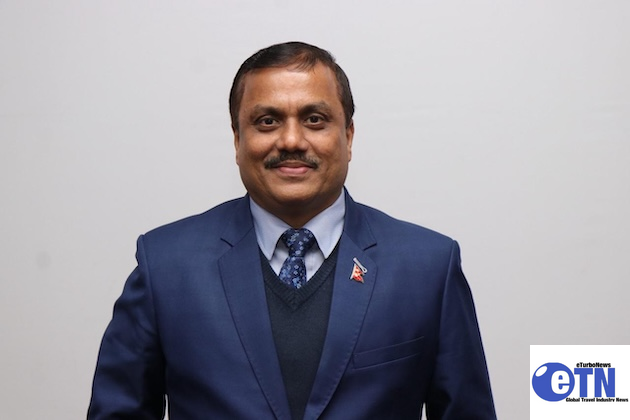
Deepak Raj Joshi’s Departure

Joshi is widely regarded as one of Nepal’s most experienced tourism professionals. He previously served as CEO of the Nepal Tourism Board from 2015 to 2020, where he led several high-profile tourism promotion campaigns and played a key role in strengthening Nepal’s international tourism profile.
During his earlier tenure, he was credited with modernizing tourism promotion efforts, strengthening partnerships with the private sector, and helping Nepal recover tourism momentum following the devastating 2015 earthquake. After leaving NTB, he later served as CEO of the Confederation of Nepalese Industries (CNI) before returning to the tourism board in 2024.
Industry stakeholders have frequently praised Joshi for his understanding of both domestic and international markets tourism, destination branding, and sustainable tourism development.
Mr. Joshi was awarded as a Tourism Hero by the World Tourism Network.

Deepak RajJoshi, Kathmandu, Nepal – Amazing Travel Awards
Nominated by Suresh SinghBudal of the PATA Nepal Chapter: Mr. Deepak Raj Joshi is currently leading Nepal’s tourism recovery initiative as a coordinator for the Tourism Recovery Task Force, TRTF-Nepal. He is a member of Rebuilding travel and the Project Hope Task Force Board. Mr. Joshi served as the Chief Executive Officer of Nepal Tourism […]
His latest term coincided with Nepal’s renewed tourism expansion strategy, including wellness tourism initiatives, regional partnerships, and efforts to diversify source markets beyond India and China.
Tourism arrivals in Nepal have been steadily increasing in 2026, with more than 107,000 international visitors recorded in April alone, according to tourism reports. However, the leadership transition now raises concerns about continuity in policy implementation and international promotion efforts.
Hikmat Singh Ayer Named Officiating CEO

Our Team | Nepal Tourism Board
1 Mr. Hikmat Singh AyerOfficiating CEO 2 Mr. Santosh PantSr. Director, Corporate Services and Administration Department 3 Mr. Mani Raj LamichhaneSr. Director and Chief, NTB,…
Following Joshi’s removal, the Ministry of Culture, Tourism, and Civil Aviation appointed Hikmat Singh Ayer as the Officiating Chief Executive Officer of the Nepal Tourism Board.
Ayer currently serves as Senior Director at NTB and has been associated with the organization for more than 25 years. During his long tenure, he has overseen several key departments and has played a central role in destination marketing, tourism promotion, program coordination, and tourism product development.
Within Nepal’s tourism industry, Ayer is viewed as a seasoned administrator with deep institutional knowledge and extensive experience in both government and private-sector tourism collaboration.
He has previously served in acting leadership roles during administrative transitions at the tourism board and is considered familiar with the organization’s operational and policy challenges.
Ayer’s Vision for Nepal Tourism
Tourism observers say Ayer is expected to continue NTB’s ongoing focus on sustainable tourism, wellness tourism, and diversification of tourism products.
In recent public remarks and policy discussions, Ayer has emphasized Nepal’s potential as a global wellness tourism destination, arguing that Nepal’s Himalayan environment, spirituality, culture, yoga traditions, meditation heritage, and natural landscapes position the country uniquely in the international market.
He has also advocated for improved tourism data systems, stronger regional air connectivity, and greater attention to community-based tourism development.
Ayer is believed to support a broader tourism strategy that goes beyond mountaineering and trekking to include wellness travel, cultural tourism, rural tourism, adventure experiences, eco-tourism, and high-value experiential travel.
Tourism insiders note that his experience in tourism product and resource development may help Nepal diversify its offerings at a time when travelers increasingly seek sustainable and authentic experiences.
Challenges Facing Nepal Tourism
Despite positive arrival numbers in 2026, Nepal’s tourism sector continues to face major structural and geopolitical challenges.
One of the primary concerns remains air connectivity and aviation infrastructure. Tribhuvan International Airport in Kathmandu continues to struggle with congestion, operational limitations, and weather-related disruptions, while regional airports still require expansion and modernization.
The tourism sector also faces increasing competition from neighboring destinations such as Bhutan, India, Thailand, and emerging Himalayan tourism markets.
Industry leaders have also raised concerns about inconsistent tourism policies, political instability, and frequent administrative changes that can disrupt long-term planning and undermine international confidence.
Global geopolitical developments have also impacted visitor flows. Tourism data earlier this year showed declines in some long-haul markets due to disruptions linked to tensions in West Asia, which affected major transit routes used by travelers heading to Nepal.
Climate change is another growing challenge. Melting glaciers, changing weather patterns, and environmental degradation in trekking regions pose long-term risks to Nepal’s mountain tourism industry.
At the same time, Nepal continues to face pressure to improve tourism infrastructure, waste management, destination safety, digital marketing capacity, and visitor service standards.
Industry Watching Closely Nepal Tourism Developments
The sudden leadership transition comes during an important period for Nepal’s tourism recovery strategy and regional tourism initiatives.
Many tourism stakeholders are now closely watching to see whether the government will move quickly to appoint a permanent CEO or allow the interim leadership to continue for an extended period.
For now, Hikmat Singh Ayer inherits the responsibility of maintaining momentum in Nepal’s tourism recovery while steering the Nepal Tourism Board through a politically sensitive transition period.
As Nepal seeks to position itself as a leading global destination for adventure, culture, spirituality, and wellness tourism, stability and strategic continuity at the Nepal Tourism Board will remain critical for sustaining growth in one of the country’s most important economic sectors.