
OpenAI no longer just invests money – but computing power. Does this change startup financing?

AI tokens as a new startup investment? What sounds absurd is now practice at OpenAI. The AI company invests in startups from the well-known accelerator Y Combinator – not with money in the traditional way, but with computing power and model access for AI. Each company in the current class will receive tokens worth two million US dollars that can be used to use OpenAI models.
New trend: “Tokenmaxxing”
The idea behind it: Founders should be able to develop products faster and make their internal processes more efficient. Access to powerful models is a crucial factor, especially for AI startups – both for product development as well as for scaling and testing. Instead of having to bear high infrastructure costs themselves, they can rely directly on existing systems.
Read too

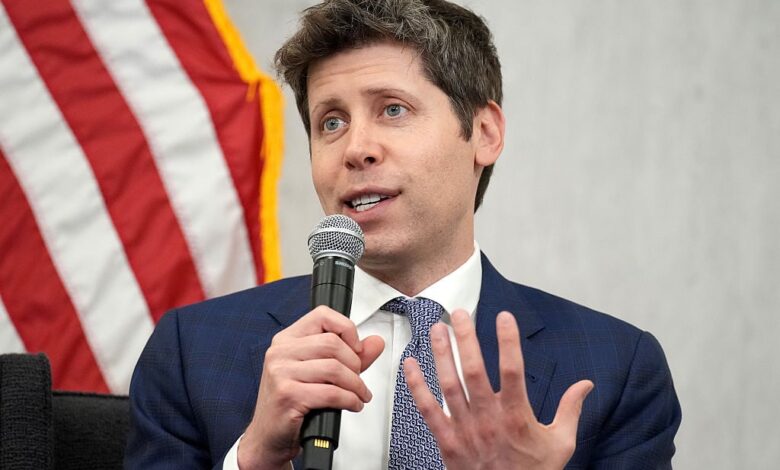
In this context, Sam Altman himself spoke of “tokenmaxxing” – i.e. the maximum use of AI models and credits in order to accelerate development. Behind this is a growing trend in the tech sector: more and more companies are viewing the consumption of tokens as a direct lever for productivity. Some startups go so far as to give their teams fixed budgets or even minimum quotas for token use.
The logic is simple: those who work more with AI make faster progress. Some founders speak of a “force multiplier” – a factor that makes small teams significantly more efficient. In some cases they report massive efficiency gains and significantly higher output. This approach is also supported by investors who actively encourage startups to invest generously in tokens – sometimes in amounts that correspond to the salaries of developers.
The deal behind it
However, the offer is not entirely without consideration. The tokens are to be offered via an equity-related model; In return, OpenAI receives shares in the startups. The model is therefore similar to a classic venture capital investment – except that instead of capital, API access and computing power are provided.
Read too

But OpenAI also benefits in another way: by investing early in technology in young companies, it can anchor its products deeply in their processes. The more startups build on OpenAI, the greater the dependency becomes – and with it the long-term business potential.
At the same time, “Tokenmaxxing” is not without controversy. Critics consider pure token consumption to be a poor measure of productivity. The accusation: High use of computing power does not automatically mean better results – on the contrary, false incentives could even lead to inefficient behavior. In some cases, teams are already observed to artificially increase their token consumption, for example in order to dominate internal rankings.
Many startups therefore choose a middle path and rely on capped subscription models instead of unlimited consumption. These offer predictable costs and prevent AI usage from getting out of control – a crucial factor, especially for smaller teams with limited budgets.