Turkmenistan, long considered one of the world’s most isolated nations, is cautiously opening to tourism through new e-visa reforms and global marketing campaigns. From the flaming Darvaza Gas Crater to Silk Road ruins and marble cities, the country is attracting adventurous travelers despite continuing concerns about political repression and travel restrictions.
In the heart of Central Asia, Turkmenistan has long occupied a strange space in the global imagination — a nation of marble cities, burning desert craters, Silk Road ruins, and near-total isolation. For decades, travelers described it as one of the world’s hardest countries to enter, where visas were unpredictable, movement tightly controlled, and photography often restricted.
Now, something appears to be changing.
A new electronic visa law introduced in 2025 is signaling a cautious tourism thaw, with officials openly promoting the country to foreign travelers and tour operators racing to position themselves for what could become Central Asia’s last great frontier destination.
A Country Wrapped in Mystery
Few destinations inspire the same mix of fascination and uncertainty as Turkmenistan. The country sits between Iran, Afghanistan, Uzbekistan, and the Caspian Sea, yet remains largely absent from mainstream tourism routes.
For adventurous travelers, that isolation has become part of the appeal.
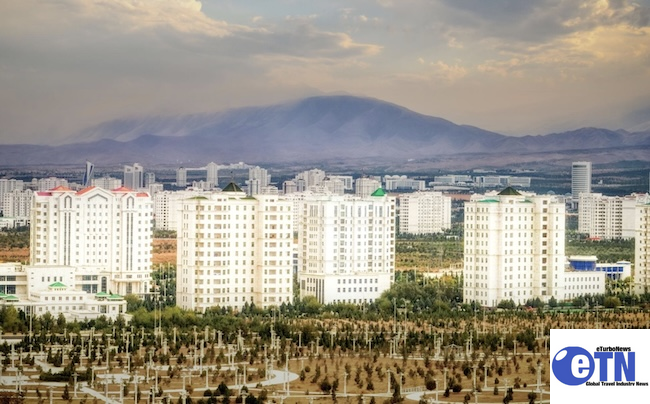
Social media creators on YouTube, Instagram, TikTok, and travel blogs increasingly describe Turkmenistan as “the last closed country,” comparing the experience to stepping into an alternate reality: empty white marble boulevards in Ashgabat, giant golden statues, synchronized fountains in the desert, and strict rules that coexist with remarkable hospitality.
One viral attraction dominates nearly every tourism campaign: the Darvaza Gas Crater, widely known online as the “Door to Hell.” The crater has burned continuously in the Karakum Desert for decades, glowing brightest at night and drawing photographers, drone operators, and overland travelers from around the world.
The Tourism Pivot
The biggest shift came in April 2025, when Turkmenistan adopted legislation allowing electronic visas for foreign visitors. Previously, travelers needed a formal invitation letter and often faced unexplained rejections.
According to Radio Free Europe/Radio Liberty, the government’s evolving approach accelerated in 2026, with tourism conferences in Ashgabat aimed at improving the country’s international image.
Tourism forums branded “TurkmenTravel 2026” now market the country as an emerging Silk Road destination. Official tourism messaging emphasizes UNESCO heritage sites, desert adventure travel, and cultural authenticity.
TurkmenTravel Business Forum & Expo 2026
State tourism messaging frequently highlights:
- Ancient Silk Road cities
- Desert eco-tourism
- UNESCO heritage sites
- Wellness tourism around underground lakes and hot springs
- Caspian Sea resort developments in Awaza
Tour operators say inquiries have increased significantly since the e-visa announcement. Companies such as Darvaza Tour, Regent Holidays, G Adventures, and Indus Travel now market multi-day itineraries across the country focused on archeology, desert landscapes, and Soviet-modernist architecture.
Selling the Silk Road
Turkmenistan’s tourism ambitions rely heavily on its Silk Road identity.
The ancient oasis city of Ancient Merv — a UNESCO World Heritage Site — is increasingly positioned as one of Central Asia’s great overlooked archaeological treasures. UNESCO describes Merv as one of the oldest and best-preserved Silk Road oasis cities in the region.
Other heritage attractions include:
- Nisa, the ancient Parthian capital
- Kunya-Urgench
- Yangykala Canyon
- Traditional desert nomadic settlements
Tour companies increasingly package these locations as part of “extreme Silk Road” or “off-the-grid” itineraries aimed at travelers who have already explored more accessible Central Asian destinations like Uzbekistan or Kazakhstan.
The Contradiction at the Center
Yet behind the glossy tourism campaigns lies a more complicated reality.
The same RFE/RL investigation that highlighted the tourism opening also documented the ongoing restrictions faced by Turkmen citizens. While foreign tourism may be loosening, many locals reportedly continue to face travel bans, surveillance, and bureaucratic controls.
Human Rights Watch has similarly documented cases of Turkmen citizens allegedly being prevented from traveling abroad, particularly those returning home for passport renewals.
Travelers still report:
- Mandatory guides on many itineraries
- Tight control over movement
- Restrictions on photographing government buildings
- Limited independent travel
- Highly curated tourist experiences
That tension — openness for outsiders versus restrictions for residents — now defines Turkmenistan’s emerging tourism identity.
The Instagram Effect
Ironically, social media may be doing more to reshape Turkmenistan’s image than official campaigns.
Travel influencers posting videos of empty highways, futuristic monuments, and the flaming Darvaza crater have generated millions of views. YouTube travel documentaries with titles like “Inside the World’s Most Isolated Country” portray Turkmenistan as mysterious, surreal, and visually cinematic.
On Instagram, the country’s visual identity has become highly recognizable:
- White marble government buildings
- Monumental architecture
- Desert campfires beneath the stars
- Soviet-era relics
- Traditional Turkmen carpets and horses
For younger adventure travelers, the appeal lies precisely in the country’s rarity. Unlike mass tourism destinations, Turkmenistan still feels largely undiscovered.
Can Tourism Transform the Country?
Whether tourism becomes a serious economic sector remains uncertain.
Turkmenistan’s economy remains overwhelmingly dependent on natural gas exports, and the government still maintains tight political control.
But analysts say tourism offers something the country increasingly wants: soft power, foreign currency, and international legitimacy.
The government’s new openness coincides with broader regional integration efforts and attempts to attract foreign investment.
For now, Turkmenistan remains one of the world’s most enigmatic destinations — a place where ancient Silk Road history, authoritarian modernity, and social-media-era curiosity collide.
And that may be exactly why travelers are suddenly paying attention.