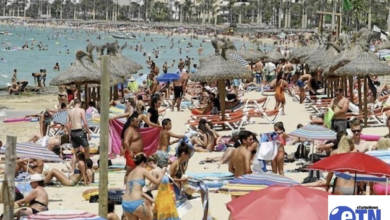


Switzerland is promoting a new “travel with care” campaign to shape more respectful visitor behavior and protect the local quality of life. As concerns about overtourism rise globally, the country’s soft-guidance approach contrasts with Hawaiiwhere stricter policies and sustainability fees signal a shift towards regulated, regenerative tourism.
Switzerland’s tourism industry has a new message for visitors: enjoy the Alps, the lakes, and the trains — but learn the house rules first.
Under the slogan “Travel with care. Leave with memories,” Switzerland Tourism, the Regional Tourism Alliance, and the Swiss Tourism Federation have launched what they call the country’s first national initiative to strengthen public acceptance of tourism while nudging guests toward more respectful behavior. The campaign is deliberately soft in tone: less “don’t do this,” more “a little care goes a long way.” Its visitor-facing tips include keeping public spaces clean, stowing luggage properly, keeping noise down, respecting staff and waiting one’s turn.
The timing is revealing. Switzerland is not rejecting tourism; it is trying to professionalize the social contract around it. The official industry material frames tourism acceptance as something that must be “actively shaped,” not left to chance, and links the campaign to Switzerland Tourism’s broader “Travel Better” strategy.
The Swiss approach has two tracks. One speaks directly to guests through multilingual, culture-neutral messaging. The other is aimed at destinations and tourism businesses: a toolbox with modules on strategy, stakeholder management, communication, guest participation and early-warning indicators for local tensions. The Swiss Tourism Federation says the toolbox is intended to help destinations act before tourism falls “out of balance,” and stresses that acceptance depends not only on visitor numbers but also on participation, perceived benefit, and day-to-day behavior.

In practice, that means the “perfect tourist” Switzerland is trying to cultivate is not just a high-spending one. It is a legible one: someone who knows how to behave on a crowded train, how to share mountain villages with residents, and how to treat the country’s infrastructure as a common good rather than a backdrop.

Malama Hawaii | Go Hawaii
The most rewarding trip is one that gives back
Hawaii has been working on a more advanced version of the same problem. Its Mālama Hawaiʻi program asks visitors to “give back” through beach cleanups, native tree planting, habitat stewardship, sustainable farming and cultural preservation. The idea is not just etiquette, but reciprocity: the visitor should leave the place better, or at least contribute to its care.
Hawaii has also moved beyond messaging into governance and finance. The Hawaii Tourism Authority says its Destination Management Action Plans were created to realign tourism with community values, reduce pressure at overcrowded sites and protect natural and cultural assets. Its 2026–2028 draft plans focus on “hotspots” identified through community engagement.
The state has gone further still. In 2024, Hawaii enacted regenerative-tourism language into state planning, including goals to reduce tourism’s ecological footprint, protect sensitive cultural and environmental areas, and reduce dependence on tourism. In 2025, Governor Josh Green signed the “Green Fee,” a 0.75 percentage-point increase in the transient accommodations tax beginning in 2026, expected to raise about $100 million annually for environmental stewardship, climate resilience, and sustainable tourism.
That is where Switzerland and Hawaii diverge. Switzerland is currently emphasizing persuasion, shared norms, and practical destination tools. Hawaii is building a harder architecture: visitor education, community planning, stewardship programs, legal mandates, and dedicated funding. Even the courts have become part of Hawaii’s tourism transition: a federal judge recently allowed the state’s climate-related cruise tax provisions to move forward while litigation continues.
Both places are responding to the same global shift. Destinations once competed mainly for arrivals. Now they are competing for compatibility: visitors who spend, but also listen; who move through fragile places without overwhelming them; who understands that “welcome” is not the same as “anything goes.”
Switzerland’s campaign is still young. Its test will be whether etiquette messaging can change behavior at the real friction points: trains, scenic villages, mountain trails, lakefronts and overloaded resort towns. Hawaii’s lesson is that education helps, but it may not be enough. Once tourism pressure becomes a resident-quality-of-life issue, destinations tend to move from slogans to systems.
For now, Switzerland is asking tourists to travel with care. Hawaii is asking them to help pay for the care. The future of popular destinations may require both.