International tourism to the United States is falling despite a global travel boom. Analysts point to the “Trump effect,” geopolitical instability, and rising travel friction as key drivers. With 2026 data already signaling further decline, the downturn may be deeper than official reports suggest—and far from over.
What stands out most in this unfolding tourism crisis in the United States of America is the silence.
Across the United States, destination marketing organizations, tourism boards, domestic travel associations, and industry leaders have largely avoided publicly challenging the political climate shaping their own decline. This, despite visible shifts—such as LGBTQ-focused travel pages quietly disappearing from official tourism websites—changes that are widely noticed within the industry but rarely acknowledged aloud.
The paradox is stark: an industry built on openness and global welcome is retreating into caution at home. Instead, it has fallen to international bodies like that World Travel & Tourism Council to voice concern, even if in carefully measured, diplomatic language designed to protect member interests.
Those members include major US-linked corporations such as Marriott International, American Express, and Virituso, which operate globally but must navigate an increasingly politicized domestic environment. The result is a quiet tension—between commercial pragmatism and reputational risk—where speaking out could carry consequences, but staying silent may be costing the industry far more.
The Reality for the US Tourism Industry Sinks in
Domestically and outbound tourism in the United States is booming, but inbound, the departure boards at major hubs in Dubai International Airport and Hamad International Airport have become an unlikely barometer of America’s fading pull.
Flights to North America flicker between delayed, rerouted, and on time—depending on the latest geopolitical tremor rippling through the Gulf. For millions of long-haul travelers, these hubs are the gateway to the United States. When they fall, journeys become longer, costlier, and less certain. Increasingly, that uncertainty ends in a simple decision: go somewhere else.
Because while global tourism is rebounding strongly, the United States is not just lagging—it is slipping backward. And the reasons now stretch from geopolitics to perception, with one figure repeatedly placed at the center of the shift: Donald Trump.
A tourism decline in a year of global growth
The headline numbers are already troubling. International arrivals to the United States fell by roughly 5-6% in 2025even as global travel expanded sharply. Billions in visitor spending were lost. Competing destinations—from southern Europe to Southeast Asia—absorbed the demand.
The World Travel & Tourism Council warned that the US would be the only major economy to see a decline in international visitor spending in that period.
But even those warnings may understate the problem. Because the data behind them is already out of date.
The data lag problem: why reality may be worse for US Travel
Tourism reporting runs on a delay. Most major analyses—from WTTC, Tourism Economics, and Oxford Economics—are based primarily on full year 2025 databecause this is the latest complete dataset available.
That creates a structural bias: Reports describe where the market was, not where it is going.
And early indicators suggest the situation is deteriorating faster than those reports capture.
- January 2026 arrivals are already down year-on-year
- Arrivals to the US from key markets like Canada and Europe continue to weaken rapidly.
- Long-haul travel is being reshaped by geopolitical disruption
In other words, the widely cited “5–6% decline” may turn out to be the mild phase of a deeper downturn.
Industry insiders increasingly acknowledge this gap. Forecasts published in early 2026 rely on models calibrated to 2025 behavior—but traveler sentiment, policy shifts, and global instability have all moved since then. The result is a growing disconnect between official forecasts and real-world signals.
The Trump effect
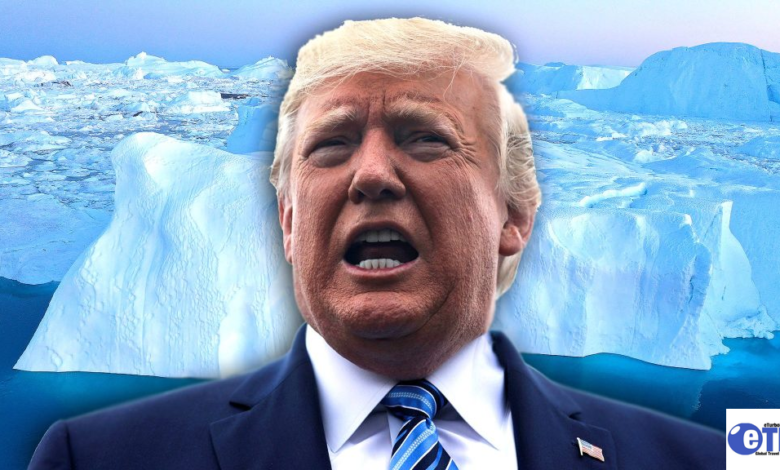
There is no longer much ambiguity in how analysts frame the central driver: Donald Trump
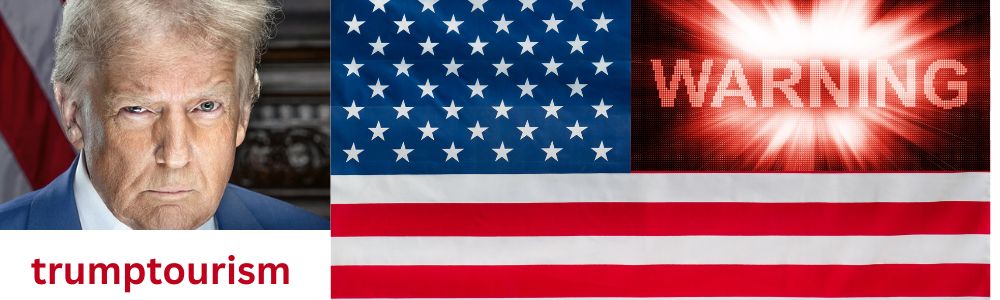
Trump Tourism: Join the Fight | Trump Tourism
Travel from and to the United States and the industry behind has changed under US President Donald Trump. There are new challenges, expectations, and regulations.
His political return and policy direction have coincided with—and, many argue, accelerated—the downturn in international arrivals. The mechanisms are cumulative rather than singular:
- Tariffs and diplomatic friction with allies
- Tough border enforcement and entry uncertainty
- Proposals for expanded traveler screening
- Rhetoric that shapes global perception of the US
Tourism economists describe this as a sentiment shock. Travelers are not necessarily boycotting the US—they are simply recalculating.
If a trip feels more expensive, more complicated, and less welcoming, the decision quietly shifts elsewhere.
Canada pulls back—and others follow
The clearest evidence comes from Canada, which has historically been the largest and most reliable source of US visitors. That flow is now shrinking sharply.
Political tensions, trade disputes, and rhetoric have combined to weaken a travel relationship that once seemed immune to disruption. The decline is large enough to affect entire regional economies in border states and tourist hubs.
But Canada is only the beginning.
- European travel demand is softening, with more travelers turning to Europe, Asia, and Africa.
- Australian travelers are pivoting towards Asia
- Emerging markets are choosing destinations with fewer barriers
This is not a localized dip. It is a broad reallocation of global tourism flows.
A world that is easier elsewhere
Travelers in 2026 are making decisions in a highly competitive marketplace. And increasingly, the United States loses with ease.
- Visa processes remain comparatively slow
- Border procedures are perceived as stricter and less predictable
- Reports of device searches circulate widely
- Policy proposals around social media vetting raise concerns
Meanwhile, competitor destinations are moving in the opposite direction—simplifying entry, lowering friction, and marketing openness.
Tourism is driven as much by perception as by infrastructure. And perception, once lost, is difficult to rebuild.
The geopolitics multiplier
Layered on top of policy and perception is a third force: global instability.
Conflicts affecting energy markets and airspace have begun to disrupt long-haul travel patterns. The Gulf aviation corridor—critical for connecting Asia, Africa, and Europe to North America—has experienced intermittent disruption.
The consequences are subtle but powerful:
- Longer flight times
- Higher ticket prices
- Less reliable connections
For travelers already uncertain about visiting the US, these added frictions can tip the balance. A trip that once felt routine now feels complicated.
2026 for Tourism: Escalation, not recovery
The key point is timing.
2025 is the last fully measured year—and it shows a clear decline for the US
2026 is unfolding in real time—and all early signals point downward.
This creates a high-risk scenario:
- A second consecutive annual drop in arrivals
- Deepening losses in tourism revenue
- A structural shift towards competing destinations
And because official reports lag behind reality, the full extent of the downturn may not be visible until after it has already intensified.
Can the World Cup change the trajectory?
The 2026 FIFA World Cup offers a potential counterweight, expected to draw large numbers of international visitors.
But expectations are increasingly cautious. Concerns remain that:
- Visa and entry barriers could limit attendance
- Travel friction may deter marginal visitors
- Broader geopolitical sentiment could cap demand
The event will boost arrivals. But it may not reverse the underlying trend.
A crossroads moment
The United States is still one of the world’s most compelling destinations. But global tourism has changed.