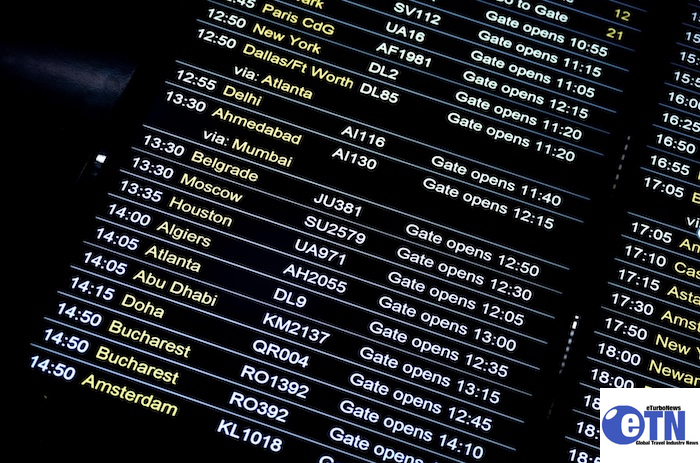
Global aviation celebrated a record 2025, with ACI reporting 9.8 billion passengers worldwide. Yet escalating Middle East tensions disrupting key hubs like Dubai, Doha, and Abu Dhabi raise serious concerns about 2026. Can the industry sustain growth as geopolitical instability threatens global air connectivity and operational reliability?
The global aviation industry is celebrating a strong comeback year, but growing geopolitical tensions are casting a long shadow over what comes next.
According to the latest data released by the Airports Council International (ACI) World, 2025 marked a milestone year for global airports, with traffic, cargo, and aircraft movements all showing solid growth. Yet, as the industry applauds its recovery, a critical question is emerging: Is aviation heading into another disruption cycle in 2026?
A Record Year for Global Aviation
ACI World|The Voice of the World’s Airports
ACI World contributes to the safety, security, and sustainability of the aviation industry by advancing the global interests of airports and the communities they serve.
ACI World confirmed that global passenger traffic reached 9.8 billion travelers in 2025reflecting a 3.6% increase over 2024 and surpassing pre-pandemic 2019 levels by 7.3%.
Leading the rankings once again:
- Hartsfield-Jackson Atlanta International Airport remained the world’s busiest airport with 106.3 million passengers
- Dubai International Airport held second place with 95.2 million passengers
- Tokyo Haneda Airport climbed to third with 91.7 million passengers
The top 10 airports alone accounted for 9% of global passenger traffichighlighting the continued dominance of mega-hubs.
ACI Director General Justin Erbacci praised the sector’s resilience:
“These hubs keep people and goods moving, supporting global trade, tourism, and economic growth.”
Growth Driven by Global Recovery — But Limits Are Emerging
Several factors fueled the 2025 surge:
- Lower jet fuel prices (down ~13% year-over-year)
- Easing inflation boosting travel demand
- Strong rebound in international travel, especially in Asia-Pacific
- China’s reopening driving global connectivity
However, ACI also warned of growing structural constraints:
- Airport capacity limits and slot shortages
- Aircraft delivery delays
- Air navigation system bottlenecks
Even in a strong year, the system is operating close to its limits.
International and Cargo Traffic Surge
International travel reached 4.0 billion passengersup 5.9% from 2024with:
- Dubai International Airport remains the top global hub for international passengers
- London Heathrow Airport and Incheon International Airport hold second and third positions
Meanwhile, air cargo climbed to 128.9 million tonnesdriven by e-commerce and supply chain shifts, with:
- Hong Kong International Airport leading globally
- Shanghai Pudong International Airport close behind
The Elephant in the Room: Geopolitics
Despite the optimism, ACI’s own report acknowledges a growing threat: Geopolitical instability is reshaping global air traffic flows.
Airspace closures and regional conflicts have already occurred
- Increased flight times and fuel costs
- Forced rerouting of major international corridors
- Shifted traffic away from traditional hubs
And now, a more urgent concern is emerging.
Middle East Disruptions Raise Alarm for 2026
Major global transit hubs in the Gulf — including:
- Dubai International Airport (DXB)
- Abu Dhabi International Airport (AUH)
- Hamad International Airport (DOH)
— have recently experienced severe operational disruptions due to escalating tensions involving Iran.
At times, these airports — critical connectors between Europe, Asia, and Africa — have nearly come to a standstilldisrupting global flight networks.
This raises a pressing question for the aviation industry:
How can 2026 projections remain optimistic when some of the world’s most important hubs face recurring geopolitical risks?
A Disconnect Between Performance and Forecasts?
Just minutes before ACI’s release, the World Travel & Tourism Council (WTTC) also celebrated a record breaking 2025 for global travel and tourism, releasing its WTTC-Chase Travel report for 2025
But neither ACI nor WTTC has fully addressed a growing concern:
- What happens if Middle East airspace becomes unreliable?
- Can global hubs absorb rerouted traffic without major delays?
- Are airlines and airports prepared for prolonged disruption?
The Road Ahead
The aviation sector has proven its resilience time and again. But 2025’s success may not guarantee 2026 stability.
With capacity already stretched and geopolitical risks intensifying, the industry faces a fragile balance:
- Strong demand vs. limited infrastructure
- Global connectivity vs. regional instability
ACI’s data tells a story of recovery and growth. But unfolding events suggest the next chapter may be far less predictable.
For aviation leaders, the message is clear:
The question is no longer just how to manage growth — but how to protect it.