The Iran war is reshaping global tourism far beyond the Middle East. Flights are being rerouted, fuel costs are surging, and traveler behavior is shifting toward safer, closer destinations. As airlines experiment with new models and destinations reposition themselves, the industry faces a deeper challenge: who will lead global tourism through an increasingly fragmented world?
One World. One journey. United for Safe and Open Travel
Airlines reroute, destinations shift, and travelers rethink plans as geopolitical tensions disrupt global travel—raising urgent questions about leadership, resilience, and the future of international tourism.
Nearly a month after the Iran war erupted on February 28, 2026, the global tourism industry is no longer simply reacting to a regional crisis—it is being fundamentally reshaped by it.
What began as airspace closures and flight disruptions has evolved into a worldwide reordering of travel flows, rising costs, shifting demand patterns, and a growing sense that international tourism is entering a more fragmented, politically charged, and uncertain era.
From collapsing arrivals in conflict-adjacent regions to rising airfares and experimental airline strategies, the ripple effects are global. But beyond the operational shock, a deeper transformation is underway—one that is redefining power, profitability, and leadership in global tourism.
Tourism Arrivals Collapse in Conflict-Adjacent Regions
Early indicators from booking systems, airlines, and tourism boards show a sharp decline in international arrivals to destinations near the conflict zone.
- Eastern Mediterranean destinations such as Cyprus and Greece report double-digit booking declines
- Gulf hubs are seeing reduced transit traffic as global connectivity weakens
- Egypt and Jordan face slower demand despite relative stability
In tourism, perception often outweighs reality. Even destinations far from actual conflict zones are being affected by traveler anxiety and shifting risk perception.
At the same time, demand is being redirected:
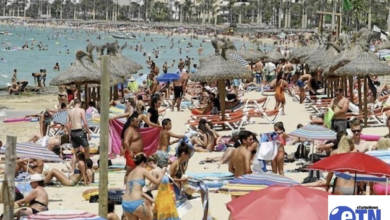
- Spain, Portugal, and Italy are absorbing displaced Mediterranean travelers
- Domestic tourism is rising across Europe and North America
Tourism is not disappearing—it is being redistributed along geopolitical fault lines.
Hotel Nights Decline—and Shift Globally
The fall in arrivals is translating directly into reduced hotel occupancy in affected regions.
- Hundreds of millions of global hotel nights are now at risk in 2026
- Travelers are shortening stays and choosing closer destinations
- Luxury and long-haul-dependent hotels are under pressure
Meanwhile:
- Western Mediterranean destinations are nearing capacity
- Domestic and regional destinations are stabilizing their performance
This shift reinforces a key trend: tourism flows are becoming more regional and less global.
Aviation Shock: Disruption, Cost, and Competition
Aviation remains the most disrupted sector.
- Middle Eastern hubs are operating at reduced capacity
- Flights are longer due to airspace closures
- Fuel costs have increased dramatically
Passengers now face:
- Longer travel times
- Fewer connections
- Higher ticket prices
A winner is China
At the same time, Chinese carriers are flying at near-full capacity between Europe and Asia despite record operating costs, benefiting from continued access to Russian airspace—thereby cutting travel time and reducing fuel burn compared to Western airlines forced to reroute.
This uneven playing field is introducing a new layer of competitive imbalance into global aviation.
A Quiet Aviation Reset: Aircraft Relocation and “Disguised Networks”
Behind the scenes, airlines are adapting in unprecedented ways.
Qatar Airways: Parking Aircraft Abroad
Industry sources indicate that Qatar Airways is relocating aircraft to Europe, including Spaineffectively parking capacity outside the conflict zone.
This reflects:
- A defensive strategy to preserve assets
- A temporary write-down of hub-based operations
- Billions in infrastructure investment now underutilized
Etihad Airways: Reinventing the Network
Meanwhile, Etihad Airways is wet-leasing aircraft and operating routes under alternative configurationsincluding:
- Seychelles → Rome
- Seychelles → Paris
This allows the airline to:
- Avoid Middle Eastern airspace risks
- Maintain market presence
- Experiment with flexible, decentralized operations
Together, these moves signal a potential shift toward a post-hub aviation model.
Caribbean Strategy: Opportunity and Vulnerability
In the Caribbean, destinations such as Jamaica and the Bahamas are navigating a dual reality.
Short Term: Capturing US Demand
With Americans hesitant to travel long-haul:
- Caribbean destinations are intensifying US marketing
- Airlines are expanding short-haul capacity
- Resorts are offering aggressive pricing
The region is positioning itself as a safe, accessible alternative.
Long Term: Reducing Dependence
At the same time, these destinations are working to diversify:
- Expanding direct air links to Europe
- Developing routes to South America
- Positioning themselves as alternative transit hubs
This reflects a broader lesson from the crisis:
Dependence on a single source market creates systemic risk
Financial Markets: Winners, Losers, and Questions
While tourism sectors struggle, other industries are benefiting.
- Energy and defense sectors are seeing strong gains
- Market volatility is creating profit opportunities
There has also been growing speculation about whether well-connected individuals or investors may be benefiting from early knowledge of geopolitical developments. While such claims remain unverified, they highlight a deeper concern:
Global crises often redistribute wealth unevenly—and rapidly
A More Divided Travel World
The Iran war is also reshaping traveler behavior and sentiment.
Americans Traveling Abroad, But Safety First
- Increased safety concerns
- Higher costs
- Growth in domestic tourism
Europeans Rethinking Travel to the US
- Concerns about immigration procedures
- Perception of high visa costs
- Political tensions influencing travel decisions
The result is a cooling of one of the world’s most important travel corridors: transatlantic tourism.
Domestic travel boom
Globally, domestic tourism is surging:
- Europe: regional and rail travel rising
- US: domestic destinations booming
- Asia: intra-regional travel increasing
Travelers are prioritizing:
- Safety
- Cost certainty
- Simplicity
Who Will Lead Global Tourism Through This Crisis?
As the crisis deepens, a critical issue is emerging: fragmented leadership.
The World Tourism Organization (UN-Tourism) faces structural limitations, with key outbound markets such as the United States, the United Kingdom, Canada, and Australia not members of its system, thereby limiting its global influence. The Secretary General has been depending on her support from her home country, the United Arab Emirates, and this is putting an entirely new face on the situation.
In contrast, the World Travel & Tourism Council (WTTC), which has an experienced and motivated new leadership, now led by Gloria Guevara, is emerging as a central private-sector force capable of mobilizing airlines, hotel groups, and investors.
At the same time, the Hon. Edmund Bartlett continues to champion global resilience through Jamaica’s Global Tourism Resilience and Crisis Management initiatives—placing preparedness, diversification, and recovery at the center of policy.
These efforts intersect with a broader ecosystem of organizations, including Destinations International, Pacific Asia Travel Association (PATA), European Tourism Association (ETOA)etc European Travel Commission (ETC), along with numerous global think tanks and other associations, tourism boards, and organizations.
Yet despite this abundance of leadership, the industry remains fragmented and uncoordinated.

The question remains: Who will truly unite the industry in a time of global disruption? “My guess is the world is looking at Gloria Guevara to be the uniter of global tourism and take on this task,” said Juergen Steinmetz, chairman of the World Tourism Network. He added his slogan: “One World. One Journey. United for Safe and Open Travel.“
What’s Next?
If the Iran war continues, the travel industry may face:
- Permanent changes in global flight corridors
- Higher long-term travel costs
- Increasing regionalization of tourism
- Continued experimentation with airline business models
Above all, the industry may be entering a new era where:
Flexibility, resilience, and coordination—not scale alone—define success
The Iran war is not just disrupting tourism—it is transforming it.
From shifting arrivals and hotel nights to rising airfares, evolving airline strategies, and fragmented leadership, every aspect of global travel is being reshaped.
And as airlines adapt, destinations reposition, and leaders search for coordination, one reality is becoming clear:
The future of tourism will depend not only on demand but on the industry’s ability to unite in the face of global uncertainty.