
St. Patrick’s Day has evolved from a religious feast into a global celebration of Irish culture. Centered in Dublin but embraced worldwide, the holiday drives tourism, boosts Ireland’s global image, and attracts visitors seeking culture, landscapes, and heritage—making it one of the country’s most powerful annual showcases.
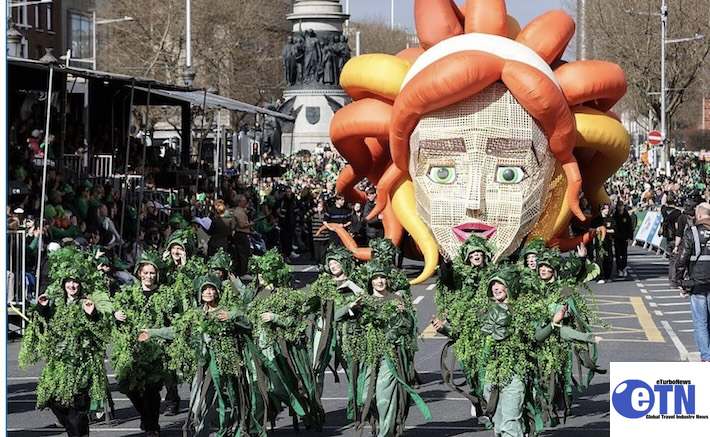
Dublin- On a gray morning that quickly gave way to bursts of green, the streets of Dublin filled with the sounds of drums, laughter, and the low hum of anticipation. By midday, the city had transformed into a moving spectacle—floats winding through Georgian avenues, dancers in step, and visitors pressed shoulder to shoulder with locals along the parade route.
It is St. Patrick’s Daya day that began as a religious observance in honor of Saint Patrickthe 5th-century missionary credited with bringing Christianity to Ireland. Over centuries, the day has evolved into something far larger: a global expression of Irish identity, now stretching well beyond the island itself.
A National Story, Exported Worldwide
In Ireland, the holiday is both intimate and expansive. Families attend church in the morning, while cities host festivals that blend tradition with spectacle. The St Patrick’s Festivalcentered in Dublin, draws hundreds of thousands each year, offering a curated display of Irish music, art and storytelling.
But the reach of the holiday extends far beyond Ireland’s shores. In New York Citywhere the parade dates back to 1762, marchers move up Fifth Avenue in one of the largest celebrations of its kind. In Chicagothe river runs an improbable green. Landmarks in cities from Sydney to London are illuminated in emerald light.
What was once a feast day has become a shared ritual, carried by generations of the Irish diaspora and embraced by millions with no direct connection to Ireland at all.
Tourism and the Power of Visibility

For Ireland, the day is more than symbolic. It’s strategic.
Tourism officials have long recognized St. Patrick’s Day as a moment when the country occupies a rare position: at the center of global attention. Images of crowded pubs, sweeping landscapes and cheerful celebrations circulate widely, shaping perceptions of Ireland as both vibrant and welcoming.
“Visibility is everything,” said one festival organizer. “For a few days each year, Ireland becomes the focus of the world’s imagination.”
That visibility translates into travel. Visitors arrive not only in March but throughout the year, drawn by the images and atmosphere associated with the holiday. Many make their way to sites like that Cliffs of Moheror spend evenings in crowded pubs where traditional music sessions blur the line between performance and participation.
Why Ireland—and Why Now
The appeal of Ireland as a destination lies in a combination of the tangible and the intangible. There are the landscapes—windswept coastlines, patchwork fields, and villages that appear suspended in time. There is also the cultural promise: literature, music and a reputation for hospitality that visitors often describe as unusually personal.
Spring, particularly March, offers an intensified version of that experience. The country is still emerging from winter, but the festival’s energy brings a sense of renewal. By late spring and summer, longer days and milder weather open the countryside to exploration, while autumn offers quieter, reflective travel.
A Global Audience

Ireland.com | Ireland.com
Official website of Tourism Ireland for visitors to the island of Ireland.
The visitors who arrive each year reflect Ireland’s far-reaching connections. Travelers from the United States remain the largest group, often tracing ancestral ties. Visitors from Britain cross easily by air and sea, while growing numbers arrive from continental Europe, including Germany and France. Australia and Canada, both home to large Irish-descended populations, also contribute significantly.
Yet not all who come are searching for heritage. Many are drawn by something less definable: an atmosphere that feels at once celebratory and sincere.
The Meaning of the Moment
As dusk falls over Dublin, the crowds thin slightly, although the city does not quiet. Music spills from doorways, and the glow of green lights reflects off the River Liffey. For locals, the day is familiar, even routine. For visitors, it can feel like entry into a story long told and still unfolding.
St. Patrick’s Day, in its modern form, is no longer confined to a single nation. But in Ireland, where it began, the celebration retains a sense of origin—a reminder that even the most global traditions are rooted in a specific place, shaped by its people, and renewed each year on its streets.