
Das Wichtigste zu diesem Rezept in 30 Sekunden
-
- Zubereitungszeit: 15 Minuten Vorbereitung + ca. 45 Minuten Backzeit
- Schwierigkeit: Einfach
- Das Besondere: Ein geniales One-Drawer-Gericht – die angedrückten Kartoffeln garen direkt im würzigen Bratensaft des Hähnchens knusprig mit.
- Perfekt für: Den unkomplizierten Feierabend, wenn du ohne viel Aufwand ein fantastisches, warmes All-in-One-Gericht genießen möchtest.

Nicht nur perfekt zum Grillen!!
Knoblauch-Käse-Schnecken: Fluffig, käsig und unwiderstehlich
Das Grillwetter zeigt sich aktuell schon das eine oder andere Mal und was braucht macht zum Grillen? Ja, Fleisch und Saucen ist richtig! Aber natürlich auch ein leckeres Baguette, ein Fladenbrot oder eben unsere unwiderstehlichen Knoblauch-Käse-Schnecken!
Wenn der Abend nach mehr verlangt als Pizza
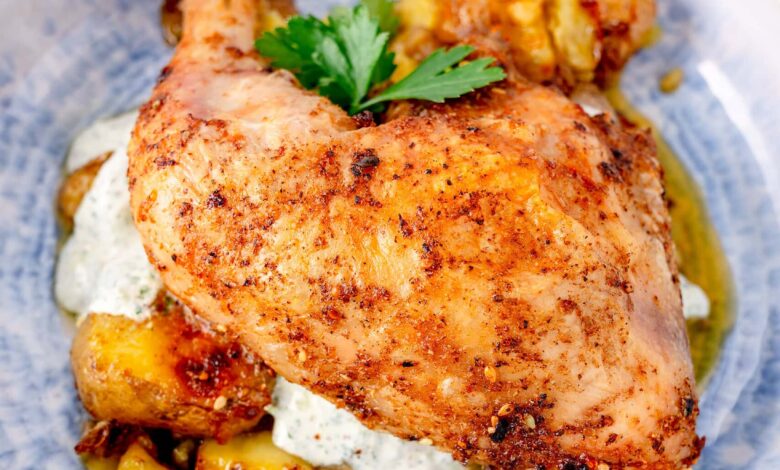
Du kommst nach Hause, der Tag war lang, der Hunger ist real – aber Lust auf stundenlanges Kochen hast du gerade null. Genau für solche Momente sind diese Za’atar Hähnchenschenkel aus der Heißluftfritteuse geboren. Würzig-aromatisch, die Haut goldbraun und knackig-knusprig, das Fleisch darunter butterzart und saftig. Und das Beste? Du brauchst nur ein einziges Gerät, eine Handvoll Zutaten – und bekommst dafür ein komplettes Abendessen auf den Tisch, das nach Urlaub schmeckt.
Za’atar, die aromatische Gewürzmischung aus Thymian, Sumach und Sesam, ist bei uns längst ein Küchenfavorit. Sie bringt dieses unverwechselbare orientalische Flair, das wir so lieben – leicht erdig, leicht säuerlich, voller Tiefe. Kombiniert mit Pul Biber und Zitronenschale entsteht eine Marinade, die die Haut der Schenkel in eine regelrechte Aromenkruste verwandelt. Dazu noch gequetschte Drillinge, die sich mit dem Bratensaft vollsaugen und unglaublich knusprig werden – und ein frischer Kräuterjoghurt, der das ganze Gericht nochmal auf ein anderes Level hebt.
Falls du auch unser Orientalisches Backhendl mit Kartoffel-Gurken-Salat oder die Asiatischen Hähnchenschenkel kennst: Hier geht’s in eine ähnliche Richtung, nur noch entspannter – dank Heißluftfritteuse.

Die wichtigsten Zutaten
Um dieses Gericht so aromatisch und unwiderstehlich lecker zu machen, brauchen wir gar nicht viele Zutaten. Die Kombination und die Qualität machen hier den Unterschied.
Za’atar – die Seele des Gerichts
Za’atar ist keine einzelne Zutat, sondern eine Gewürzmischung, die je nach Region und Hersteller leicht variiert. Im Kern stecken getrockneter Thymian oder Oregano, Sumach für die feine Säure und gerösteter Sesam. Du bekommst Za’atar in türkischen oder arabischen Lebensmittelläden, aber auch in gut sortierten Supermärkten (ich habe dir weiter unten das Gewürz auch verlinkt). Qualitätsunterschiede gibt es durchaus – achte auf ein kräftiges, frisches Aroma. Selbermachen geht natürlich auch: einfach 2 TL getrockneter Thymian, 1 TL Sumach und 1 TL Sesam mischen.
Saftige Hähnchenschenkel mit Haut
Für unser Rezept verwenden wir ganze Hähnchenschenkel mit intakter Haut. Die Haut ist entscheidend, denn sie schützt das Fleisch in der Heißluftfritteuse vor dem Austrocknen und wird durch das Backen unglaublich kross. Achte beim Einkauf am besten auf Bio-Qualität oder Fleisch vom Metzger deines Vertrauens. Die Schenkel bringen von Natur aus etwas mehr Fett mit als eine trockene Brust, was für unser All-in-One-Gericht essenziell ist – denn dieses Fett sorgt später für die perfekten Kartoffeln!
Drillinge – der heimliche Star
Die kleinen Kartoffeln, auch Schmörkes genannt, sind für dieses Rezept ideal: zart, cremig im Inneren und mit dünner Schale, die beim Quetschen herrlich kross wird. Nach dem kurzen Vorkochen werden sie flach gedrückt, sodass die Schnittflächen direkt das Bratfett und den Hähnchensaft aufsaugen. Das Ergebnis? Außen knusprig wie Chips, innen fluffig-weich. Wer keine Drillinge bekommt, nimmt kleine festkochende Kartoffeln.
Griechischer Joghurt – der Geheimfavorit
Vollmundig, leicht säuerlich und cremig – griechischer Joghurt mit mindestens 10 % Fett ist die Basis unseres Kräuterdips. Mit frischer Petersilie, Minze, Knoblauch, Zitronensaft und einer Prise Sumach wird daraus eine Sauce, die wirklich zu allem passt: zum Hähnchen, zu den Kartoffeln, zum Dippen zwischendurch. Der Dip lässt sich übrigens auch wunderbar vorbereiten – im Kühlschrank wird er sogar noch besser.

Die 5 Geheimnisse für perfekte Za’atar Hähnchenschenkel
1. Kartoffeln wirklich gut vorkochen. 15 Minuten in gesalzenem Wasser – sie sollten fast gar sein, bevor sie in die Fritteuse kommen. So werden sie innen cremig und außen knusprig.
2. Richtig quetschen. Nimm ein stabiles Glas oder einen Kartoffelstampfer und drücke jede Kartoffel flach. Je größer die Fläche, desto mehr Knusprigkeit.
3. Marinade großzügig einreiben. Nicht nur die Oberfläche bestreichen – das Öl-Gewürz-Gemisch wirklich unter die Haut arbeiten, wo es geht. Das macht den Unterschied.
4. Kapern erst in der zweiten Runde. Kommen sie von Anfang an rein, verbrennen sie und werden bitter. Nach 30 Minuten zugeben – dann werden sie knusprig-salzig-aromatisch.
5. Den Rost entfernen: Für diesen All-in-One-Trick ist es essenziell, dass du den Einsatzrost (falls vorhanden) aus deiner Airfryer-Schublade nimmst. Die Kartoffeln sollen direkt auf dem Boden liegen, um im herabtropfenden Saft braten zu können.

Was unser Rezept besonders macht
Die meisten Hähnchenschenkel-Rezepte für die Heißluftfritteuse sind gut – aber eben auch austauschbar. Paprika, Salz, Pfeffer. Immer dasselbe. Unser Rezept denkt einen Schritt weiter.
Erstens: Alles in einem Gerät. Kartoffeln und Hähnchen garen gleichzeitig in der Heißluftfritteuse – kein zweiter Topf, kein zweites Blech, keine doppelte Abwäsche. Die Drillinge liegen unten in der Schublade (Rost raus!), die Schenkel kommen obendrauf und tropfen beim Garen nach unten. Das macht die Kartoffeln unwiderstehlich.
Zweitens: Der Gequetschte-Kartoffel-Trick. Diese Methode – vorkochen, quetschen, offen rösten – ist bei uns schon bei den Batata Harra (scharfen Röstkartoffeln) zum Einsatz gekommen. Im Hähnchen-Bratensaft funktioniert sie noch besser. Die Kartoffeln werden von innen cremig und von außen so knusprig, dass man aufpassen muss, dass nicht alle weggefuttert sind, bevor der Rest auf dem Tisch steht.
Drittens: Der Kräuterjoghurt. Wir sagen das nicht leichtfertig: Dieser Dip ist unser absoluter Liebling. Er kühlt, er erfrischt, er balanciert das Würzige der Za’atar-Marinade – und er schmeckt genauso gut als Dip für Fladenbrot, zu anderen Hähnchengerichten oder einfach so aus dem Glas. Ein bisschen wie ein türkisches Tzatziki, aber grüner und frischer. Apropos: Wer klassisches Tzatziki liebt, wird diesen Dip vergöttern.


Schritt für Schritt: So wird’s gemacht
Schritt 1 – Kartoffeln vorkochen (15 Min.) Die Drillinge waschen und in gut gesalzenem Wasser etwa 15 Minuten kochen, bis sie fast gar sind. Abgießen und kurz ausdampfen lassen.
Schritt 2 – Marinade anrühren (3 Min.) 4 EL Öl mit 2 TL Za’atar, 1 TL Pul Biber und dem Abrieb einer Zitrone verrühren. Wer mag, gibt noch eine Prise Salz dazu. Die Hähnchenschenkel damit von allen Seiten einreiben – und wirklich unter die Haut gehen.
Schritt 3 – Fritteuse vorbereiten (2 Min.) Den Rost aus der Schublade der Heißluftfritteuse nehmen. Die abgegossenen Kartoffeln hineingeben und mit einem Glas oder Kartoffelstampfer flach drücken. Nicht zu zaghaft – eine gute, flache Fläche ist das Ziel. Die marinierten Schenkel direkt auf die gequetschten Kartoffeln setzen.
Schritt 4 – Erste Runde backen (30 Min. bei 190 °C) Schublade rein, 190 °C einstellen, 30 Minuten backen. Kein Umdrehen nötig – die Heißluft erledigt das.
Schritt 5 – Kapern und zweite Runde (15 Min.) Schenkel kurz herausnehmen, die Kartoffeln wenden (sie sollten jetzt schön angebräunt sein), 2 TL Kapern gleichmäßig verteilen und die Schenkel wieder obendrauf setzen. Weitere 15 Minuten bei 190 °C – jetzt wird die Haut richtig knusprig-goldbraun.
Schritt 6 – Joghurtdip zubereiten (5 Min.) Während die zweite Runde läuft: Petersilie und Minze fein hacken, Knoblauch pressen, alles mit 175 g griechischem Joghurt vermengen. Mit Zitronensaft, Sumach und Salz abschmecken. Wer mag, mixt alles kurz mit dem Stabmixer zu einer hellgrünen Creme.
Schritt 7 – Servieren Kartoffeln und Schenkel direkt aus der Fritteuse auf einen Teller, Joghurtdip daneben und genießen. Ein Stück Fladenbrot dazu macht das Ganze perfekt.
Für ähnliche Feierabend-Hits aus einem Gerät lohnt sich auch ein Blick auf unser All-in-One-Blech mit Hähnchenschenkeln, Süßkartoffeln und grünem Spargel oder das blitzschnelle Estragon-Hähnchen, wenn es schnell gehen muss.
WERBUNG – AFFILIATE LINKS
Diese Produkte haben wir beim Za’atar Hähnchenschenkel verwendet:
Wenn ihr über diese Produktlinks bei Amazon.de bestellt, bezahlt ihr exakt das Gleiche, aber Amazon gibt einen kleinen Teil des Gewinns an uns weiter und so könnt ihr uns unterstützen.
📖 Rezept
Za’atar Hähnchenschenkel aus der Heißluftfritteuse
Zubereitungszeit
15 Minuten
Kochzeit
45 Minuten
Gesamtzeit
1 Stunde
🥕 Zutaten für das Rezept
- 500 g Kartoffeln Drillinge oder kleine Schmörkes
- 4 Hähnchenschenkel mit Haut
- 2 TL Za’atar Gewürzmischung
- 1 TL Pul Biber alternativ Chiliflocken
- 1 Bio-Zitrone für Schalenabrieb und Saft
- 4 EL Speiseöl
- 2 TL Kapern
- 175 g Griechischer Joghurt 10 % Fett
- 1 Knoblauchzehe
- 5 Stängel frische Petersilie
- 3 Stängel frische Minze
- Etwas Sumach nach Geschmack
- Salz
- Kartoffeln vorkochen: Die 500 g Drillinge (ungeschält) in einem Topf mit gesalzenem Wasser für etwa 15 Minuten weich kochen. Anschließend das Wasser abgießen und die Kartoffeln kurz ausdampfen lassen.
- Marinade anrühren: Die 1 Bio-Zitrone heiß abwaschen, abtrocknen und die Schale fein abreiben. In einer kleinen Schüssel 4 EL Öl mit 2 TL Za’atar, 1 TL Pul Biber (oder Chiliflocken) und dem Zitronenabrieb zu einer Paste vermengen.
- Fleisch vorbereiten: Die 4 Hähnchenschenkel mit einem Küchentuch gründlich trocken tupfen und großzügig mit der Gewürz-Öl-Mischung einreiben.
- Kartoffeln smashen: Den Einsatzrost aus der Heißluftfritteusen-Schublade nehmen. Die vorgekochten 500 g Kartoffeln auf den Boden legen und mit einem stabilen Glas oder Kartoffelstampfer flach anquetschen.
- Erster Backvorgang: Die 4 marinierten Hähnchenschenkel direkt auf die zerquetschten Kartoffeln legen. Alles bei 190°C für 30 Minuten in der Heißluftfritteuse backen.
- Dip zubereiten:In der Zwischenzeit die 5 Stängel Petersilie und 3 Stängel Minze fein hacken. Die 1 Knoblauchzehe schälen und durch eine Presse drücken.
- Dip abschmecken: Die 175 g griechischen Joghurt mit den gehackten Kräutern und dem Knoblauch verrühren. Mit einem Spritzer Zitronensaft, etwas Sumach und einer Prise Salz abschmecken.
- Kapern hinzufügen: Nach 30 Minuten Backzeit die Hähnchenschenkel kurz aus dem Airfryer nehmen. Die Smashed Potatoes einmal wenden und die 2 TL Kapern darüberstreuen.
- Zweiter Backvorgang:Das Fleisch wieder auf die Kartoffeln legen und für weitere 15 Minuten bei 190°C zu Ende backen, bis die Haut knusprig ist.
- Servieren: Die aromatischen Kartoffeln zusammen mit den Hähnchenschenkeln anrichten und den erfrischenden Joghurt-Dip dazu servieren. Guten Appetit!
Häufige Fragen zu Za’atar Hähnchenschenkel Heißluftfritteuse
In unserem Rezept benötigen sie bei 190°C insgesamt etwa 45 Minuten. Diese Zeit ist ideal, damit die Haut wunderbar knusprig wird, das Fleisch am Knochen komplett durchgart und gleichzeitig saftig bleibt.
Das raten wir nicht. Hähnchenbrust ist deutlich magerer und würde bei 45 Minuten im Airfryer viel zu trocken werden. Zudem fehlt das austretende Fett, welches wir unbedingt benötigen, um die Smashed Potatoes am Boden knusprig zu braten.
Za’atar ist eine Gewürzmischung aus dem Orient, die je nach Region Thymian, Oregano, Sumach, Sesam und Salz enthält. Sie schmeckt gleichzeitig erdig, leicht säuerlich und nussig – und passt perfekt zu Hähnchen, Fladenbrot und Joghurt.
Gar kein Problem! Du kannst Pul Biber wunderbar durch gewöhnliche Chiliflocken ersetzen. Wenn Kinder mitessen, kannst du die Schärfe auch komplett weglassen oder durch etwas mildes Paprikapulver austauschen.
Zu fast allem! Er ist wunderbar als Dip zu Fladenbrot, als Sauce zu unserem Hähnchen aus der Heißluftfritteuse oder zu gegrilltem Gemüse. Hält sich abgedeckt 2 Tage im Kühlschrank.

Loss et üch schmecke.

Frau Gernekochen ist in Leben 1.0 Lehrerin an einer Gesamtschule, mit viel Liebe zu ihrem Beruf.
Auf Gernekochen.de ist sie der Chef oder vielmehr die Chefin an der Kamera. Alle Fotos, die ihr hier findet, hat Theres geknipst (bis auf gaaaaanz wenige Ausnahmen). Da sie damit aber nicht mal ansatzweise ausgelastet ist, kümmert sie sich um den Auftritt auf Pinterest.
Zusätzlich ist sie auch das Gesicht in den Instagram Stories und bereichert unseren Content mit vielen leckeren Rezepten.
Ihre Vorlieben liegen in der italienischen Küche. Aber auch Kuchen und Gebäck aller Art oder Schmorgerichte, wie ihr unübertroffenes Gulasch, gehören zu ihren Steckenpferden.