


You take the broccoli out of the fridge, turn it over – and discover spots. Brown in one place, a yellowish tinge in the other. Does it have to go in the trash now? In most cases not. Dark spots on broccoli have very different causes, and not all of them mean spoilage. Yellow discoloration is even completely unproblematic; small, dry brown spots can be cut away. Only if there are black, furry or muddy areas with a musty smell is it over – then the whole head needs to be thrown away.
Before you spend a long time twisting and turning your head, it helps to take a look at the type of discoloration. It almost always tells you what to do:
| discoloration | What’s behind it | What to do |
|---|---|---|
| Yellowish florets | Beginning of flowering, natural ripening step | Eat without hesitation |
| Small, dry brown spots | Pressure, transport, age | Cut away generously and use the rest |
| Soft, watery brown spots | Too much moisture in the bag | Remove affected florets and use the rest quickly |
| Black, furry spots + musty smell | Mold | Discard the entire head |
| Soft, mushy spots + foul smell | Rot | Discard the entire head |
Where do dark spots on broccoli come from?
The most common cause is moisture. If the broccoli goes into the vegetable compartment tightly wrapped in plastic wrap, the air cannot circulate. Condensation collects between the florets and soft, brownish-black spots form right there. They feel flexible when tapped – a clear difference to a dry pressure point.

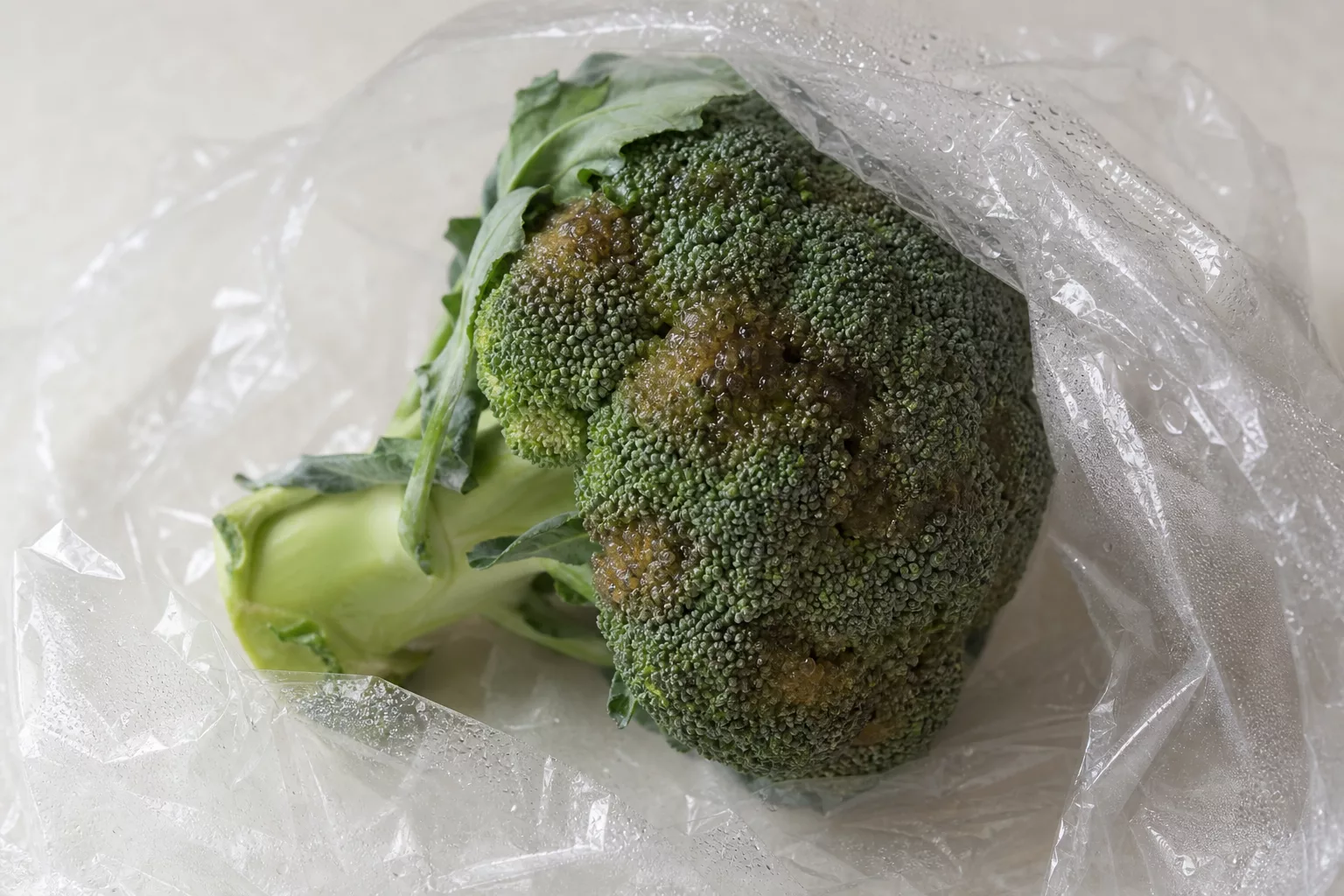
Small, dry brown dots are much more harmless. They usually come from pressure during transport or simply from getting older. The broccoli loses some of its bite and flavor, but remains edible. As long as the rest of the head is firm and smells fresh, it is sufficient to cut off the affected tips.
The third cause is the most serious. If furry black spots form, or areas become soft and mushy with a putrid, musty smell, mold or rot has set in – a case for the bin, not a case for the knife.
Yellow spots are not an error – what lies behind them
Things look completely different with yellow. What many consider a sign of doom is actually pure botany: the broccoli we eat is made up of densely packed flower buds. If it doesn’t get enough cold or if it lies for a few days too long, the flowering process will begin. The buds open and shimmer yellow.

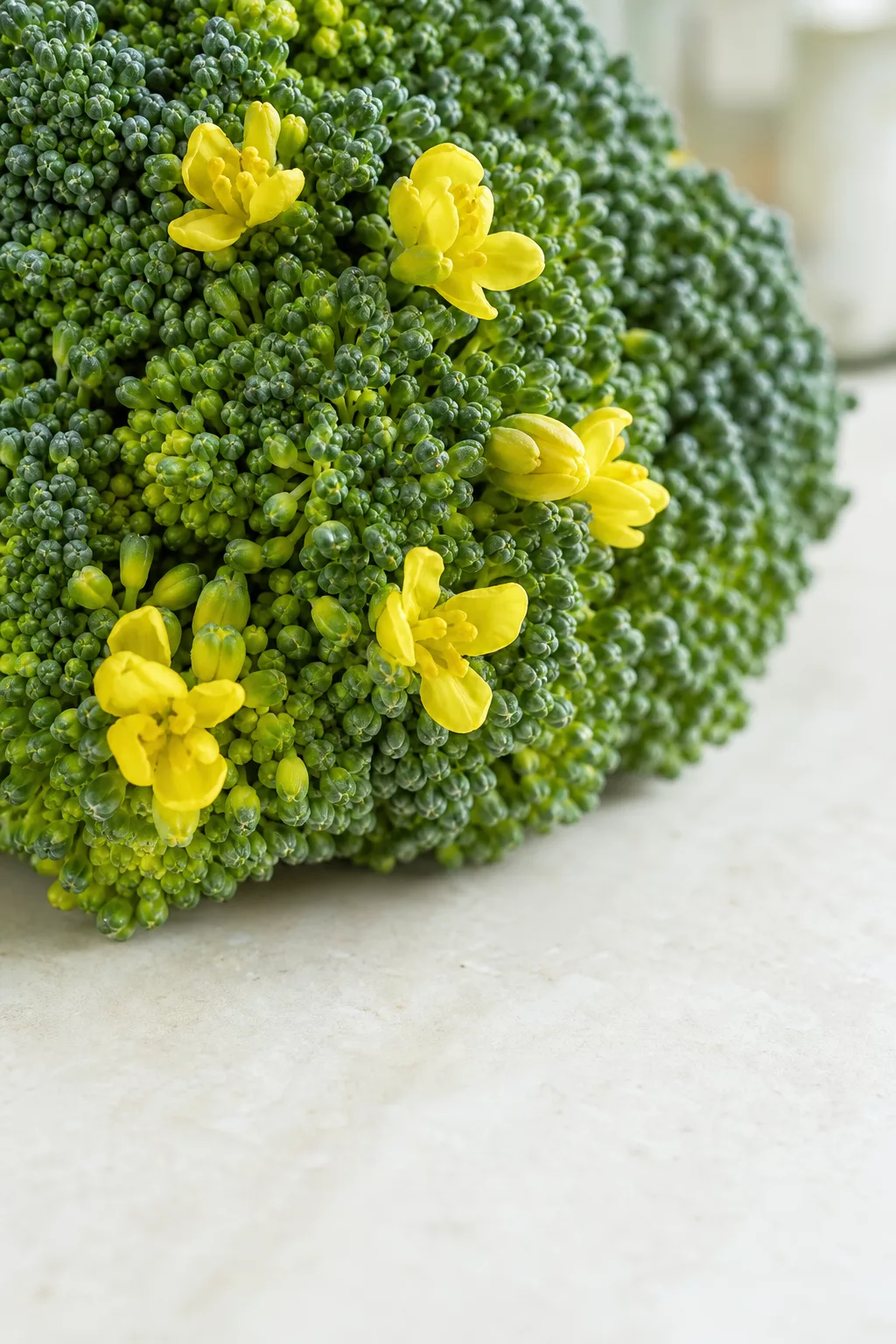
This is completely harmless to health. The broccoli tastes at most a touch milder and the nutrient content drops slightly – nothing more happens. In a soup, casserole or puree you hardly notice the difference anyway. Only when the florets turn brown or become soft do the other causes come into play.
A yellowish head is still a signal to use it up soon: the flowering progresses and with it the taste and structure decrease. If you want to stop this, store broccoli consistently in a cold place – warmth encourages it to bloom.
Cut away or throw away? The clear boundary
The decision can be boiled down to a simple rule of thumb. If the dark areas are small, dry and limited, and the rest of the head is firm and smells fresh, then cut away generously – just one to two centimeters into the healthy tissue. The rest ends up in the pan without any worries.
The most reliable test requires no eyes: smell your head and press it lightly. Fresh broccoli smells neutral to slightly charcoal and has little yield. A sweet, putrid or sulfurous smell is a clearer warning sign than any discoloration.
This does not apply to mold. As soon as a spot is furry and black or the broccoli smells musty, you should discard the entire head. When it comes to water-rich vegetables, the Lower Saxony State Office for Consumer Protection and Food Safety expressly recommends that visibly moldy foods be thrown away completely instead of just cutting out the affected area – the spores may have long since spread invisibly in the damp tissue.
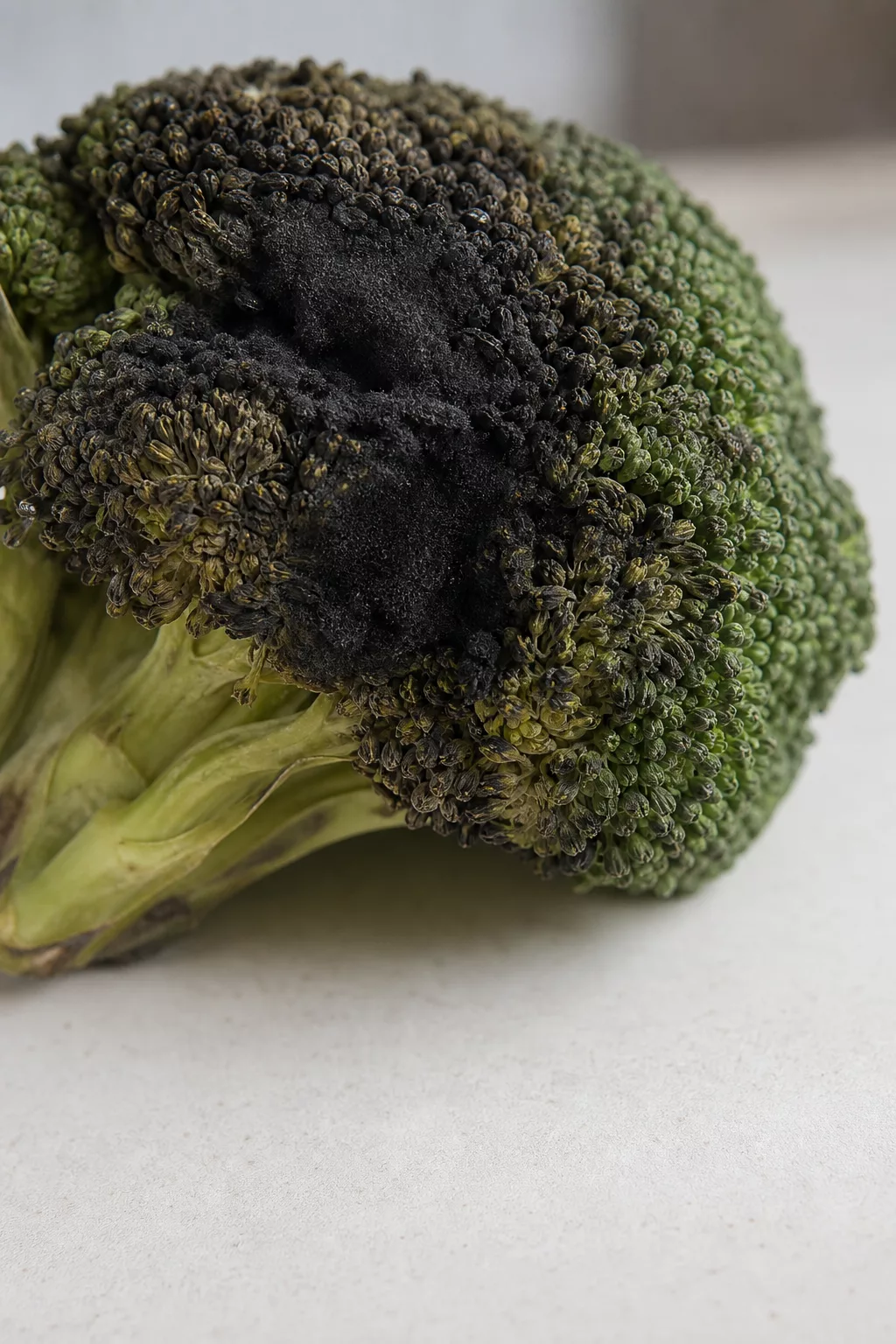
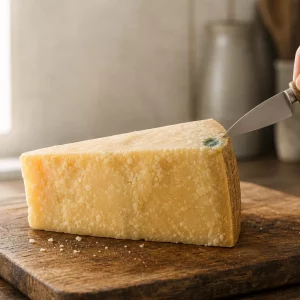
By the way, not every light-colored coating is the same as mold: With Parmesan, for example, mold can be distinguished from harmless crystals. With broccoli, on the other hand, furry black is a clear stop signal – there is no harmless possibility of confusion here.
Store broccoli properly so that it stays fresh longer
To ensure that soft spots do not develop in the first place, the most important thing is storage. Broccoli stays crunchy for the longest time if it goes into the vegetable compartment unwashed – only wash it shortly before cooking, otherwise the residual moisture will accelerate deterioration. Also pack it loosely: a perforated bag or a slightly damp cloth keeps the florets crisp without moisture building up. Airtight film is the most common reason for soft spots.
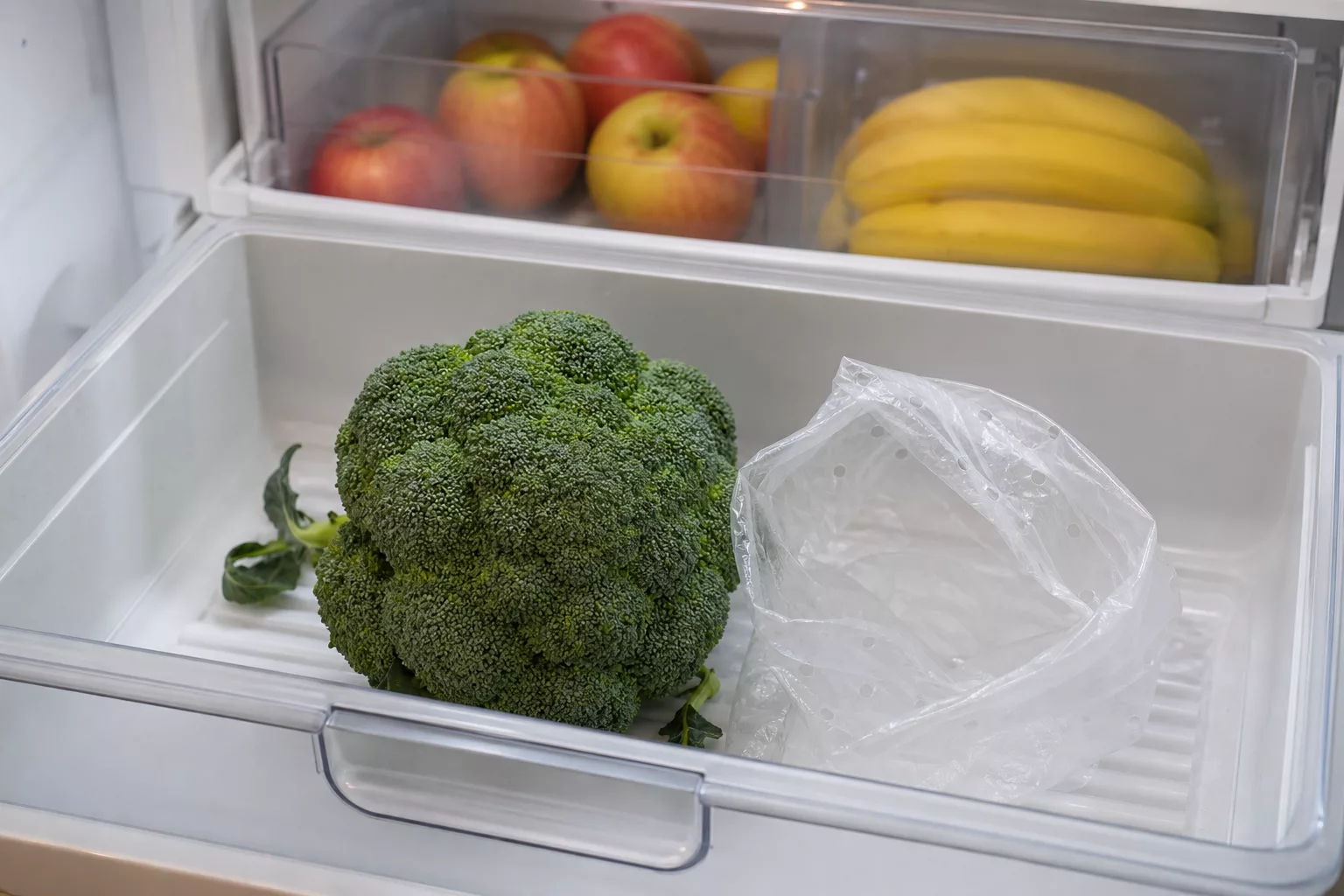
There’s a lot to gain when you buy them: choose heads with tightly closed, dark green florets and a crisp cut surface on the stalk. Buds opening or turning yellow mean the clock is already ticking.
One point is often overlooked: Broccoli ripens using the ripening gas ethylene. Therefore, do not store it directly next to apples, bananas or tomatoes that give off this gas – otherwise it will yellow and wilt more quickly. It is best to use it within three to five days of purchase. If you often struggle with condensation in the vegetable drawer, you will find a trick for more freshness in the refrigerator and when it comes to avoiding condensation in food packaging, there are other tricks that also benefit broccoli.
What’s Hot

Cook and enjoy
Parmesan is moldy: detect crystals or mold
Frequently asked questions
Can you still freeze broccoli with dark spots?
Freezing doesn’t stop spoilage that’s already underway – it just puts it on ice. Therefore, only freeze flawless florets and cut away any dark or soft areas beforehand. It’s best to blanch the florets for two to three minutes, rinse them in cold water and pat them dry – this way the color and bite are retained even after months in the freezer.
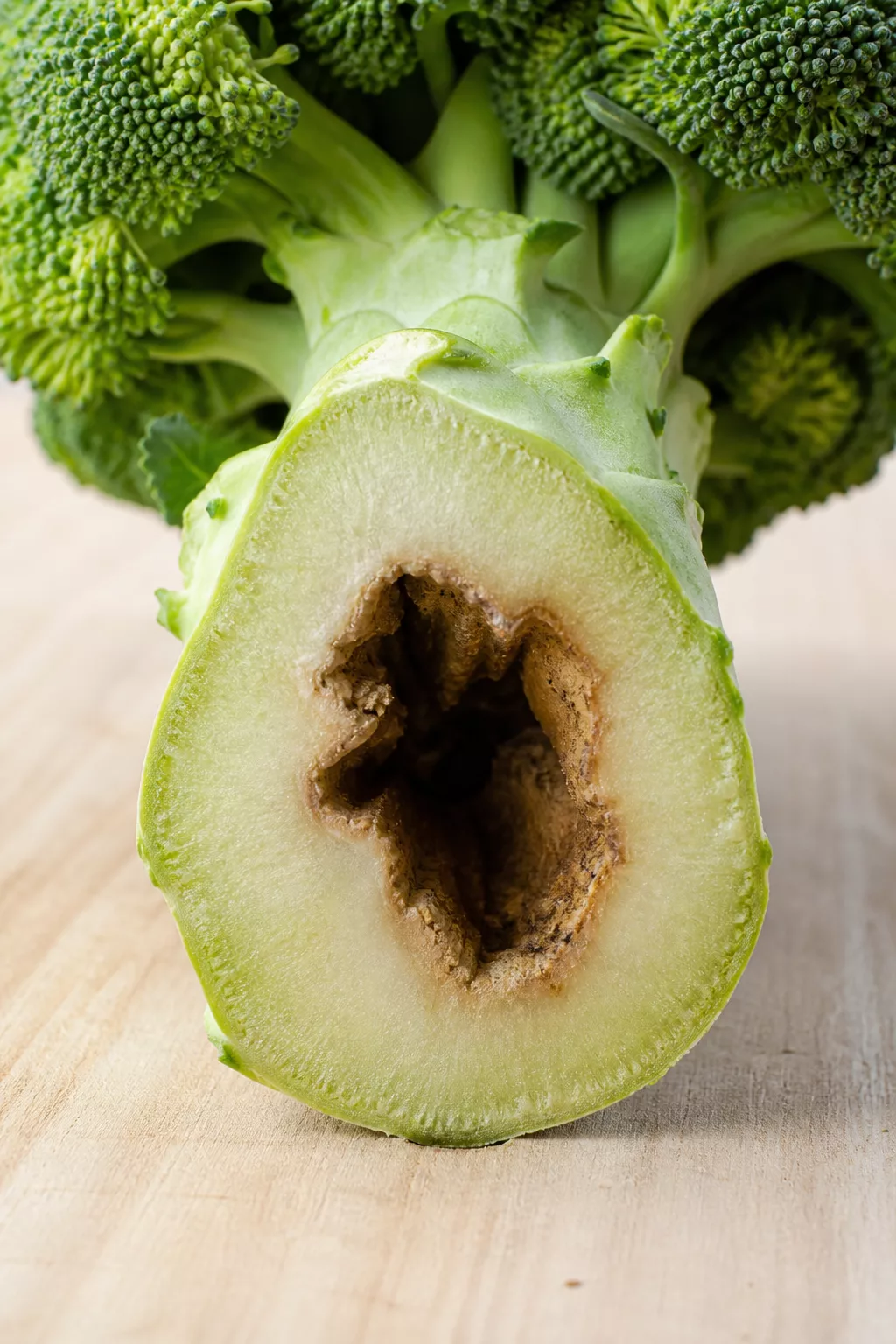
Why is the broccoli stem brown or hollow inside?
A brown or hollow stem usually has nothing to do with your storage. It occurs in the field when the plant lacks boron during growth. The discoloration only affects the stem, not the florets. Simply cut out the hollow, brownish core generously – the rest can be used as normal.