


Uganda has joined the World Travel and Tourism Council as a Destination Partner, signaling a broader shift in global tourism governance. As WTTC expands beyond private industry to include governments, it is reshaping collaboration in a sector traditionally divided between public institutions and corporate leaders.
Madrid-Kampala: The global tourism landscape is undergoing a subtle but meaningful transformation. This week, the World Travel and Tourism Council (WTTC) welcomed Uganda as its newest Destination partnermarking another step in the organization’s evolving role as a bridge between private industry power and public sector participation.
What “Destination Partner” Means
Within WTTC’s structure, a Destination partner is typically a government tourism authority or national destination body that collaborates directly with the private-sector-led council. Unlike its traditional core membership—dominated by CEOs of global travel giants—this category allows countries to align their national tourism strategies with global industry leaders.
WTTC currently counts around 40 destination partners, including major tourism economies such as the United States, France, Spain, and Saudi Arabia.

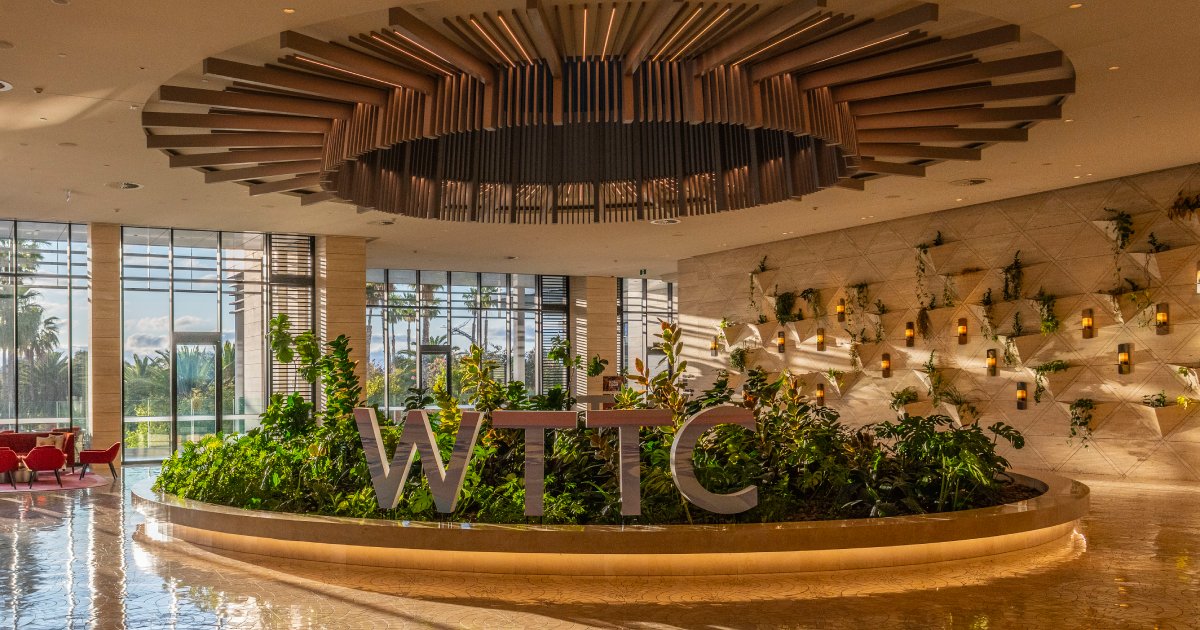
World Travel & Tourism Council
The World Travel & Tourism Council (WTTC) represents the Travel & Tourism sector globally.
Uganda’s Strategic Entry
Uganda’s inclusion is far from symbolic. Known for its biodiversity, mountain gorillas, and rapidly expanding tourism infrastructure, the country has steadily positioned itself as one of Africa’s most promising travel destinations. Its tourism strategy emphasizes sustainability, conservation, and community-based experiences—priorities that align closely with WTTC’s global agenda.
By joining WTTC, Uganda gains direct access to the world’s most influential tourism executives while strengthening its visibility among investors and policymakers.
A Quiet Power Shift in Global Tourism Governance
For decades, global tourism has been shaped by two distinct forces: the public-sector-driven UN Tourism and the private-sector-led WTTC. While UN Tourism has traditionally coordinated government policies, WTTC has represented the economic engine of the industry—major airlines, hotel groups, and travel corporations.
However, several leading tourism economies, including the United States, Canada, the United Kingdom, and Australia, have at times distanced themselves from UN Tourismm frameworks, amid criticism about governance challenges and political influence.
Against this backdrop, WTTC has been quietly expanding its reach beyond the private sector.
Closing the Gap Between Public and Private
At the same time, a direct cooperation between the World Travel and Tourism Council and UN Tourism is beginning to close the long-standing gap between private and public sector leadership. This alignment is creating a more unified global framework, where policy, investment, and industry execution are no longer operating in parallel—but increasingly in partnership.
This evolving collaboration reflects a broader recognition: tourism cannot thrive without both effective government frameworks and the agility of private enterprise.
Private sector, public impact
WTTC’s growing inclusion of destination partners signals a hybrid model in which governments participate on a platform traditionally dominated by business leaders. This allows for faster decision-making, reduced political friction, and policies more closely aligned with market realities.
Under the leadership of CEO Gloria Guevara, WTTC has also strengthened its influence at the highest levels. A recent delegation visit to the White House—conducted outside the usual formal diplomatic channels—highlighted the organization’s unique ability to engage governments in a more flexible and results-driven way.

Gloria Guevara Emerges as Global Tourism’s Key Power Broker Amid US Travel Tensions
As CEO of the World Travel & Tourism Council, Gloria Guevara is navigating geopolitics and business interests while addressing declining US tourism, promoting solutions like Global Entry, and positioning the private sector as a critical voice in global travel policy.
Uganda as a Signal of Momentum
Uganda’s entry reinforces a growing trend: destinations are seeking more dynamic, business-oriented platforms to position themselves globally. For emerging tourism markets in particular, WTTC offers access, visibility, and influence that complement traditional intergovernmental channels.
A New Model for a Turbulent Era
In today’s complex geopolitical environment, tourism faces challenges that demand coordination across borders, sectors, and ideologies. The traditional divide between public and private leadership is increasingly giving way to more integrated approaches.
WTTC’s evolution—bringing governments and industry leaders together under one roof—may represent a pragmatic path forward. Uganda’s membership is not just an addition to a list; it is part of a broader shift redefining how global tourism is led.
As cooperation between institutions such as WTTC and UNWTO deepens, the industry may finally be moving towards a more cohesive, effective, and resilient global framework—one where collaboration, rather than competition, sets the course for the future of travel.