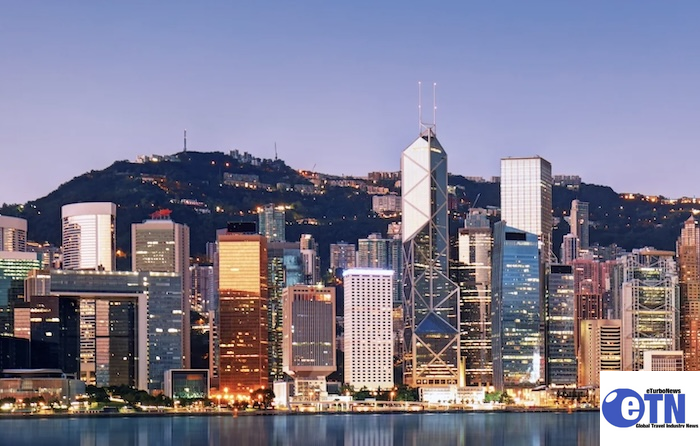
Hong Kong SAR, China — Hong Kong has the potential to reclaim its position as one of the world’s leading travel destinations, but must strategically diversify its visitor base and invest in high-value markets, according to new research from the World Travel & Tourism Council (WTTC).
The report, “Travel & Tourism in Hong Kong SAR, China: Recovery, Gaps, and the Road Ahead,” highlights the urgent need for the city to expand beyond its heavy reliance on Mainland China, which accounted for 76% of inbound arrivals in 2025. International markets made up just 24%, underscoring a critical imbalance in Hong Kong’s tourism recovery.
While inbound arrivals are forecast to reach 50.3 million in 2025, this remains 22.9% below the 2018 peak of 65.3 million visitors. Business travel spending is also lagging, projected to remain 16.8% below pre-pandemic levels due to the lingering effects of the 2019 civil unrest and the global COVID-19 crisis.
Despite these challenges, Travel & Tourism continues to be a cornerstone of Hong Kong’s economy. WTTC estimates the sector will contribute US$56.4 billion—equivalent to 13.6% of GDP—and support approximately 587,000 jobs in 2025. The industry has rebounded to 98.5% of pre-pandemic levels, driven largely by domestic demand, which has risen 15.5% since 2018.
However, international visitor spending remains 15% below 2018 levels, placing Hong Kong behind regional competitors. Singapore and Macao SAR are expected to surpass their pre-pandemic benchmarks in 2025, highlighting the urgency for Hong Kong to sharpen its global competitiveness.
Five Strategic Priorities
To accelerate recovery and growth, WTTC outlines five key recommendations:
- Re-energize Business Travel: Reinforce Hong Kong’s status as a global MICE hub by offering targeted incentives and simplifying entry procedures for international event organizers.
- Rebuild Long Haul Demand: Strengthen ties with airlines and promote the destination across Western markets including the United States, United Kingdom, and Europe.
- Rethink Tourism Offerings: Evolve beyond a retail-centric image by showcasing Hong Kong’s culinary excellence, cultural heritage, and vibrant festivals.
- Enhance Visitor Value: Encourage longer stays—currently forecast at 3.1 nights in 2025—through curated itineraries and neighborhood exploration.
- Strengthen Collaboration: Align government, the Hong Kong Tourism Board, and private stakeholders under a unified tourism strategy.

Gloria Guevara, President & CEO of WTTC, emphasizes Hong Kong’s enduring strengths: “Hong Kong SAR, China remains a global powerhouse, defined by world-class infrastructure and a unique cultural DNA that bridges East and West. Recovery is being driven by bold vision and strong partnerships.”
Investment and Infrastructure Driving Momentum
The Hong Kong SAR Government has committed HK$1.6 billion to tourism development for 2026–27, focusing on major events, festivals, and international marketing. The Hong Kong Tourism Board plans to expand outreach to emerging markets in ASEAN, the Middle East, and India, while also targeting Mainland cities beyond Guangdong.
Infrastructure developments are also reinforcing Hong Kong’s global connectivity. In 2025, Hong Kong International Airport ranked as the world’s fastest-growing airport by seat capacity, and the Hong Kong–Taipei route became the busiest international route globally, according to OAG.
As the city navigates its next phase of recovery, WTTC’s report makes clear that Hong Kong’s future success will depend on diversification, innovation, and coordinated action—positioning the destination not just to recover, but to lead in a rapidly evolving global tourism landscape.