


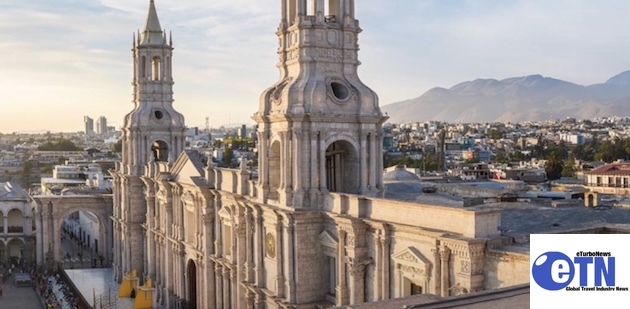
The World Bank has approved a US$77.2 million project to transform Peru’s Arequipa–Colca tourism corridor through major investments in tourism infrastructure, transport, heritage conservation, water and sanitation, and destination management. The initiative aims to boost sustainable tourism, attract private investment, and create thousands of jobs across southern Peru.
LIMA, Peru — The World Bank has approved a US$77.2 million package to support the financing development of Peru’s Arequipa–Colca tourism corridora flagship initiative designed to strengthen tourism infrastructure, protect cultural and natural heritage, and drive sustainable economic growth across one of the country’s most iconic travel regions.
The project, approved by the World Bank’s Board of Executive Directors, represents one of Peru’s first truly multisectoral regional investment programs, combining tourism development with transport, water and sanitation, healthcare, environmental conservation, and destination management. Officials say the initiative is expected to attract private investment, generate thousands of jobs, and expand economic opportunities for women, young people, artisans, farmers, and local communities throughout southern Peru.
“This project represents a new approach to regional development in Peru, bringing together investments in tourism, roads, water and sanitation services, environmental sustainability, and destination management to strengthen the Arequipa–Colca corridor,” said Ariel YepezWorld Bank Division Director for Bolivia, Chile, Colombia, Ecuador, Peru, and Venezuela.
“By making the region more attractive to visitors and investors, it can help unlock private investment, create quality jobs and expand opportunities for communities in southern Peru.”
What is the Arequipa–Colca tourism corridor?
The Arequipa–Colca tourism corridor is one of Peru’s most important tourism routes, stretching from the UNESCO-listed city of Arequipa to the spectacular Colca Canyonone of the world’s deepest canyons.
The corridor links several of southern Peru’s most significant cultural, natural and adventure tourism attractions, including:
- The Historic Center of Arequipa, a UNESCO World Heritage Site renowned for its white volcanic stone architecture.
- The Colca Canyon, famous for dramatic landscapes, hiking, hot springs, and one of the best places in the world to observe the majestic Andean condor.
- Traditional Andean villages such as Chivay, Yanque and Cabanaconde.
- Indigenous communities preserving centuries-old agricultural terraces, textile traditions and cultural festivals.
- Protected natural landscapes and high-altitude ecosystems inhabited by vicuñas, alpacas and diverse birdlife.
The route also serves as a gateway to southern Peru, connecting travelers with Lake Titicaca, the Cusco region and other destinations in the country’s southern tourism circuit.
A corridor with enormous untapped potential
Despite being one of Peru’s best-known destinations, tourism experts believe the Arequipa–Colca corridor has significant room for growth.
Visitor numbers remain concentrated around a handful of attractions, while infrastructure gaps, limited visitor services, insufficient environmental management, and uneven investment have constrained longer stays and higher tourism spending.
The new World Bank-backed program aims to address those challenges by improving:
- Road connectivity and transport access.
- Water and sanitation systems.
- Healthcare and emergency services for visitors and residents.
- Conservation of natural and cultural heritage.
- Destination management and tourism planning.
- Visitor facilities and tourism services.
- Environmental sustainability measures.
The investments are designed around market demand, focusing on expanding cultural, nature and adventure tourism while improving the overall visitor experience.
By creating a more integrated tourism destination, authorities hope visitors will stay longer, spend more locally, and explore a wider range of communities and attractions across the region.
Driving investment and local development
Tourism is among Peru’s most labor-intensive industries and remains a critical source of employment for small businesses and rural communities.
The World Bank estimates the project will support thousands of direct and indirect jobs throughout the tourism value chain, benefiting hotels, restaurants, transport operators, guides, artisans, agricultural producers and community-based tourism enterprises.
Officials also expect the improved tourism environment to encourage new private investment in accommodation, hospitality, adventure tourism, gastronomy and cultural experiences throughout the corridor.
The project will be implemented by the Regional Government of Arequipawith technical support from Peru’s Ministry of Foreign Trade and Tourism (MINCETUR).
Strengthening Peru’s tourism industry
Tourism remains a strategic pillar of Peru’s economy. Before the COVID-19 pandemic, the country welcomed more than 4 million international visitors annually, supported by globally recognized attractions such as Machu Picchu, the Sacred Valley, the Amazon rainforest, the Nazca Lines, Lake Titicaca and Arequipa.
While international arrivals have been steadily recovering, the government has increasingly focused on diversifying tourism beyond traditional destinations by developing regional tourism corridors that distribute economic benefits more broadly.
The Arequipa–Colca initiative reflects that strategy, seeking to strengthen southern Peru as a world-class destination for cultural heritage, outdoor adventure, wildlife, gastronomy and sustainable travel.
Beyond attracting more visitors, the project also serves as a model for integrated regional development by combining infrastructure, environmental protection and tourism planning into a single investment framework.
According to the World Bank, the program could become a blueprint for future subnational development initiatives across Peru and Latin America, demonstrating how targeted public investment can unlock regional economic potential while preserving the cultural and natural assets that make destinations unique.