


With the WIN initiative, twelve billion euros are expected to flow into startups and scaleups by 2030. The first report shows progress – but there is also clear criticism of the pace and strategy.


WIN initiative on track: Together with the Federal Ministry of Finance and the Federal Ministry of Economics, KfW has presented the first annual report on the program for growth and innovation capital. The balance for 2025 is positive. But representatives of Alliance 90/The Greens and Bitkom President Ralf Wintergerst warn: Despite progress, there are still crucial adjustments to be made.
This is what the WIN initiative is all about
The initiative was founded in September 2024 under the traffic light government of the Federal Ministry of Finance, Federal Ministry of Economics, Federal Chancellery, KfW, companies and associations to mobilize private capital for startups and scaleups in Germany.
This includes investments in young companies – as direct investments, through venture capital funds or funds of funds. Further investments include debt capital for these companies. The goal is to achieve investments of twelve billion euros by 2030. KfW coordinates the WIN initiative on behalf of the federal government.
Read too


These are the results of the report
The results of the annual report: By the end of 2025, 2.64 billion euros of a total of 12 billion euros in committed commitments had been invested in the market. Thematically, investments are concentrated in young companies with a focus on AI, climate and security and defense technologies.
61 percent of the capital flows to Germany. 37 percent of investments flow into the European market, according to a statement from the Federal Ministry of Finance, the Federal Ministry for Economic Affairs and Energy and KfW. Around 67 percent of the billions flowed into scaleup companies in advanced growth phases. Ten percent went to startups, 18 percent was invested as seed capital in early-stage founders.
A large part of the funds flowed into classic venture capital funds (51 percent). Direct investments in companies account for eight percent, venture capital funds of funds six percent.
Read too

“We are continuing to work on strengthening the competitiveness of Germany as a business and innovation location. We want to achieve technological leadership in key areas,” says Vice Chancellor and Federal Finance Minister Lars Klingbeil. “With the Location Promotion Act, the federal government has also significantly improved the framework conditions for young and innovative companies. This creates the jobs of tomorrow and strengthens our sovereignty.”
Praise for progress in startup funding
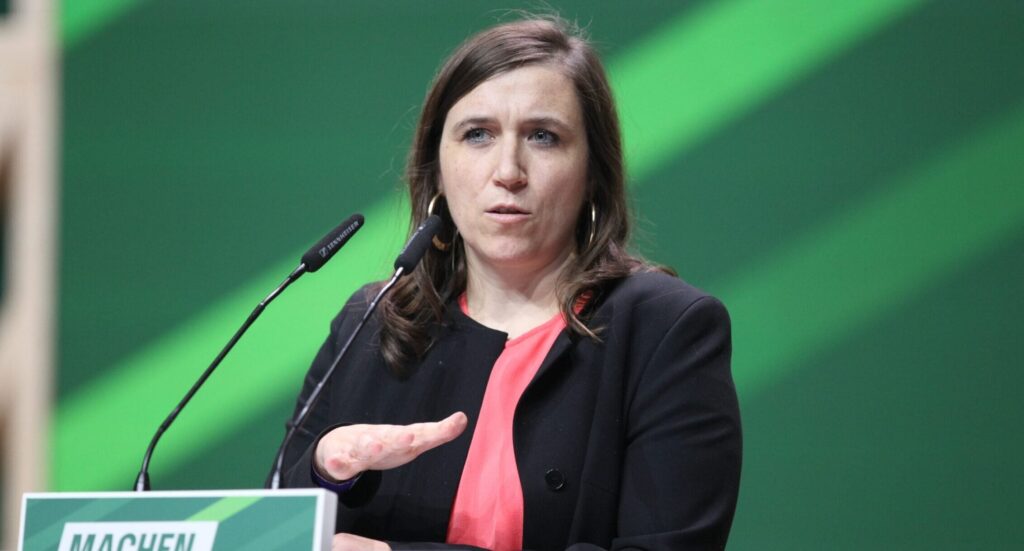
Recently, the Alliance 90/The Greens sharply criticized the implementation. Now there are words of praise from Katharina Beck (Alliance 90/The Greens), spokeswoman for financial policy and rapporteur: “The WIN initiative is on track, which is finally good news for Germany as a startup location after a year of great inaction by the new federal government. 2.64 billion euros in just over a year, 6 out of 10 measures implemented, pension funds with more scope for VC investments thanks to the increased risk capital quota, location support law passed. This shows that It cost the taxpayer nothing to make this approach work.”
The Greens are calling for concrete steps towards the 25 billion target
Nevertheless, there are still problems in some areas, in particular the Federal Government’s communication strategy is criticized by the Greens. No press conference, hardly any communication from the federal government – it was simply too quiet around the report. “Rich people and Klingbeil obviously fail to recognize the huge potential of the WIN initiative. Anyone who wants to attract new investors and mobilize further commitments must also publicly advocate for it.” This signal remains missing.
Read too

And the Greens have another demand, because the federal government has formulated the goal in the coalition agreement of doubling the capital to over 25 billion euros. But: “A doubling requires that the federal government acts consistently. There is no sign of that,” says Katharina Beck. That’s why she demands that the government now support the planned doubling.
Bitkom demands more speed
The four WIN measures that are still open, including the strengthening of umbrella fund structures and the reform of private pension provision, should also be implemented quickly, said Beck. “At the European level, Germany needs a stronger negotiating position in the 28th regime, a uniform legal framework that would make setting up and scaling in Europe easier for everyone.”
The digital association Bitkom also warned in a statement that further steps are needed to really close the growth capital gap. “Exactly where it really counts, those involved in the WIN initiative still owe it to implementation,” says Bitkom President Dr. Ralf Wintergerst. “It must become more attractive for foundations and family offices to invest in startups.
And above all, pension funds and pension funds must invest part of their capital in young technology companies – both sides would benefit from this because broad sections of the population could then also participate in the success of startups. And finally, investors who got involved in startups early on, such as business angels, must also be able to resell their shares.” He calls for more visibility for these issues and for politicians to move much more quickly.