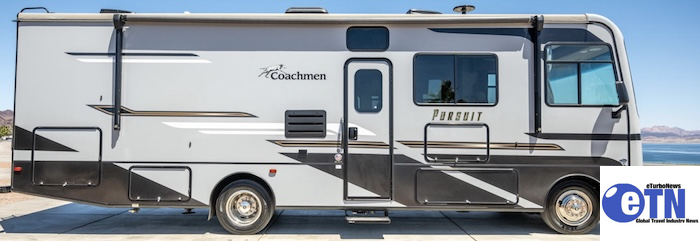
Motorhome travel is transforming global tourism, offering travelers freedom, flexibility, and immersion. Once defined by the American road trip, the trend now spans Australia, Europe, and beyond. But shifting politics, rising costs, and changing perceptions are reshaping where—and why—travelers choose to explore the open road.
A global idea of freedom
The promise is simple: a vehicle, a map, and the freedom to go wherever the road allows. For decades, the United States defined that promise, exporting an image of the open road that travelers from around the world came to experience firsthand.
But today, that idea is no longer uniquely American.
From the coastal highways of Australia to the alpine passes of Europe, motorhome travel has become a global language of tourism—adapted, reshaped, and, in some cases, rivaling the very country that popularized it.
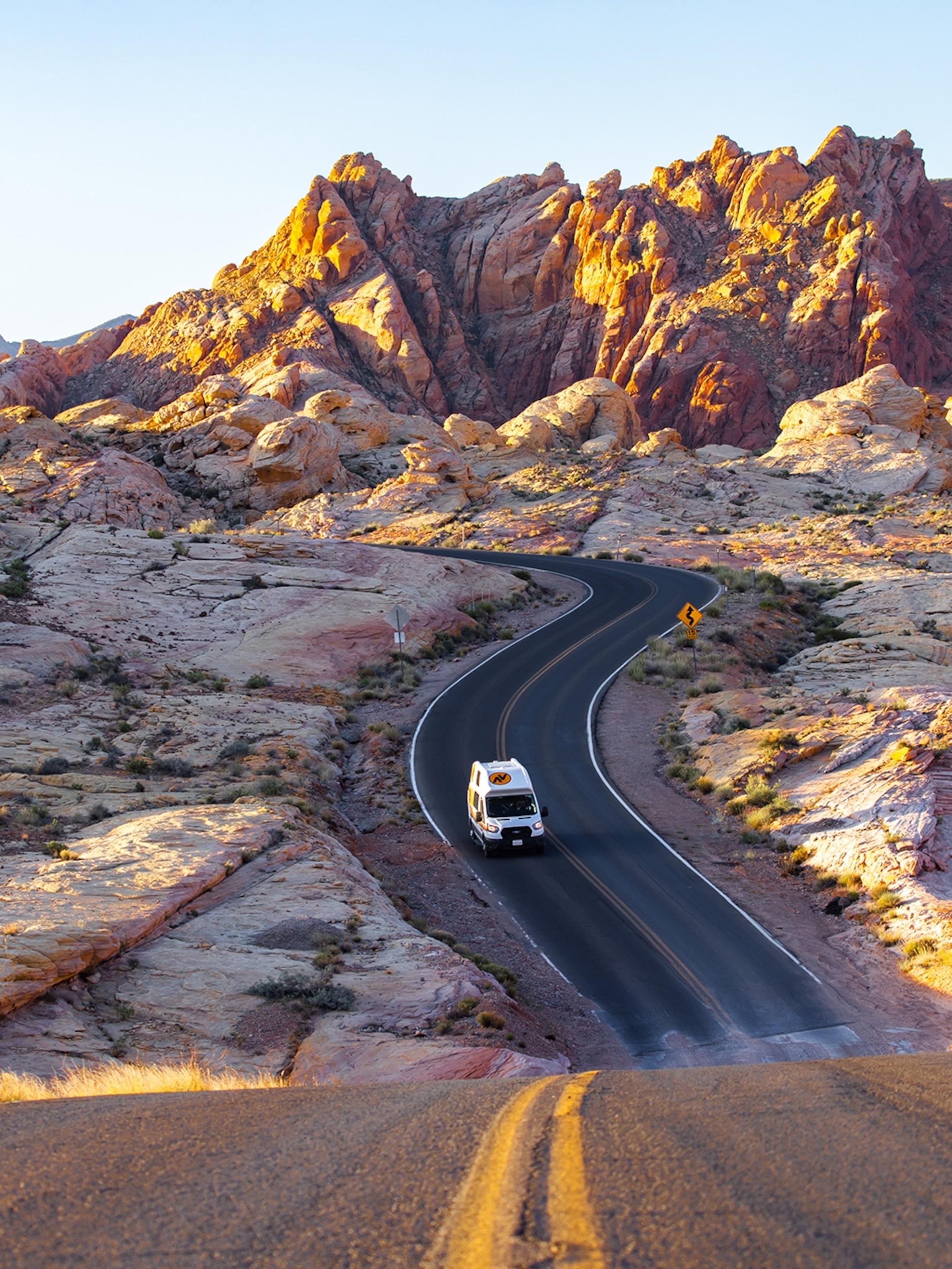
Scale, myth, and friction
The United States remains the benchmark.
Routes anchored by Yellowstone National Park, Grand Canyon National Park, and the Pacific Coast Highway offer a scale and diversity difficult to replicate elsewhere. The mythology—of endless highways and wide horizons—still draws visitors from Germany, the Netherlands, Australia, and beyond.
Yet that appeal now competes with new realities.
In recent years, international arrivals to the US have softened, influenced in part by stricter border policies, visa hurdles, and shifting global perceptions during and after the presidency of Donald Trump. Industry observers point to declines in visitors from Canada and parts of Europe, traditionally core markets for long-distance RV travel.
At the same time, federal investment in national parks—through legislation like the Great American Outdoors Act—has improved campgrounds and infrastructure, reinforcing the country’s physical appeal even as access becomes, for some, more psychologically distant.
The result is a paradox: the roads may be better maintained, but fewer foreign travelers may be choosing to drive them.
Nature, simplified

When the United States invented the modern road trip, Australia and New Zealand have refined it.
Here, motorhome travel is not just popular—it is often the default for international visitors.
- In Australiaroutes like the Great Ocean Road and journeys through the Outback offer dramatic scenery with relatively low population density.
- In New Zealanda compact geography delivers glaciers, mountains, and coastlines within short driving distances.
Crucially, both countries have built systems around the traveler:
- Clearly designated campervan routes
- Abundant, well-maintained campsites
- Infrastructure tailored to short-term renters
For many visitors, the experience is less intimidating than in the US Distances are manageable, signage is consistent, and planning is simplified.
“Everything feels designed for you to do this,” said a French traveler in Queenstown. “You don’t have to figure it out as much.”
Density and regulation
Europe presents a different interpretation of motorhome travel—less about vastness, more about access.
Countries such as Germany, France, and the Netherlands have strong domestic RV cultures, supported by dense networks of campsites and well-developed road systems. Travelers can move easily between countries, sampling cultures in ways impossible in the United States.
But the experience is more structured:
- Wild camping is often restricted
- Campsites are regulated and sometimes crowded
- Routes are shorter, destinations closer together
For international visitors, Europe offers a variety on a large scale. A two-week trip might include the Alps, the Mediterranean, and historic cities—an intensity of experience that contrasts with the long, meditative drives of the American West.
The leading trade voice of the RV industry | RVIA
Often overshadowed by its southern neighbor, Canada offers a version of the American experience with fewer crowds.
Its national parks—Banff, Jasper, and beyond—combine vast wilderness with high-quality infrastructure. For some travelers, especially Europeans, Canada represents a middle ground: the scale of the US, but with a perception of greater ease at the border and a calmer travel environment.
Motorhome travel in Asia remains in its early stages, but interest is growing.
Japan and South Korea, in particular, are investing in infrastructure and promoting domestic road travel. However, density, regulation, and limited camping culture mean the experience differs significantly from Western models.
For now, Asia is less a competitor than a developing market—one watching the evolution of motorhome tourism elsewhere.
Across continents, the decision often comes down to trade-offs:
United States
- Strengths: unmatched scale, iconic routes, deep cultural narrative
- Challenges: complex planning, long distances, shifting perceptions of entry
Australia & New Zealand
- Strengths: ease of use, strong infrastructure, concentrated natural beauty
- Challenges: distance from major markets, seasonal constraints
Europe
- Strengths: cultural diversity, accessibility, shorter travel times
- Challenges: less spontaneity, regulatory limits on camping
Canada
- Strengths: wilderness, infrastructure, quieter experience
- Challenges: shorter season, higher costs
Motorhome travel is no longer defined by a single country. It is a global system shaped by infrastructure, policy, geography, and perception.
The United States still holds a powerful advantage: the idea of the open road remains inseparable from its identity. But that idea is being reinterpreted elsewhere—sometimes more efficiently, sometimes more accessibly.
And as political climates shift—affecting visas, border experiences, and international sentiment—travelers are increasingly willing to choose alternatives.
Back at the rental lot, a map of the American West is spread across a folding table. A couple traces a route from Las Vegas to Utah, then hesitates.
They have another option: a campervan trip in New Zealand next year, perhaps, or Australia’s southern coast.
The question is no longer whether to travel by motorhome. It’s where.
The open road, once a distinctly American promise, has become something broader—portable, adaptable, and, increasingly, competitive.