Panama’s tourism industry must expand beyond Panama City to unlock economic growth in the provinces. Inland tourism can create jobs, strengthen small businesses, increase visitor spending, and promote sustainable development. Business leaders say investing in regional tourism infrastructure, safety, and promotion is essential for spreading tourism revenues nationwide.
Tourism has long been one of Panama’s strongest economic engines. From the iconic Panama City skyline to the Panama Canal, the country attracts millions of visitors every year and generates billions of dollars in economic activity. Yet for all its success, Panama’s tourism industry remains heavily concentrated in the capital city, leaving much of the country’s interior underdeveloped and economically disconnected from the benefits tourism can bring.
That imbalance is now becoming a central issue in national economic discussions.
According to Giulia De Sanctis, president of the Panamanian Association of Business Executives (APEDE), Panama must redirect part of its tourism promotion strategy toward the interior provinces to stimulate employment and economic opportunity across the country.

APEDE | Asociación Panameña de Ejecutivos de Empresa
The Panameña de Ejecutivos de Empresa association is a private organización sin fines de lucro, conformada por men y hombres que trabajan como ejecutivos y profesionales.
“Panama needs to generate employment, and one of the fastest, most sustainable, and most impactful ways to achieve this is through inland tourism,” De Sanctis stated in the APEDE column La Voz de Apede. “Tourism doesn’t just boost hotels; it permeates the entire economy because it drives consumption, activates value chains, strengthens commerce, and generates opportunities in multiple sectors simultaneously.”
Tourism’s Importance to Panama’s Economy
Tourism already plays a major role in Panama’s economy. Before the pandemic, the sector accounted for approximately 11–13% of the country’s GDP and supported hundreds of thousands of jobs, both directly and indirectly.
In 2023, Panama welcomed more than 2.5 million visitors, nearly returning to pre-pandemic levels. Tourism revenues exceeded US$5 billion, underlining the industry’s strategic importance for national growth.
Most visitors arrive from:
- The United States
- Colombia
- Venezuela
- Ecuador
- Brazil
- Spain
- Canada and Europe also remain important long-haul markets.
The average visitor stays between 6 and 8 days and spends significantly more per capita than tourists in many neighboring countries. Average expenditures are estimated at approximately US$1,850 per trip, or more than US$230 per day.
These numbers demonstrate that tourism is not simply a leisure activity—it is a major export industry that injects foreign currency into Panama’s economy while supporting transportation, agriculture, restaurants, retail, entertainment, and local services.
Why the Interior Matters
Despite the strong numbers, tourism activity remains disproportionately centered around Panama City and nearby attractions. International visitors often arrive, stay briefly in the capital, visit the canal, and then depart or continue to another destination in the region.
This limits the economic benefits reaching provinces such as:
- Chiriqui
- Veraguas
- Coclé
- Los Santos
- Bocas del Toro
- Darien
Yet these regions contain some of the country’s most valuable tourism assets:
- Beaches and islands
- Mountains and cloud forests
- Indigenous cultures
- Coffee tourism
- Eco-tourism and biodiversity
- Adventure travel
- Whale watching and marine tourism
- National parks and UNESCO heritage sites
Research by the World Bank found that tourism in Panama has particularly strong multiplier effects in rural and peripheral areas, often generating greater income distribution benefits than sectors concentrated in urban centers.
Unlike capital-intensive industries, tourism creates opportunities for small businesses:
- Family-owned hotels
- Restaurants
- Tour guides
- Artisans
- Farmers
- Fishermen
- Transportation providers
That is why inland tourism is increasingly viewed not only as a tourism policy, but also as a social and regional development strategy.
Safety and Infrastructure Are Essential
To successfully expand tourism into the interior, Panama must continue investing in infrastructure and public safety.
Travelers today prioritize:
- Safe roads and transportation
- Reliable healthcare access
- Security in tourist zones
- Digital connectivity
- Sustainable environmental management
Panama is generally considered one of the safer destinations in Latin America, particularly in established tourism regions. However, uneven infrastructure and limited tourism services outside the capital still create barriers for broader visitor movement.
Improved highways, regional airports, signage, bilingual services, and digital tourism promotion could significantly increase overnight stays in the provinces.
Safety perception also matters internationally. Modern travelers seek destinations where they feel secure exploring independently, especially eco-tourists and adventure travelers who often venture outside large cities.
Sustainable Tourism Creates Long-Term Value
Global tourism trends increasingly favor authentic experiences over traditional urban tourism. Travelers are looking for:
- Nature
- Wellness
- Culture
- Sustainability
- Community experiences
This creates a major opportunity for Panama.
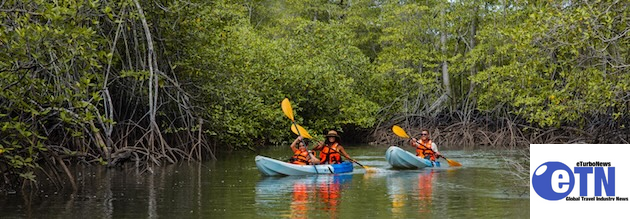
The country possesses extraordinary biodiversity, including rainforests, marine ecosystems, and protected areas that can attract high-value international visitors. Sustainable inland tourism can help preserve these natural resources while generating income for local communities.
Studies consistently show that long-stay visitors create far greater economic impact than short cruise visits or transit tourism because they spend more on lodging, food, transportation, and local experiences.
That is precisely where Panama’s interior can excel.
A National Opportunity
Panama has already established itself as a global logistics and financial hub. The next step may be transforming itself into a diversified tourism destination where economic opportunity reaches beyond the capital.
Promoting tourism in the interior is not about weakening Panama City. The capital will remain the country’s gateway and business center. Instead, the goal is to extend visitor spending deeper into the country so more Panamanians benefit directly from the industry.
If done strategically, domestic tourism can:
- Reduce regional inequality
- Create jobs quickly
- Support small businesses
- Encourage sustainable development
- Strengthen Panama’s international tourism brand
- Increase average visitor stays and spending
For Panama, the future of tourism may no longer depend solely on the capital’s skyline, but on the ability to connect visitors with the country’s provinces, people, and natural treasures.