Netflix subscribers hunting for their next obsession don’t need to look far. The platform’s most-watched global series just dropped eight new episodes, and it’s already dominating the conversation again. Season 2 of One Piece arrived on March 10 and, within days, rocketed straight to the top of the streaming charts worldwide.
Based on the legendary manga by Eiichiro Oda, One Piece follows rubber-bodied dreamer Monkey D. Luffy (Iñaki Godoy) as he assembles a pirate crew and sails the Grand Line in search of the ultimate treasure. What begins as a swashbuckling quest becomes an epic story about freedom and loyalty with an aesthetic and tone like nothing else on TV.
There’s a lot going on in the live-action One Piece: a sprawling oceanic world, eccentric powers, and colorful characters with equally wild backstories. Yet, somehow, it all clicks together seamlessly. The series sidesteps tired fantasy habits and delivers something energetic and sincere. While its manga roots are iconic, Netflix’s live-action One Piece earned its success purely on its own merits, making it absolutely unmissable.
One Piece Is So Much More Than An Anime Adaptation
A Blockbuster Fantasy That Stands Tall Even If You’ve Never Touched Manga


Live-action anime adaptations often struggle to find an audience. Fans arrive with preconceptions and expectations, and newcomers dismiss them as shows that only cater to those familiar with the source material. Netflix’s live-action One Piece shrugs off both concerns. The series works as a self-contained fantasy adventure first, adaptation second, delivering clear character motivations, cinematic action, and confident storytelling that welcomes every viewer.
Audiences don’t need to know a single thing about the lore of the One Piece manga to care about the show’s characters. Luffy is instantly magnetic, defined by stubborn optimism and emotional intelligence. Roronoa Zoro (Mackenyu) brings stoic intensity with flashes of dry humor. Nami (Emily Rudd) balances cunning and vulnerability, while Usopp (Jacob Romero Gibson) and Sanji (Taz Skylar) round out a found family worth rooting for.
The writing of One Piece is essential to the show being so accessible, as it prioritizes emotional clarity over dense exposition. Backstories land with weight. Conflicts escalate naturally. Big moments breathe. Even the strangest concepts, such as the talking reindeer Tony Tony Chopper, feel grounded because the characters feel genuine and well-rounded rather than cosplay tributes to the source material.
Visually, One Piece commits to jaw-dropping spectacle throughout. Massive practical sets, detailed costumes, and confident VFX create a tactile world. Luffy’s ship, The Going Merry, looks like a seaworthy vessel rather than a prop. Locations from Loguetown to Whiskey Peak feel lived-in. Action scenes land with all the impact of a feature-length theatrical release.
Most crucially for its success, Netflix’s One Piece doesn’t lean on fan service to survive. Its global chart dominance isn’t powered solely by manga loyalists. It’s driven by general audiences discovering a polished, character-led fantasy with blockbuster energy and a distinct creative voice.
Among today’s big-budget streaming fantasy TV shows, One Piece stands near the top. It’s ambitious without being self-serious, heartfelt without being sentimental, and spectacular without losing narrative focus. The fact that it’s a manga adaptation is secondary to the fact that it’s simply incredibly good.
There Are No Shows Out There Like One Piece
Wild Style Meets Real Stakes In A Genuinely One-Of-A-Kind Series
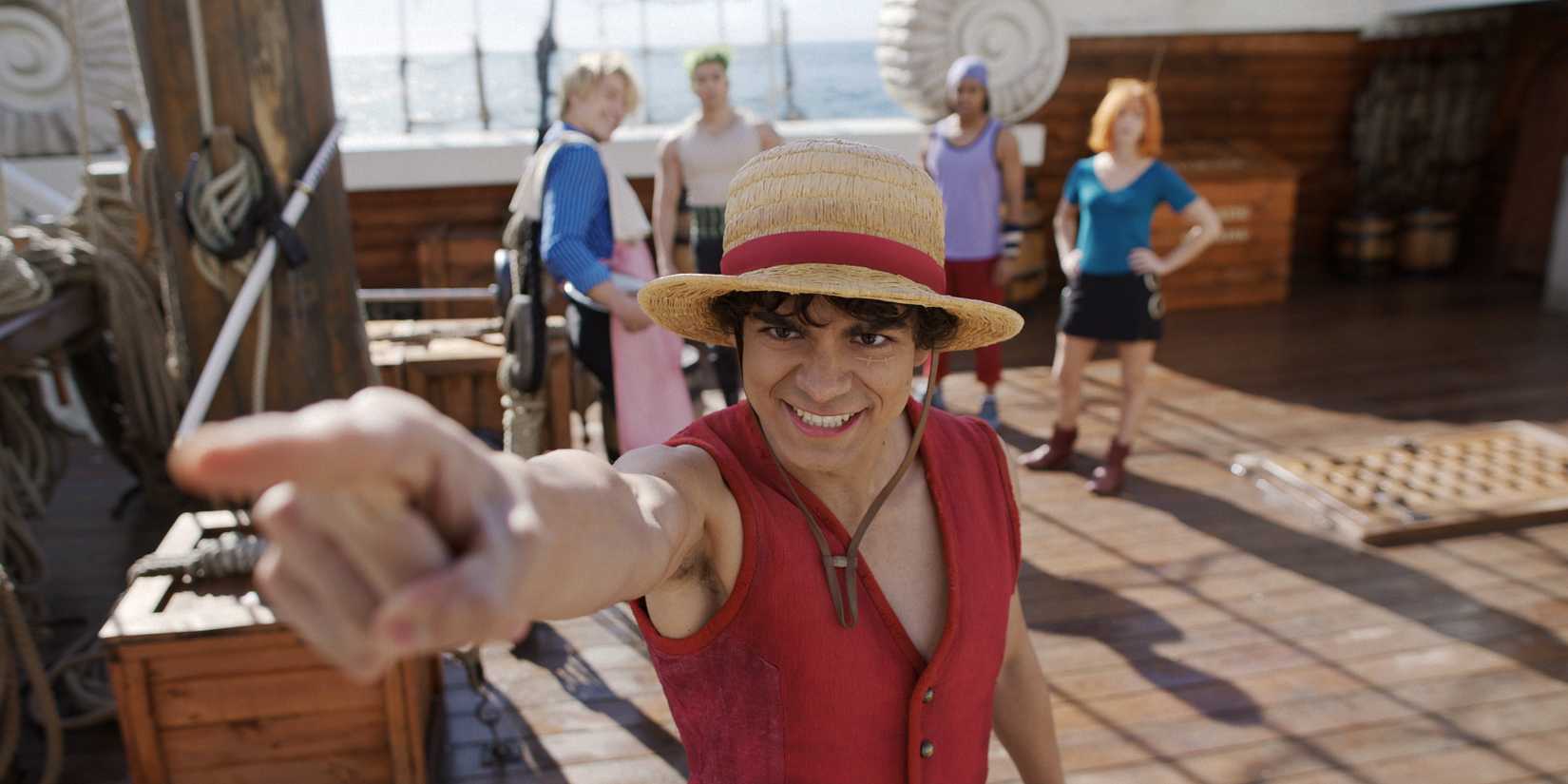
Plenty of live-action fantasy shows offer one or two innovative elements, but nothing is as unique as One Piece. Its aesthetic blends storybook color, exaggerated designs, and theatrical flair with grounded performances and cinematic framing. The result feels heightened but never hollow, playful but never cheap.
Many aspects of the manga that shouldn’t work in live-action somehow do. Devil Fruit powers stretch bodies, summon elements, and bend physics. Pirate crews dress like rock stars and royalty. Cities look painted, ships look legendary. Yet, because Netflix’s One Piece treats its world with total sincerity, letting emotion anchor even the wildest ideas, nothing ever breaks audience immersion.
There’s simply no other shows out there that can realistically be compared with One Piece. It occupies its own tonal space, confident enough to be colorful and serious at once. In an era of algorithm-friendly familiarity, One Piece feels creatively fearless. That distinct identity is rare, and it’s a major reason the series resonates across regions and demographics.
One Piece Is The Show The Fantasy Genre Needed
A Vibrant Epic That Breaks Free From The Grimdark Blueprint

There’s a lot to love about One Piece, but one of the best things the show has done for the fantasy genre is break it out of a rut. For over a decade, prestige fantasy has chased a single template – being the next Game of Thrones. Post-GoT fantasy TV has leaned ever-darker, grittier, and more cynical. Moral grayness deepened. Color palettes desaturated. Narrative progress was driven by brutality.
That approach delivered many great shows, but repetition bred fatigue. Too many fantasy shows released after GoT, from The Lord of the Rings: The Rings of Power to The Witcher, mistook imitation for evolution. Scale increased, but tonal variety shrank. The sense of wonder that defines fantasy somehow got lost in the gloom.
Netflix’s One Piece pivots hard in the opposite direction, and to say it’s a refreshing change of pace for fantasy TV fans is an understatement. It embraces vibrant color, expressive characters, and swashbuckling momentum while still exploring weighty themes like oppression, inherited trauma, systemic corruption, and chosen family.
The series proves maturity doesn’t require misery. Emotional depth in One Piece emerges through empathy, not shock value. Conflicts resonate because viewers care about the people involved, not the political ramifications for the fantasy world they live in.
This tonal shift feels overdue. Fantasy thrives on imagination, and imagination thrives on contrast. By rejecting the dark and brooding blueprint laid out by Game of Thrones, One Piece expands what blockbuster fantasy television can look and feel like. It proves that there’s space for sincerity alongside severity, color alongside grit, and hope alongside consequence.
One Piece doesn’t just succeed on its own terms. It quietly redefines the modern fantasy playbook, reminding audiences that mature themes and childlike wonder can share the same horizon.

- Release Date
-
August 31, 2023
- Network
-
Netflix
- Showrunner
-
Matt Owens, Steven Maeda, Joe Tracz
-

Iñaki Godoy
Monkey D. Luffy
-