


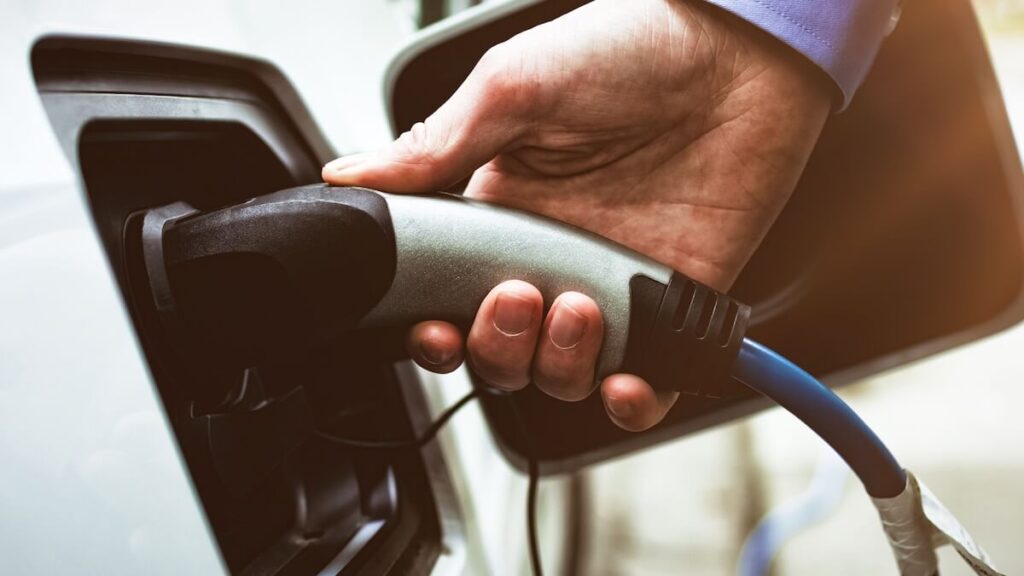
There are currently increasing media reports about supposedly “fattening” e-car charging. A study serves as the supposed basis, but it primarily describes correlations and does not prove any reliable causality. But what is really behind the claim? An analysis.
Charging electric cars takes significantly more time compared to conventional combustion engines. Fast charging stations noticeably shorten the duration, but regular breaks occur, especially on longer journeys or when there is high utilization.
These loading times also change the behavior of drivers. Instead of a quick stop at the gas station, charging an e-car is often combined with other errands. A much-cited study took up exactly this point and analyzed what drivers of electric cars deal with during these waiting times.
A majority of those surveyed use the additional charging breaks to buy snacks or eat something. A prime target for media exaggerations, which give rise to the myth of fattening e-car charging from these everyday observations.
The artificial word “Ladepositas” appears particularly frequently, which is made up of the words “Laden” and “Obesity”. The term itself suggests a seemingly scientific connection between loading behavior and weight gain – but what is really behind this claim?
“Ladepositas”: The myth of electric cars making you fat
On behalf of the insurer DA Direkt, the market and opinion research company Civey conducted a survey on the charging behavior of e-car drivers. The focus was, among other things, on the duration of the charging breaks and their use in everyday life, for example for shopping or consuming snacks and meals.
According to the survey results, 51 percent of those surveyed use the waiting times while charging their e-cars for snacks or a meal. 31 percent do shopping or errands during this time, and 26 percent charge their own battery while taking a break or taking a nap. Six percent of those surveyed also said they used the time for sporting activities.
The results of the survey show, above all, that electric car owners often use their charging breaks pragmatically and combine them with everyday tasks. But the DA Direkt press release already raises the question of whether charging an electric car leads to weight gain or “obesity”.
Apparently a hit with numerous media outlets, who gratefully included this term in their headlines. This is the headline, for example Berlin morning post on the topic “Charging positions: Does charging electric cars make you fat?” Also Car Motor Sport raises the question: “Charging positions – do electric cars make you fat?” The FAZ In an older comment from 2024, it goes even further and has the direct title “Electric cars make you fat”.
But there is a clear gap between the behavior depicted in the survey results and an actual change in body weight. This is exactly where the media escalation begins.
Correlation instead of causation: Where the media takes a wrong turn
In this way, a descriptive snapshot becomes a pointed interpretation that derives a supposed cause of weight gain from the loading behavior. However, this goes well beyond what the data actually shows.
Although the term “loading position” works for the exacerbation, the scientific study does not provide any evidence of possible obesity. Medical measurements or analyzes of the respondents’ BMI are not available.
However, in the media exaggeration, these differentiated results are often presented in an abbreviated manner. An observed habit then quickly turns into a perceived health risk.
Do combustion engine drivers snack less? The missing comparison
But of course there is no causal connection between weight gain and e-car charging. Because it is simply not possible for a person to gain weight while charging an electric car. A far-reaching thesis is constructed from selective observations, which is hardly scientifically tenable due to the narrow database.
It is also not actually examined how the snacking behavior of combustion engine drivers at gas stations or rest stops or of train passengers compares. Or whether snacks and meals actually mean unhealthy foods. In addition, it is not taken into account that eating behavior during the charging break could simply be an expression of a pragmatic use of time and indicates good travel planning rather than a specific “e-car phenomenon”.
Also interesting: