


A head full of white hair can shine like fresh snow – or look like a uniformly gray wall. The difference is rarely in the color itself, but rather in whether light is refracted in it. That’s exactly what highlights do: they put lighter and cooler shades next to each other, and the hair gets depth where it was previously a single area. Spice up white hair with highlights therefore means adding targeted dimension without resorting to full coloring again. Five techniques do this in very different ways – and their re-dyeing rhythm ranges from every eight weeks to twice a year.
Why white hair benefits from highlights
White hair occurs because the hair root no longer produces melanin – the pigment that gives each strand its color and part of its surface. Without this dye, each fiber lies next to the next in virtually the same tone. From a distance of half a meter it merges into a flat, sometimes somewhat dull surface, especially with straight hair and diffuse daylight.
Highlights break up this monotony. A few lighter areas capture more light, a few cooler ones create fine shadows – and the eye reads these differences as volume and movement. The effect is the same as a painter using to turn a surface into a shape. Anyone who consciously sticks to the natural silver tone is doing the right thing anyway: it is one of the tones that are particularly flattering to mature skin, which our overview of which hair color is particularly flattering for those over 60 reveals more about this.

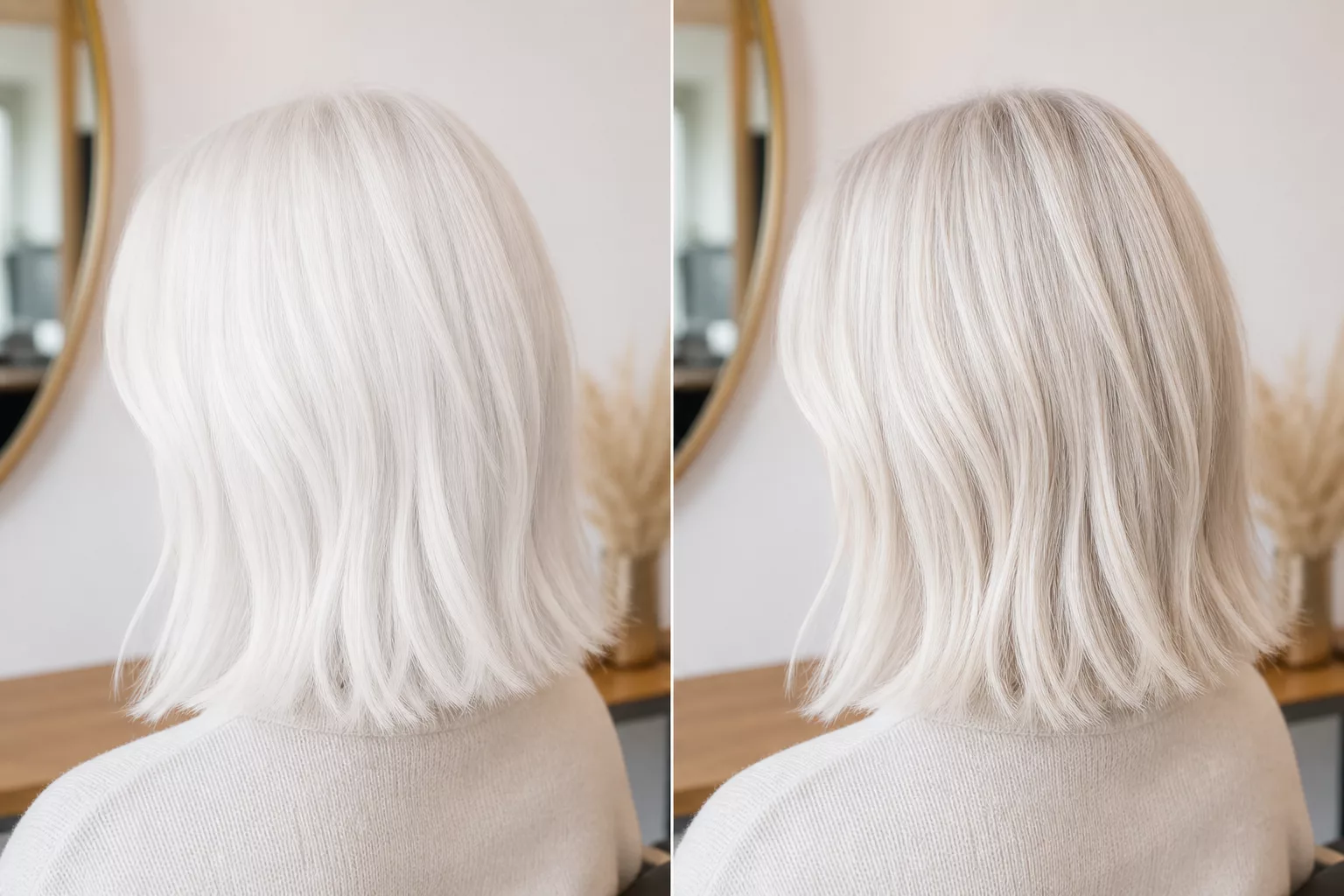
Five techniques to brighten up white hair with highlights
Which technique is right for you depends on three things: how visible the effect should be, how much care and salon time you want to plan and how noticeable the roots should be when they grow out. The following overview organizes the five most common methods, then goes into the details.
| Technology | Effect | Re-coloring rhythm | Best for |
|---|---|---|---|
| Babylights | very fine, barely visible brightening | 2–3 times a year | subtle depth, minimal effort |
| Lowlights | darker accents, more fullness | every 8-12 weeks | fine, flat-looking hair |
| Hair frosting | cool, frosty blonde shimmer | every 8-10 weeks | modern, cool silver types |
| Balayage | soft, natural flow | 3–4 times a year | easy-care sun effect |
| Gray blending | fused silver and white tones | every 10-12 weeks | maximum dimension |
A notice: The rhythm information is a rough guideline – how quickly an approach is noticed depends on the rate of growth and contrast.
Babylights: the most inconspicuous variant
Babylights are extremely fine, wafer-thin strands that are lightened just a touch lighter. They start right at the base and run loosely downwards. That’s exactly what makes it so suitable for everyday use: Because there is hardly any contrast, the roots grow out almost invisibly. In practice, two to three visits to the salon per year are often enough – instead of the three to four weeks that a classic full color requires.

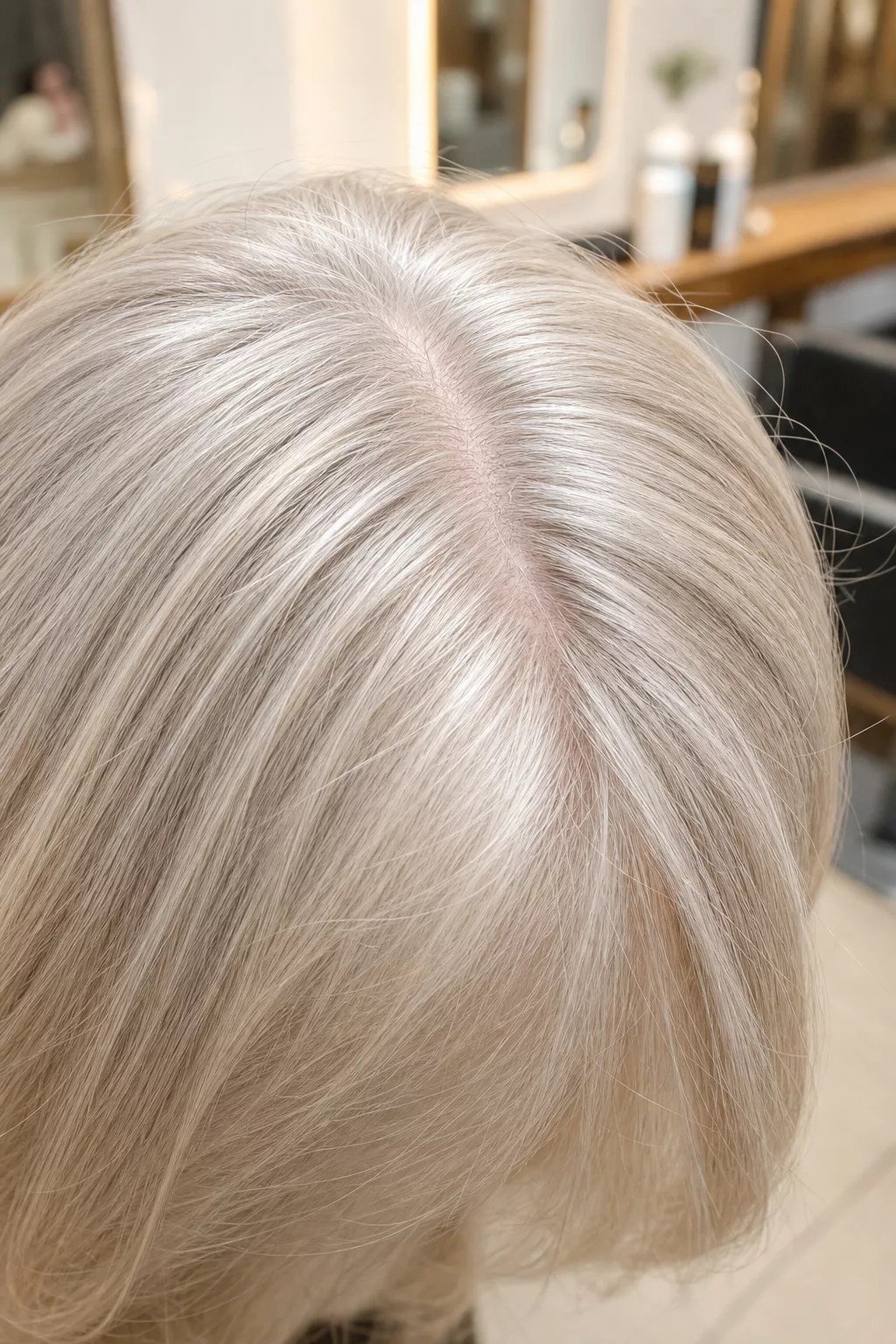
Lowlights: more fullness without any brightening
Lowlights take the opposite approach. Instead of lightening, individual strands are colored a few shades below the natural tone. These darker areas of white create depth and instantly make thin hair appear fuller. A practical side effect: There is no need for pre-lightening, which protects the hair structure. For fine, flat-looking hair, this is often the most rewarding technique of all.
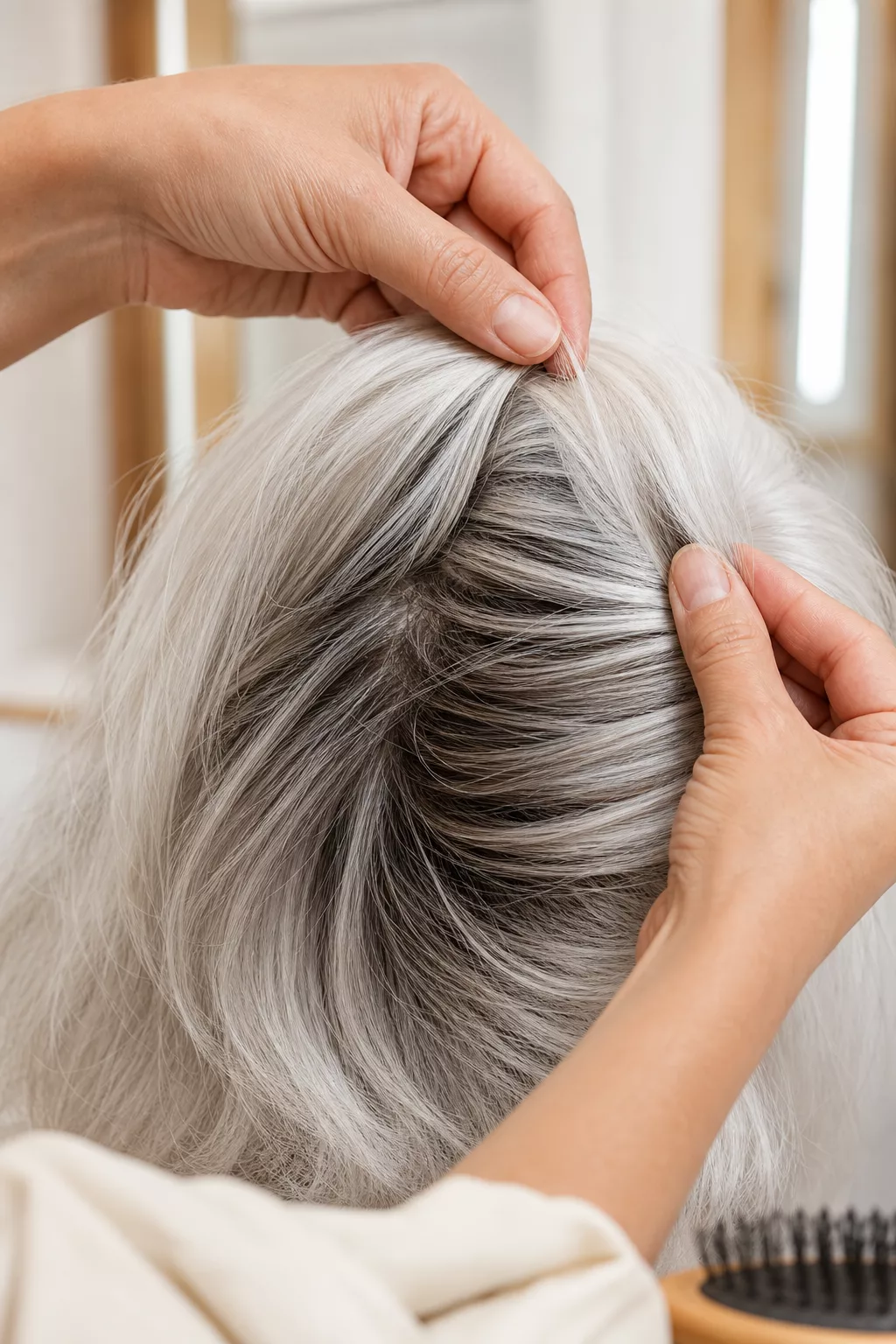
Hair frosting: the cool frost effect
With hair frosting, the hairdresser sets the strands freehand from the roots to the tips. The tone remains lighter than natural hair, but is adjusted to the basic tone, creating a cool, slightly frosty blonde shimmer. For anyone who wants to consciously present their silver tone in a modern and cool way, this variant hits the spot.
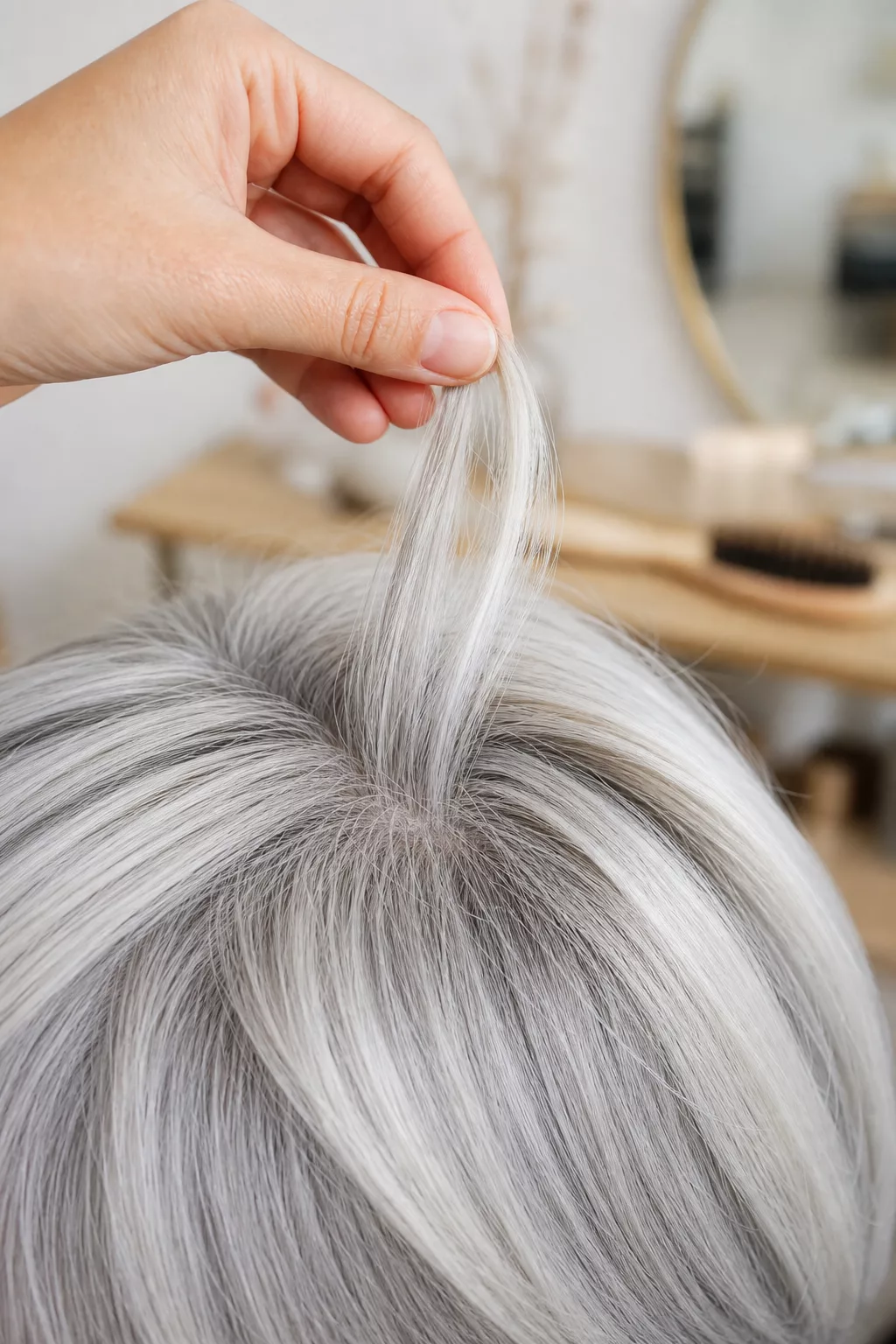
Balayage: the soft, natural course
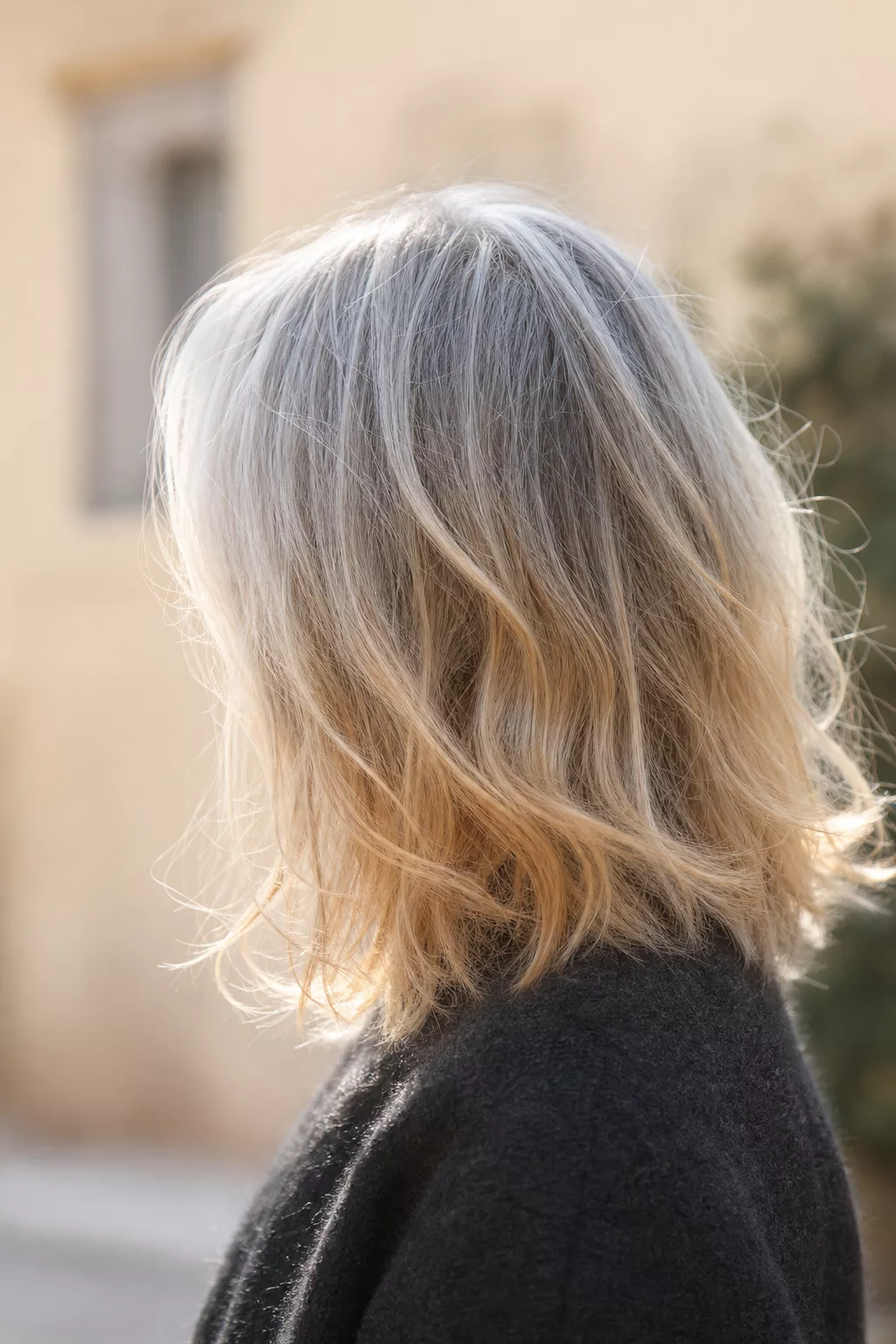
Balayage means that the highlights are painted freely into the hair by hand – without a fixed root line. The result looks extremely natural, as if set by the sun, and conceals the first gray or irregular strands particularly gently. Because the transition is so smooth, the roots are barely visible. This makes balayage one of the most low-maintenance options in comparison.
What’s Hot

hair color
Gray blending for brown hair: This is how you elegantly conceal the gray roots
Gray Blending: maximum dimension
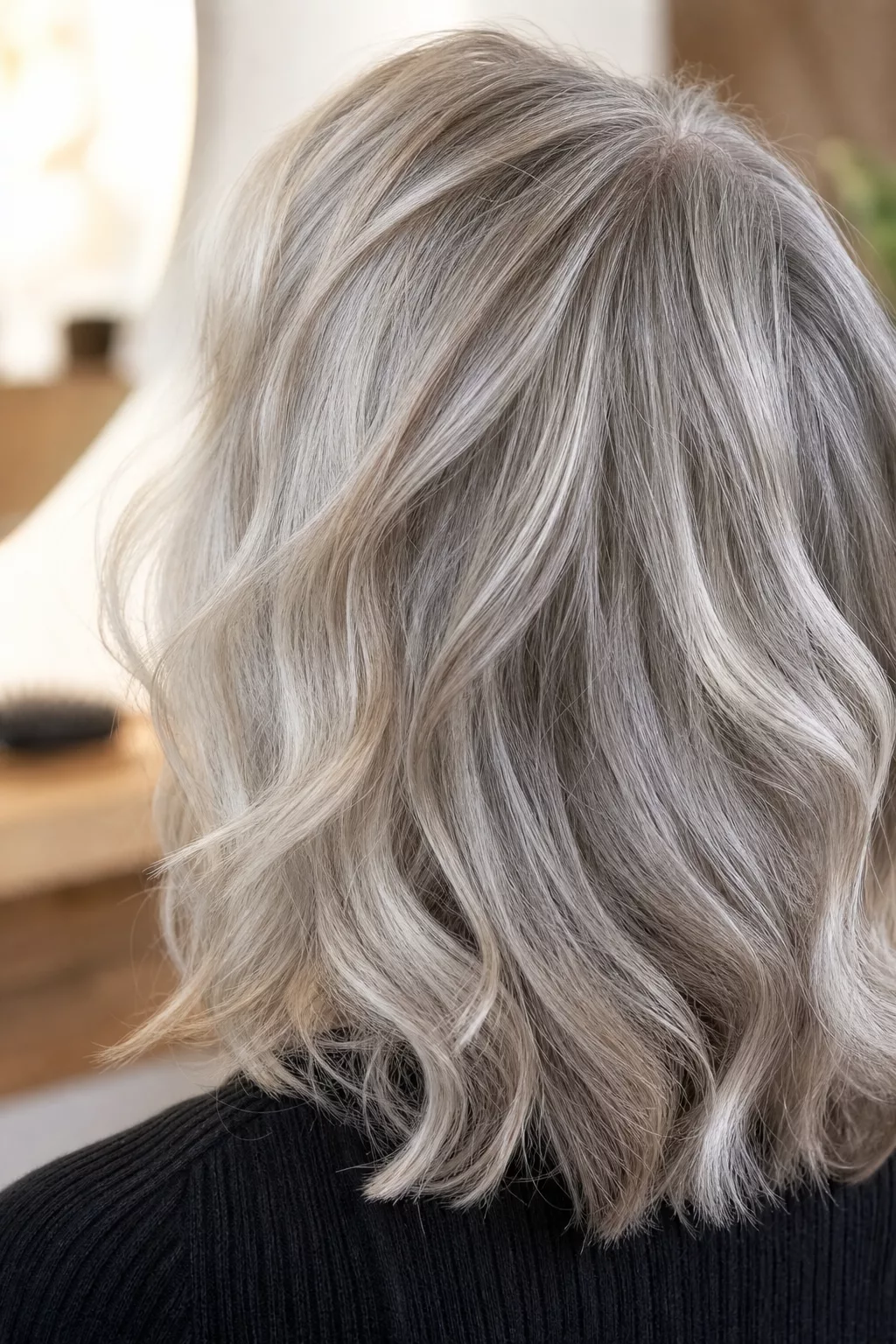
Gray blending combines highlights and lowlights as targeted accents so that silver nuances merge with the white components. The result appears multidimensional and surprisingly youthful because the hair always shimmers differently as it moves. The technique works just as well on hair that is already completely white as it does when transitioning from colored to gray hair – more on that in the frequently asked questions.
Which cut and which styling brings out the most
Color is only half the battle – it’s the cut that gets the strands moving. Layered bobs, pixie cuts and long bobs are particularly suitable because their layered lengths make the play of colors visible and give the hair momentum. Bangs frame the face more softly and draw the eye to the lighter areas around the forehead. If you are still looking for the right shape, you will find further suggestions under suitable hairstyles for gray hair over 60.
When it comes to styling, the most important thing is shine and fullness. A fine shine spray covers the lengths like a veil and lets the nuances shine. Volume powder at the roots and a round brush hairdryer give particularly fine hair stability. If your hair is naturally wavy, light beach waves will further emphasize the individual strands because light refracts differently in each bend.
Care for hair without its own pigment
Pigment-free hair behaves differently than pigmented hair. Without melanin, it lacks some of the natural protection, which is why it reacts more sensitively to UV radiation and shows a yellow tinge or dryness more quickly. In spring and summer, light sun protection for the lengths is part of the routine – similar to how you apply cream to the skin.
After each coloring, the hair also needs moisture back. A mild moisturizing shampoo and a leave-in conditioner keep the structure supple, while a silver shampoo in the right rhythm keeps the cool tone pure. The following box summarizes how often which step makes sense.
Pro tips
- Silver shampoo: Use about every ten days and leave it on for two to three minutes – if used more often, the tone quickly turns bluish.
- Tips: Re-cut minimally every four to five weeks, as pigment-free hair breaks out more quickly and frays more visibly.
- UV protection: Apply a leave-in with a UV filter to the lengths from April to September – without melanin, the hair lacks its natural sun shield.
- Moisture: A light treatment or leave-in after every wash because white hair appears drier and its shine mainly comes from care.
Accessories and a new piece of self-confidence
White hair is a grateful stage for accessories. Hair clips in gold or mother-of-pearl add warm accents, a silk scarf adds color, and a simple headband organizes the look in seconds. Because the basic tone is so neutral, almost every color looks harmonious.
But perhaps the biggest gain is not a visual one. Many women report feeling more liberated once they embrace their whites – no constant re-dyeing, no root stress every few weeks. A supposed flaw becomes a fashion statement that you have chosen yourself. If you still have this step ahead of you, you will find relaxed instructions for the transition period in our tips for growing out gray hair.
Frequently asked questions
Is gray blending only suitable for the transition to gray hair or also for hair that is already completely white?
Can the techniques be combined, for example balayage with lowlights?
Yes, and in practice this is exactly what happens very often. The hairdresser often creates a soft balayage as a base and then adds a few lowlights to create additional depth in individual areas. In this way, a result combines the natural progression of one technique with the fullness of the other. The only important thing is to clearly agree on this in the consultation so that the transitions remain smooth.