


An empty egg carton usually goes unseen into the waste paper. The gray cardboard with its conical tips and round troughs provides exactly the shape that a small jellyfish needs. A bit of purple paint, a bunch of dried lavender flowers as tentacles – and the hollow becomes a small jellyfish that floats gently at the window and smells of summer meadow as you walk past.
You and your children can make a lavender jellyfish from materials that are left over in almost every kitchen. The longest break in the whole project is for the paint to dry anyway – the rest can be done in just a few steps. In the end there is a whole small group of jellyfish dangling from the window pane and the stack of waste paper has shrunk a bit.
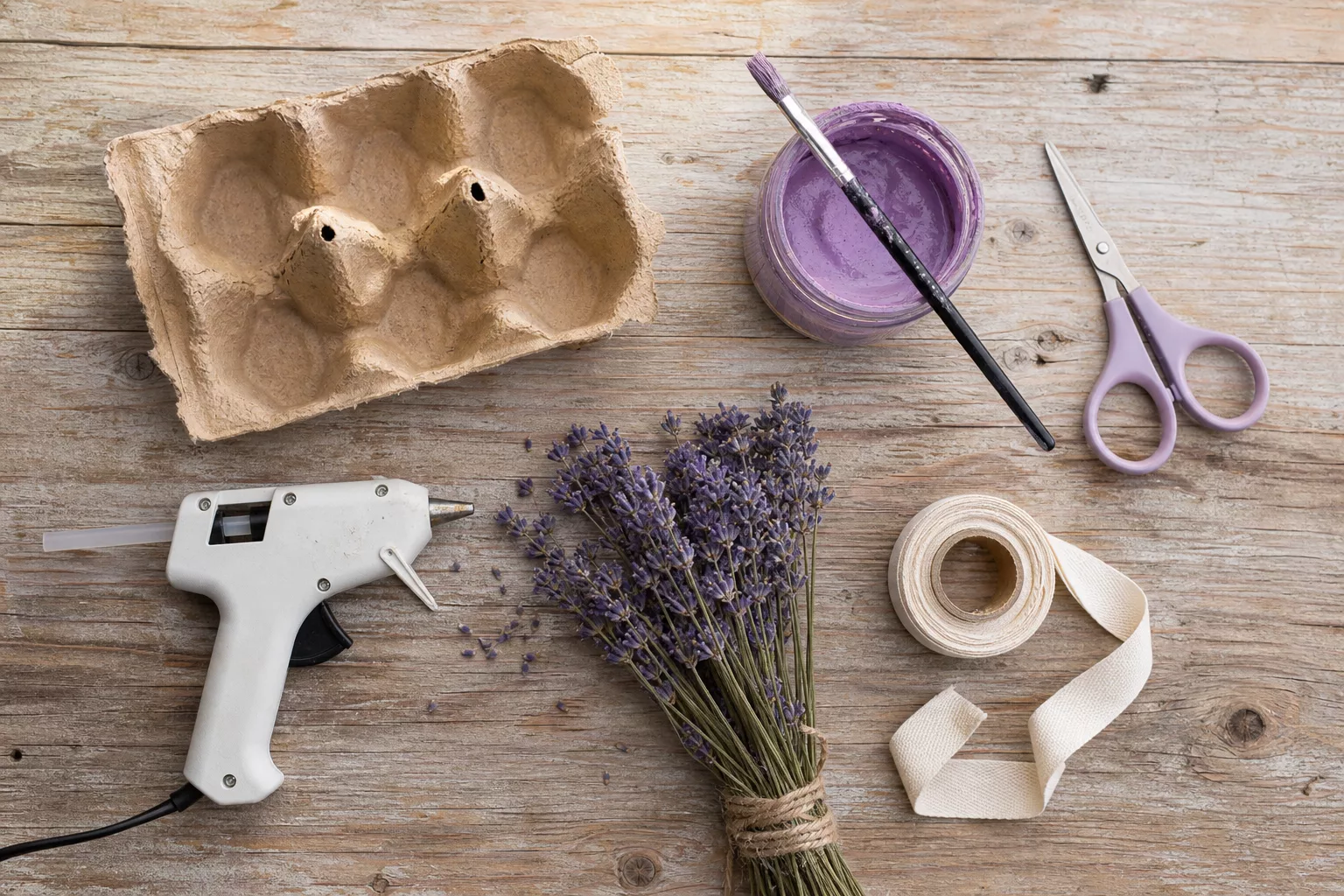
This is what you need for the lavender jellyfish
The materials list is short, and most of it is probably already lying around at home. The only important thing is that you use a cardboard egg carton – the plastic version is neither easy to cut nor paint.
- Cardboard egg carton – the 6 or 10 size; When unprinted, it takes on the color most evenly
- Purple acrylic paint and a medium-wide brush
- Scissors for the conical tips and the cups
- Hot glue gun for putting together and hanging
- Dried lavender flowers or whole branches for the tentacles
- Narrow decorative or satin ribbon (optional) for additional tentacles and the hanging loop
For smaller children, swap the acrylic paint for non-toxic watercolor – it covers a little less, but painted fingers and table edges are quickly clean again. The egg carton is a useful craft material anyway: If you get a taste for it, you’ll find more ideas for crafting with egg carton for the next rainy day.

Step by step: make the lavender jellyfish out of the egg carton
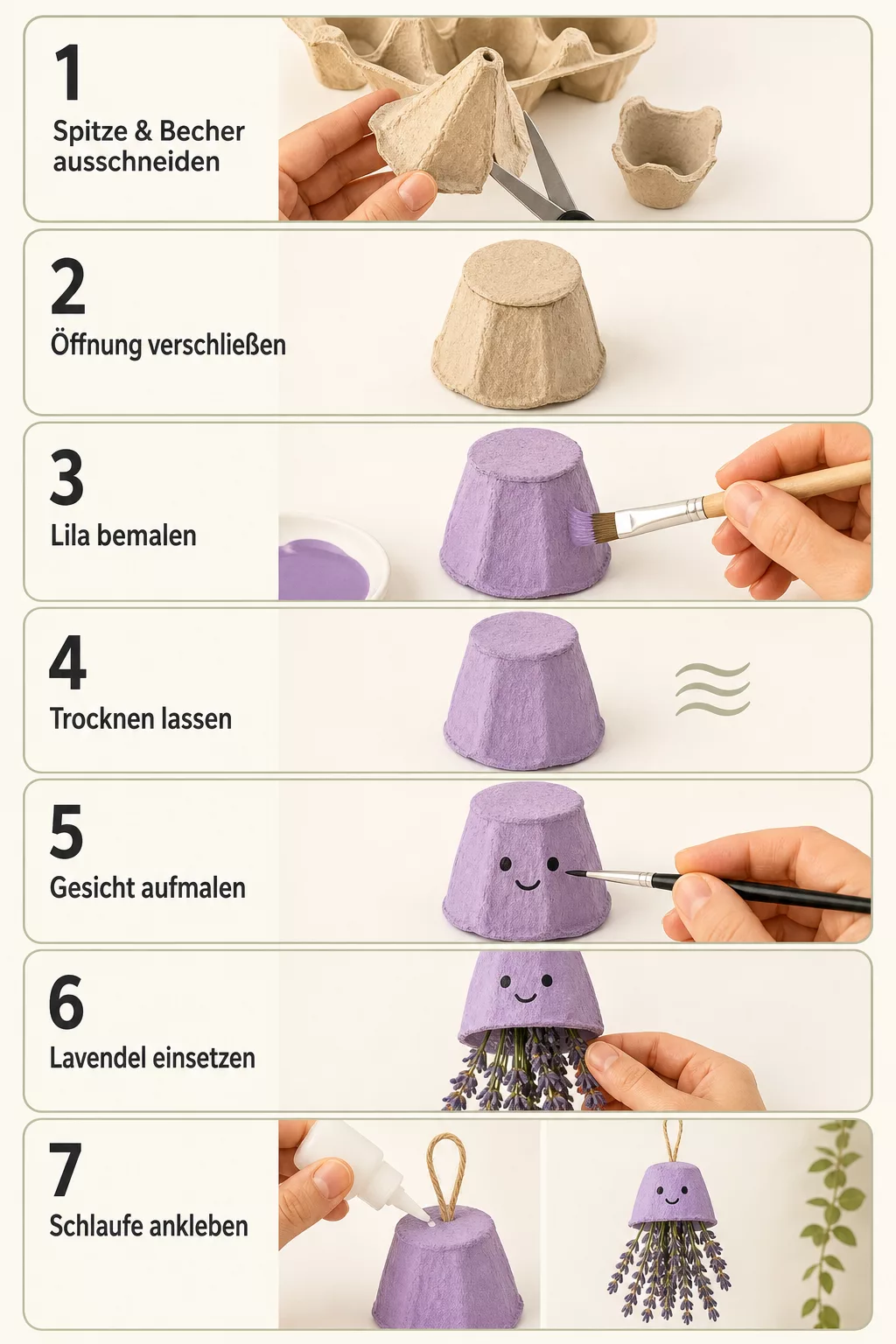
Allow around 20 minutes of active crafting time plus a drying break. It’s best to place all the pieces in front of you and work down the row from top to bottom.
- Cut out a cone-shaped tip and one of the cup-shaped bowls from the egg carton. Both together create the jellyfish head.
- Close the open side of the bowl with a piece of cardboard cut to size and use hot glue to join the parts together to form the round head.
- Paint the entire body with purple paint. Two thin coats cover more evenly than one thick coat.
- Allow the paint to dry completely – this will take half an hour to an hour, depending on the thickness of the layer.
- Using a fine brush, paint two eyes and a smile. Here every child can give their jellyfish their own character.
- Stick and glue the dried lavender flowers into the head from below. They form the tentacles; a few narrow bands in between bring movement.
- Finally, glue a ribbon loop to the top – ready to hang.
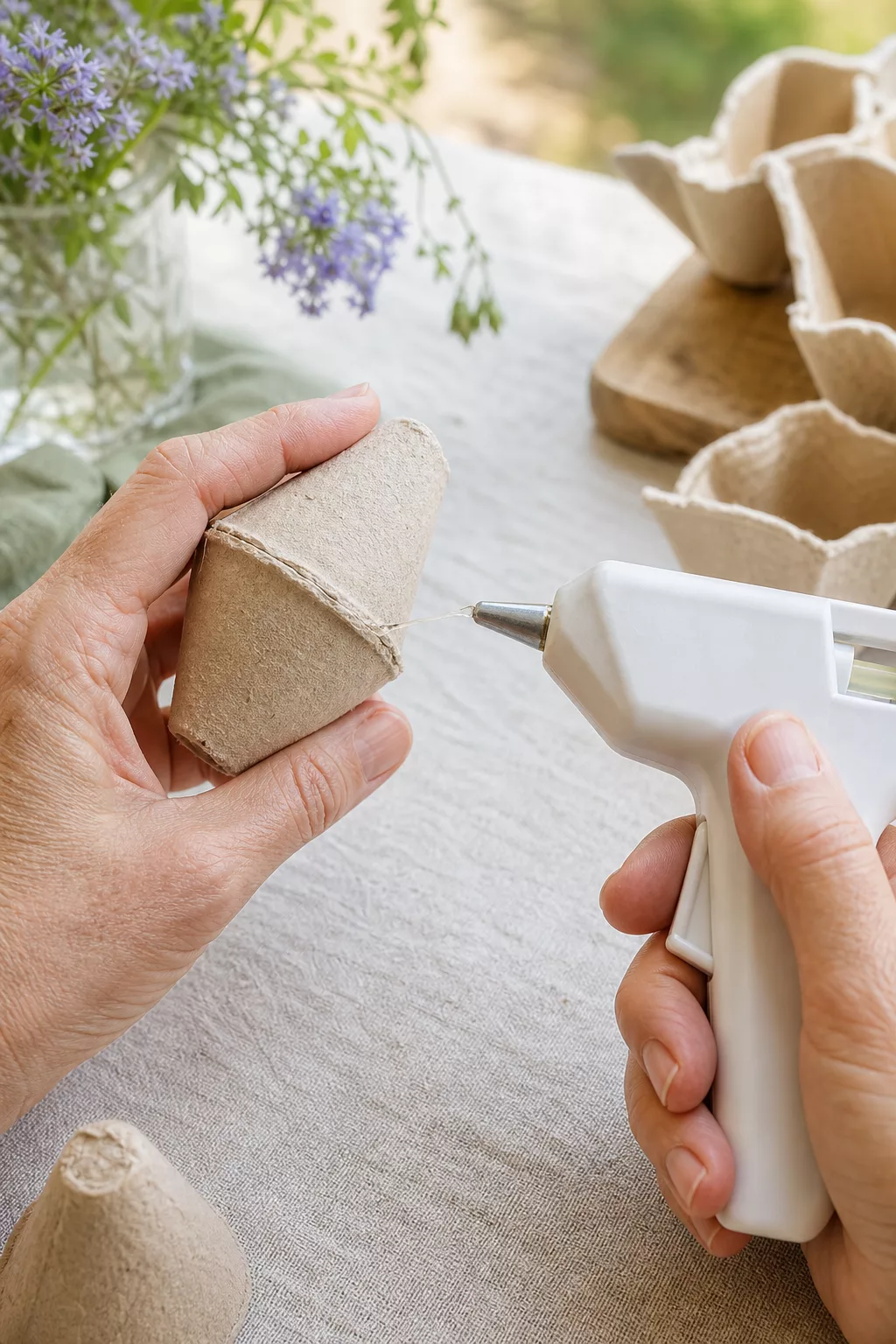
One step clearly belongs in adult hands: gluing things together with the hot glue gun. The glue heats up to 200 degrees and remains tough and burning hot for a few seconds. Do this part yourself while the children mix the next color or sort the lavender.

Pro tips
- Carton choice: Unprinted, unwaxed egg cartons absorb the ink and appear velvety matt after drying.
- Dry sample: Acrylic paint feels dry on the surface after 20 minutes, but it only hardens after about an hour – only then apply, otherwise the painting will be smeared.
- Flower stop: Place a dab of hot glue in the box opening before the lavender stems go in; then nothing will come out later.
- Mix of sizes: Cut two to three heads of different sizes out of a box of 10 – in a group it looks more lively than just the same ones.
If you are unsure in which order the handles come, the following overview will help: It shows all seven steps from the cut out cardboard tip to the finished hanging decoration at a glance.
Fresh or dried lavender – which is better?
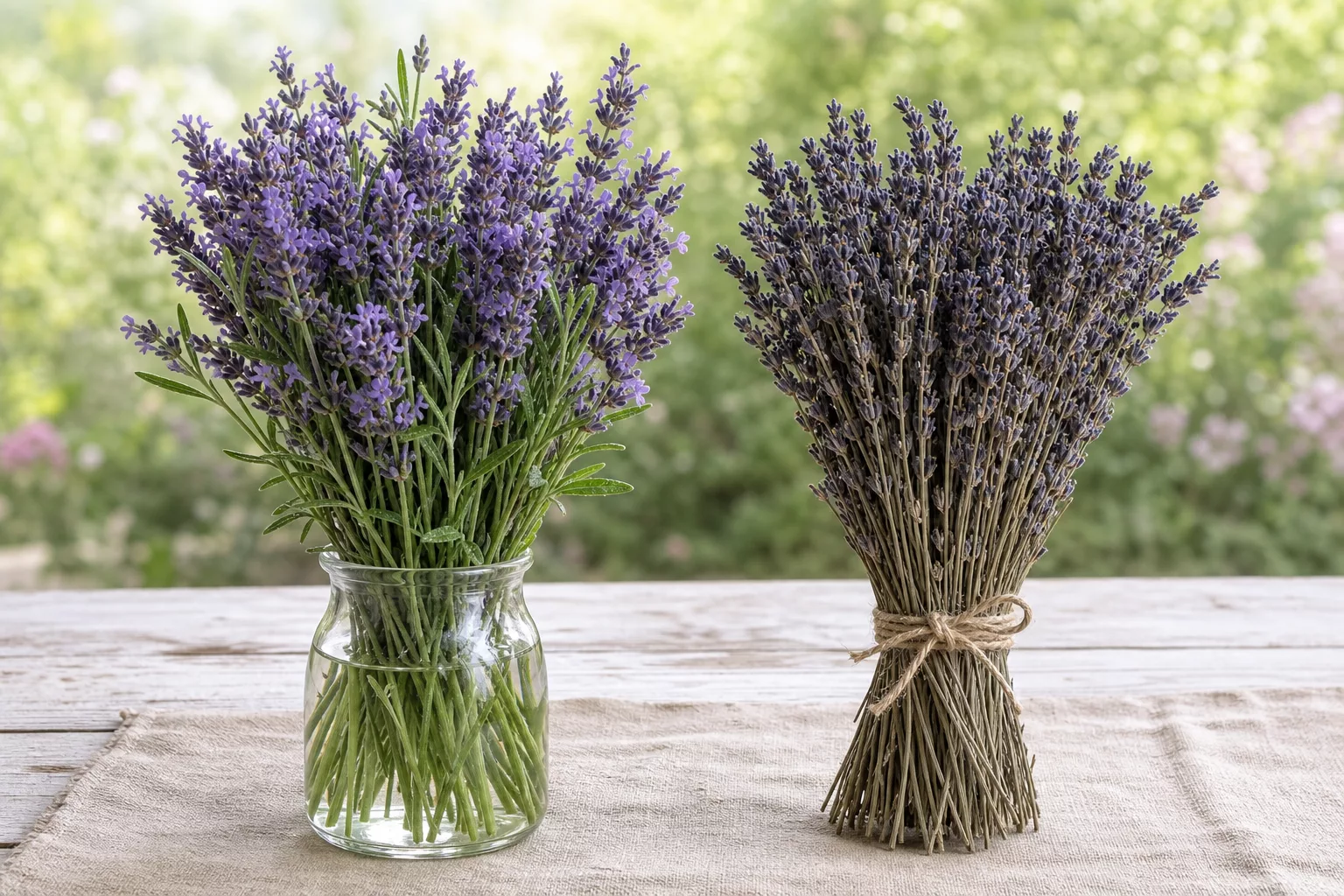
For the tentacles you have the choice between fresh or dried lavender, and the decision is clearer than you think. Dried flowers retain their shape, hardly lose a leaf and smell quietly for weeks. Fresh lavender smells more intense the first day, but within a few days it wilts, becomes shriveled and leaves the tentacles hanging limply.
For a hanging decoration that should last all summer, dried lavender is the more practical choice. If you have fresh lavender in the garden, tie it upside down into small bouquets and let it dry in an airy, shady place for one to two weeks – then it will stick later and won’t trickle. Leftover flowers don’t have to go away: There are instructions on how to make scented lavender balls out of them.
This is how the lavender jellyfish works as a summer decoration
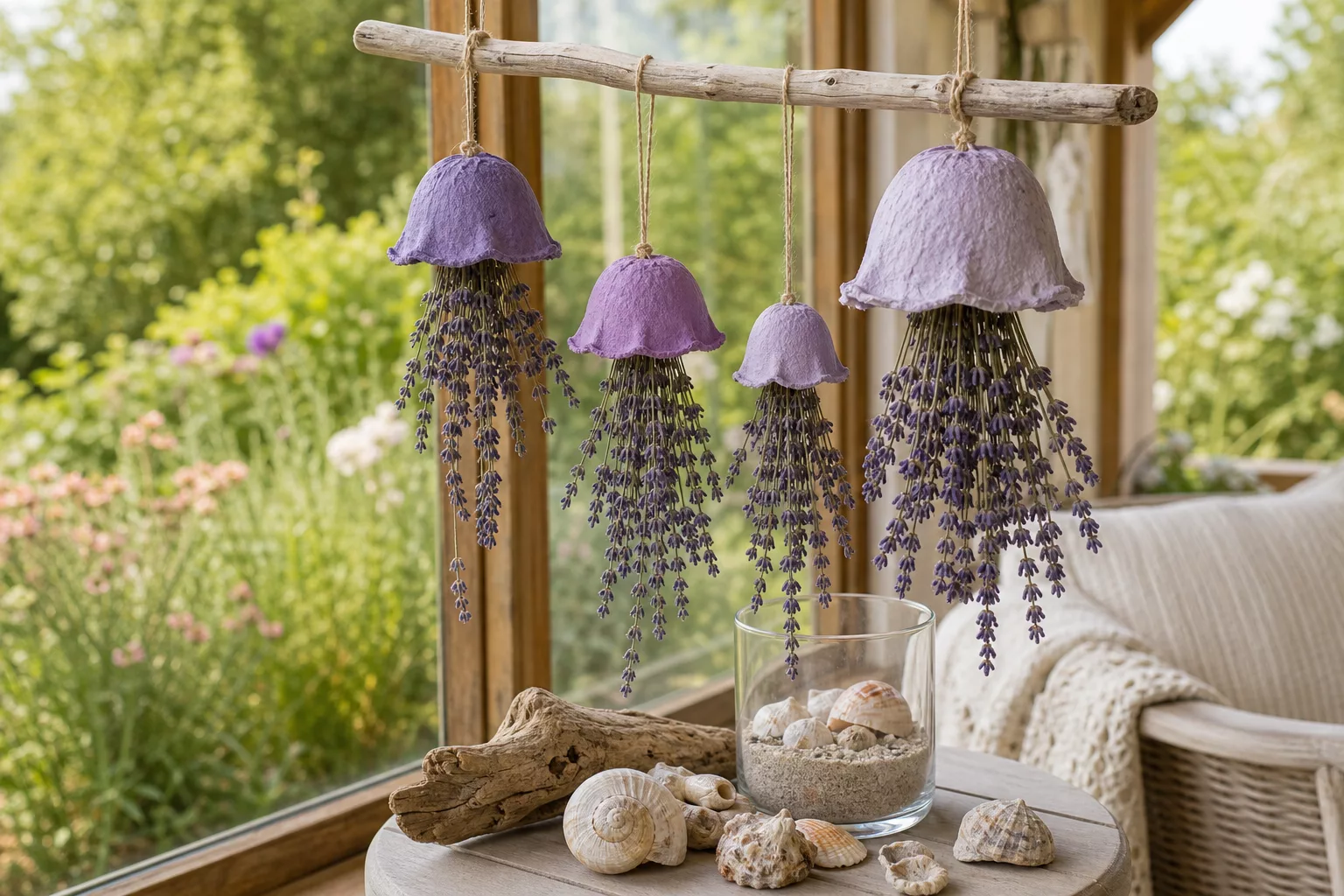
The jellyfish only develops its effect when light falls through the tentacles and they move in the breeze. That’s why it’s most beautiful hanging freely: in front of the kitchen window, on the balcony door, in the winter garden or under the roof of a covered terrace. A sheltered place is important because cardboard and acrylic paint do not tolerate rain – more on this in the frequently asked questions.
The figures really come into their own in the group. If you hang three to five jellyfish of different sizes at different heights, you will get the impression of a small swarm gliding through the water. Complemented by a few light shells, a piece of driftwood and a glass jar with sand, you can create a harmonious maritime look in no time. Matching maritime decoration ideas for the home provide inspiration for the surroundings, and if you want to think bigger about the underwater effect, you will find the jellyfish decoration in the glass floor vase an elegant option for indoors.
What’s Hot

DIY decoration
A lavender heart stays fresh for up to two weeks
Pack as a small gift
A single lavender jellyfish makes a charming souvenir. Carefully place the figure and tentacles in a cellophane bag, gather it above the head and tie it with a narrow ribbon – this way the tentacles remain intact and the lavender scent collects in the bag. For a housewarming, a summer party or as a birthday present, a scented object is often better received than something bought. A handwritten pendant with the name of the recipient turns it into a personal present in no time.
Frequently asked questions
How do I keep the lavender scent of the jellyfish fresh for as long as possible?
The scent fades over time because the essential oils evaporate. Now and then gently squeeze the flower clusters between your fingers – this releases a fresh scent. If that’s no longer enough, put one or two drops of lavender essential oil on the tentacles and the jellyfish will smell like new for weeks.
Is the lavender jellyfish weatherproof for outdoor use?
No. Egg carton and acrylic paint are not waterproof; Even a rain shower softens the cardboard and causes the paint to peel off. Only hang the jellyfish in covered, protected places and it is better to bring them in when rain is forecast or overnight.
Which steps can children take?
Everything except hot gluing. Children from around the age of three paint the body with watercolor under supervision, older children paint the face and insert the lavender flowers as tentacles. Putting them together with the hot glue gun and attaching the hanging loop are left to the adults.