


Some days, fine hair over 60 looks like it has just been blown dry and then lies flat on the head the next morning. The reason is rarely age alone. The cut usually emphasizes exactly the place where there is the least substance – and the heavy oil from yesterday also pulls the tips down. A good volume cut for fine hair over 60 doesn’t start with the hairstyle, but rather with an honest assessment: Where is the volume really missing? If you answer this one question, any trendy hairstyle will become a cut that suits your head and fits itself in the morning.
Quick check: Where does your fine hair lose its volume?
Stand in front of the mirror and slightly lift a strand of hair on the top of your head. If it immediately falls back flat again, the problem is at the root. If the hair still looks neat at the top, but is frayed and pointy at the bottom, the tips are thinned out. And if the entire length hangs weakly without tipping in any particular place, the hair as a whole is limp. These three types – flat roots, thin ends, floppy length – each require a different cut. Remember your type and the rest will read like an assignment.

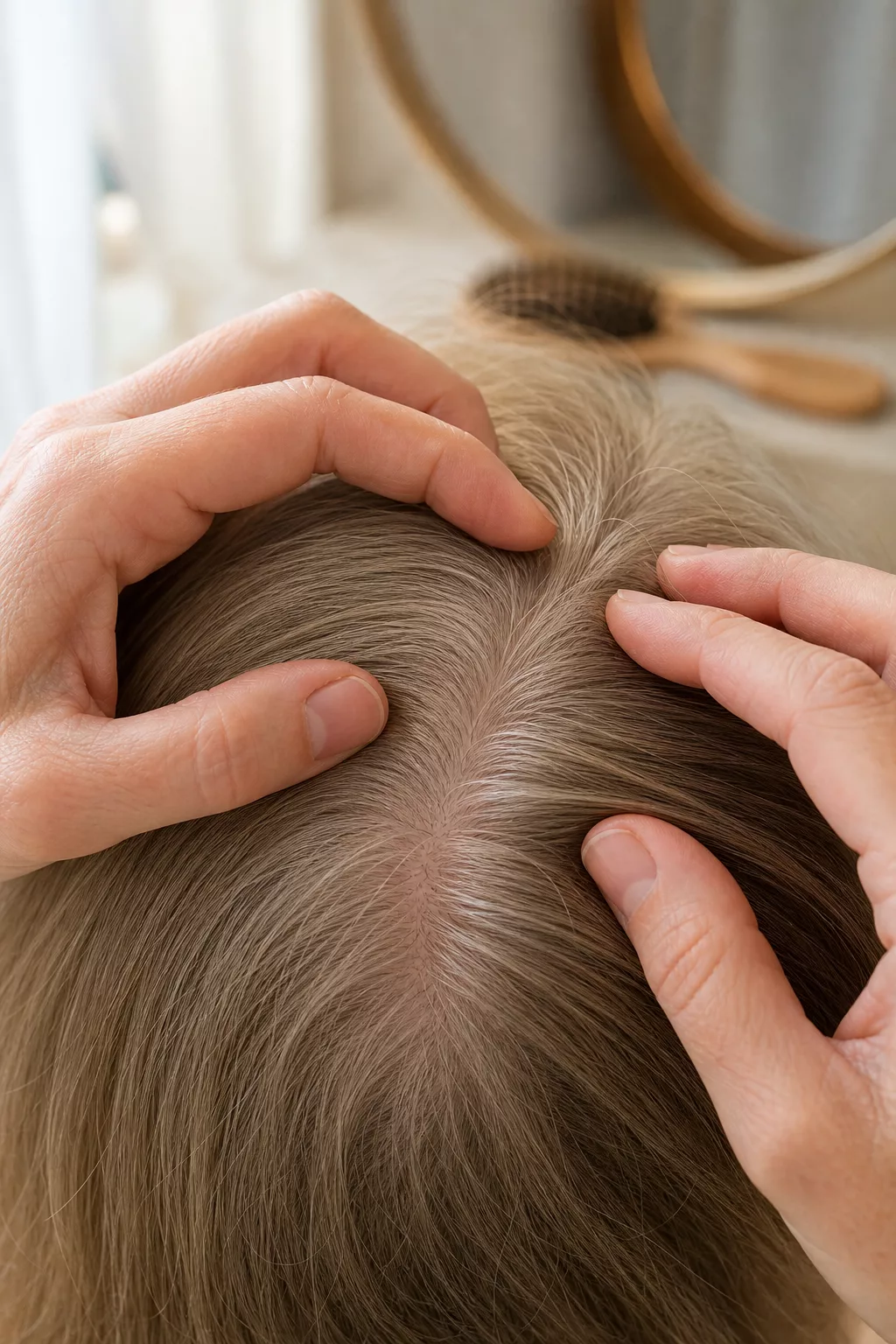
Care that doesn’t add additional weight to fine hair
Before you think about the cut, it’s worth taking a look at the bathroom. Many products that promise more fullness have the opposite effect on fine hair. Styling sprays containing alcohol dry out the already thin structure so that it falls even slacker – a label without Alcohol denat. high up in the ingredients list is worth a lot here. Heavy oils, waxes and rich treatments are just as tricky. They lay down like a film and press every base down.
What fine hair tolerates well, on the other hand, are light oils such as jojoba, argan or almond: a single drop, rubbed between the palms of the hands and only applied to the ends, provides moisture without weighing it down. Anything more than a drop will leave you with fine hair the next morning.
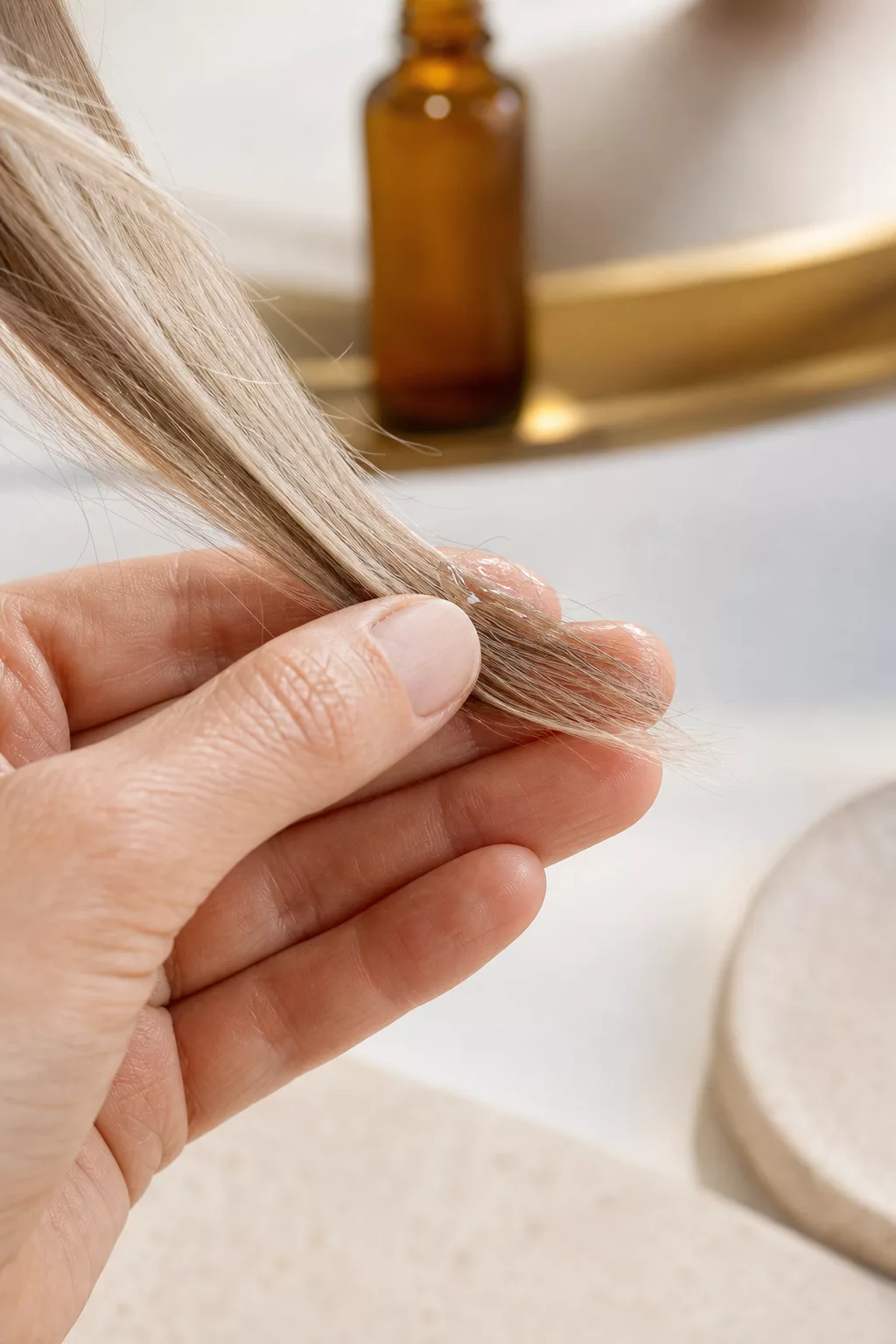
Also, reduce heat styling; If you have to use a hairdryer or straightener, you should use silicone-free heat protection in front of it. And have the tips trimmed every six to eight weeks. That sounds like cosmetics, but it’s static: the tips are the oldest and thinnest part of every strand, and if you let them fray, you lose the exact contour at the bottom that gives fine hair optical support. Our look at what is important when it comes to the cutting angle shows how much the cut itself determines the impression of volume.
Flat approach: Pixie cut and pixie with side parting
If the problem is at the top, brevity is your best ally. The less length you pull on the strand, the easier it is for the hair to stand up at the roots – short hair simply has less weight and therefore more visual volume. A classic pixie cut uses exactly that. The style is crucial: have soft, round tips cut. Hard, pointed spines, on the other hand, quickly make mature, fine hair appear thin and strained.
If you don’t want to go quite so short, a pixie with a side parting works well. The front area remains longer and layered and is combed forward to the side – this creates movement and conceals a high or flat approach. The actual volume comes during styling: Blow-dry the still slightly damp hair upwards at the roots with a round brush and fix it briefly with the cold air button. This one hand movement visibly lifts the root. Our overview of the pixie cut for women over 60 collects more variations and styling options.
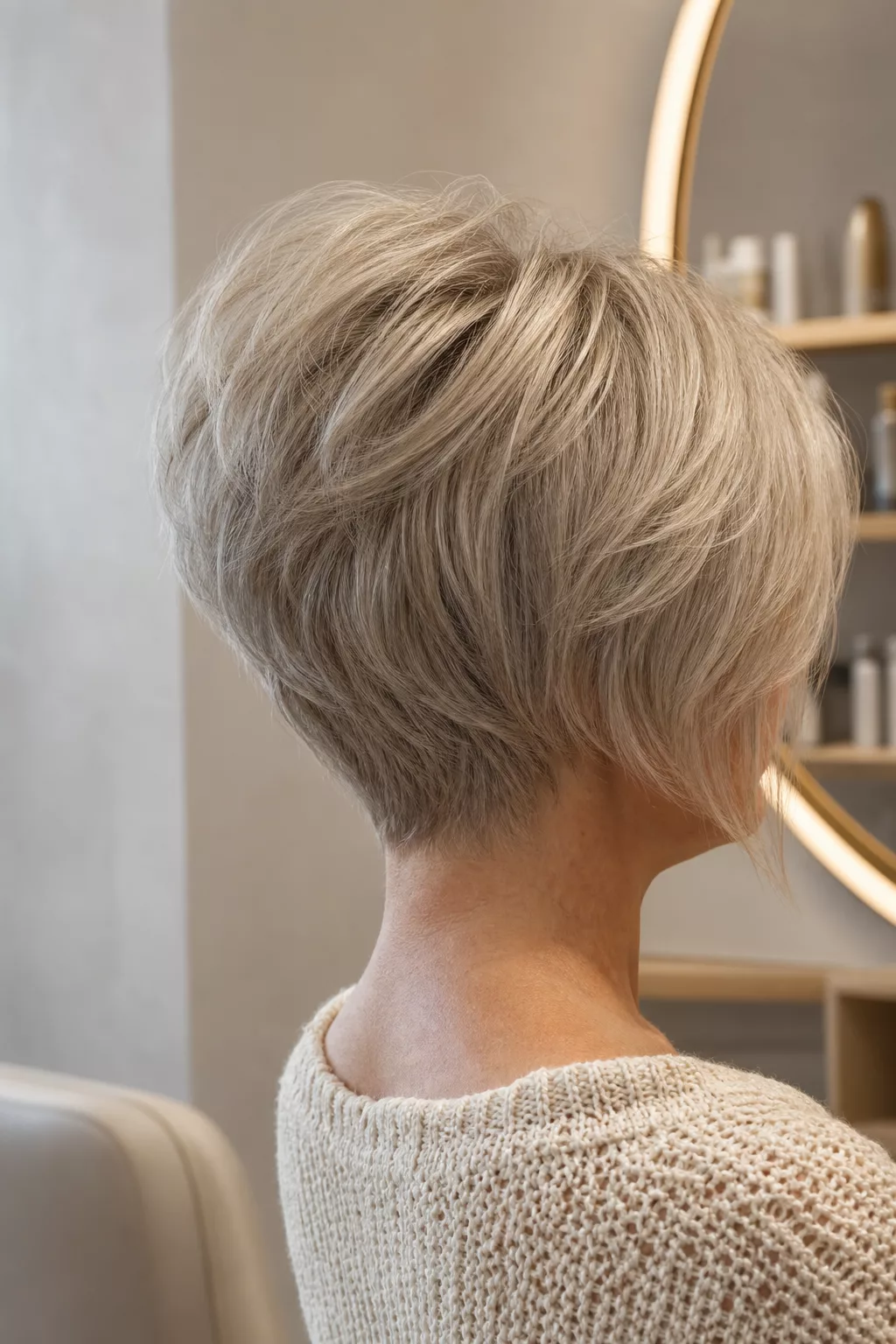
Thinned ends: layered bob and shag cut
If everything is fine at the top and only the tips are thin, you need structure right there. A layered A-line bob does this reliably: the contour tapers a little longer at the front and has a clear, almost angular edge. This defined line looks modern and feels fresher than a bob of the same length, which quickly looks well-behaved and flat on fine hair. The bob variations for fine hair over 60 show in detail which lengths and contours work.
A shag cut brings out even more movement. Its uneven layers and slightly uneven bangs create a bounce at the tips and parting that fine hair rarely has on its own. The cut thrives on its irregularity – the seemingly random steps in particular catch light and cast small shadows, which makes each strand appear denser. You can read in detail how the look can be worn on mature hair in our article on shag hairstyles over 60.
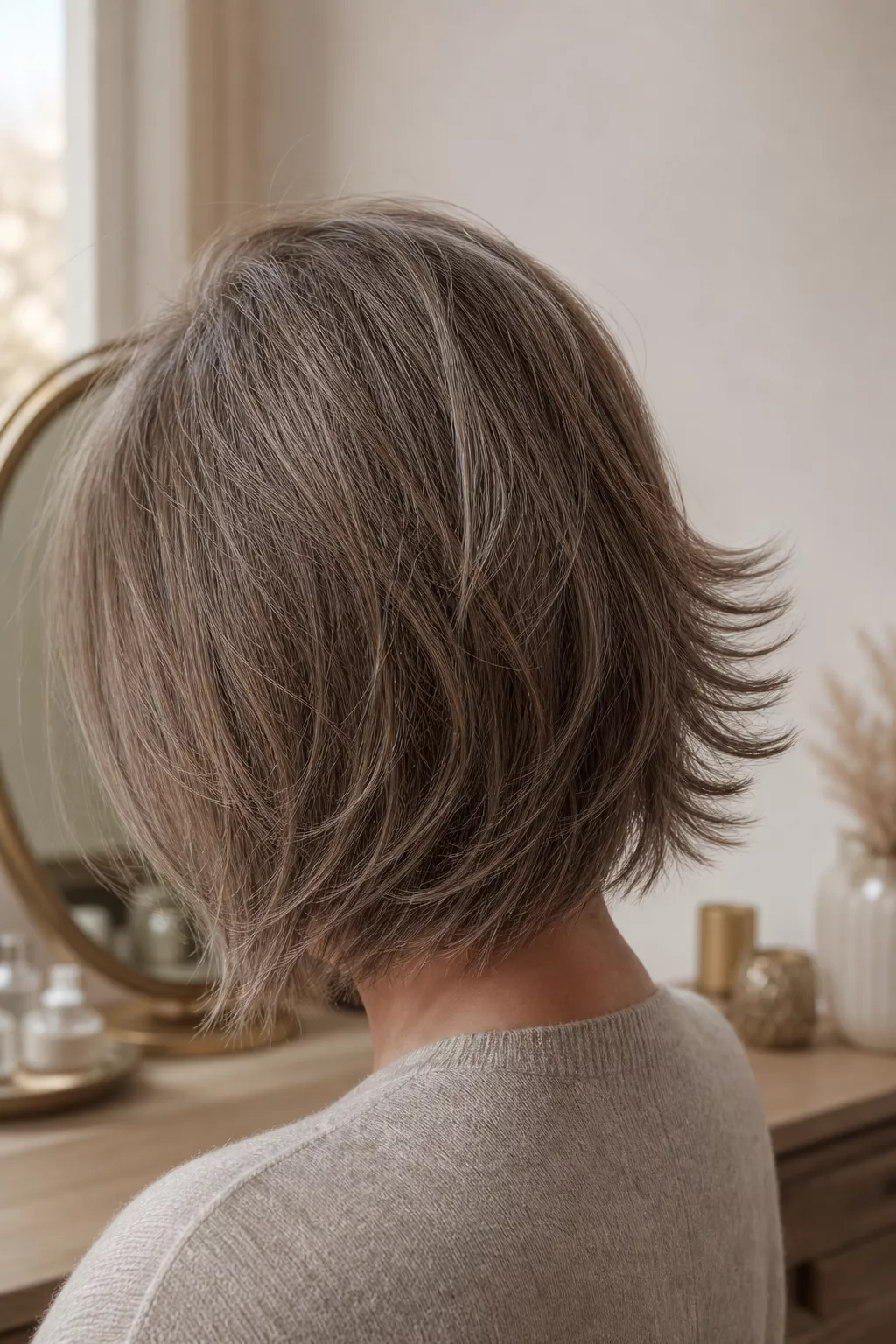
Overall floppy: shoulder-length cut with movement
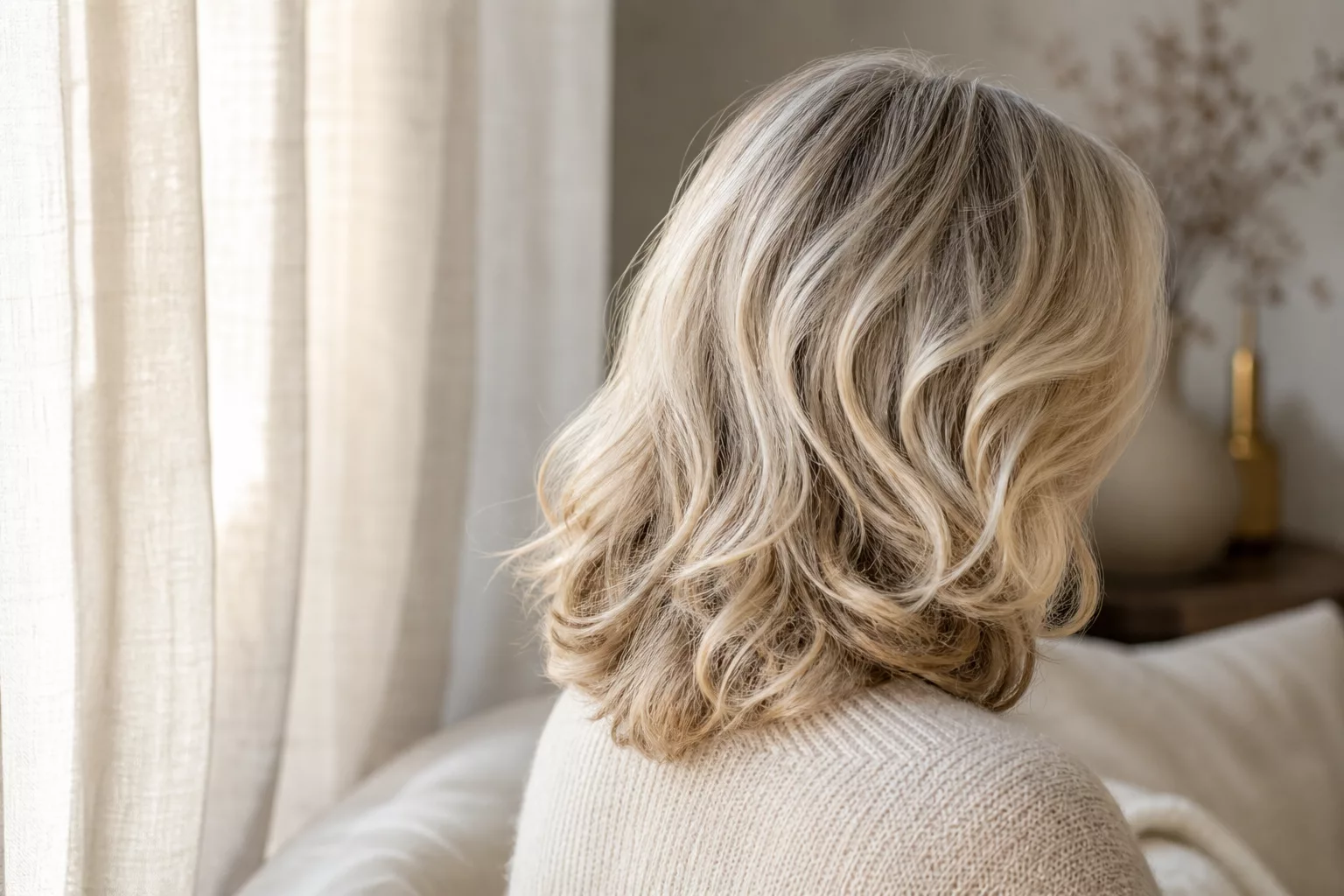
If the hair hangs weakly along its entire length and the problem cannot be isolated to the roots or ends, a medium-length cut is the most flexible answer. Shoulder-length, layered and slightly curved at the sides, it gives the hair structure in several places at the same time. The steps take weight out of the length without completely sacrificing the familiar length.
The texture does the rest. A loose wave – whether with a curling iron, with papillotes overnight or a coarse braid the evening before – breaks up the smooth, heavy surface and makes the hair appear fuller. Even a gentle S-wave on the lower two thirds is enough to turn limp lengths into moving, manageable hair. The advantage of this cut: It can be worn straight and serious or wavy and playful, depending on the occasion.

What’s Hot

Short hairstyles for women
When it comes to short haircuts over 50, styling time is a deciding factor
Cut finder: the right volume cut for fine hair over 60
If you are unsure which type applies to you, direct comparison helps. The table combines the three diagnoses with the appropriate cut – and the reason behind it.
| problem | Appropriate cut | Why it helps |
|---|---|---|
| Flat approach | Pixie cut or pixie with side parting | Little length, little weight – the hair stands up on its own at the roots. |
| Thinned tips | Layered A-line bob or shag cut | Angular contours and uneven steps give the tips support and bounce back. |
| Overall flabby | Shoulder-length cut with waves | Steps take weight, texture adds movement along the entire length. |
When you go to your next hairdresser’s appointment, don’t take a cell phone photo of someone else’s hairstyle with you, but rather the answer to one question: Where is my hair losing volume? With this diagnosis in mind, your hairdresser can make targeted cuts – and you go home with a cut that supports your fine hair exactly where it lacks volume.