


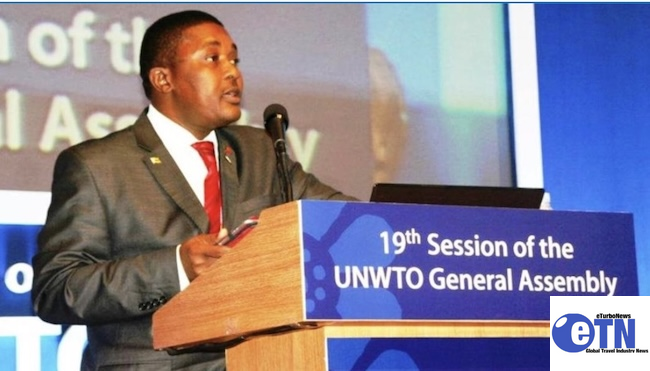
Former Zimbabwe Tourism Minister Walter Mzembi has been released after nearly a year in detention, ahead of a May 13 verdict. The politically sensitive case has raised questions about governance, while analysts suggest the move may align with Zimbabwe’s efforts to rebuild its global tourism image.
The release of former Foreign and Tourism Minister, Walter Mzembi, after nearly a year in detention, is being widely interpreted not just as a legal development, but as a politically calculated moment in Zimbabwe.
Mzembi walked free following today’s court appearance, with a final verdict now expected on May 1st3, nearly a month after his trial concluded. His prolonged detention without a verdict had increasingly drawn criticism from observers at home and abroad.
A Legal Case With Political Overtones
While officially a corruption-related case, Mzembi’s prosecution has long been viewed through a political lens. Once a high-profile figure in government and a global tourism ambassador through his work with the United Nations World Tourism Organization, he has also been perceived as a political rival within elite circles.
His detention—lengthy and unresolved for months after trial—fed a narrative that the case extended beyond legal accountability into political containment.
Now, his sudden release ahead of the verdict is raising a different question:
Why now?
Social media frames the narrative
Public reaction has been swift and revealing, with social media reflecting a mix of relief, skepticism, and political interpretation:
“This wasn’t justice—it was strategy. The pressure got too high. #JusticeForMzembi”
“You don’t hold someone that long, then release them days before a verdict without politics in play.”
“Zimbabwe is cleaning house—this case became too visible internationally.”
“A year in jail, then freedom before judgment? Something shifted behind the scenes.”
Others pointed to a broader institutional concern:
“If the system works, why did it take this long? Today’s release doesn’t erase that question.”
“Rule of law must be consistent—not convenient.”
Tourism Strategy Meets Political Reality
The timing of this development is particularly significant.
Zimbabwe has been actively working to reposition itself as an open, safe, and investment-friendly destinationwith tourism at the center of that effort. Engagement with the United Nations World Tourism Organization and efforts to project regional tourism leadership have been key pillars of this strategy.
Zimbabwe A World of Wonders
However, Mzembi’s case—given his international stature and legacy in tourism—has stood in stark contrast to that messaging.
Holding a former global tourism figure in prolonged detention without a resolved verdict risked sending conflicting signals to international partnersparticularly those sensitive to governance, transparency, and rule-of-law indicators.
Analysts now suggest the government may be seeking to de-escalate a politically and diplomatically costly situation.
Releasing Mzembi before the verdict could be interpreted as an attempt to:
- Reduce international scrutiny
- Re-align with pro-tourism messaging
- Avoid reputational damage ahead of future global engagements
A controlled reset?
Another interpretation gaining traction is that authorities are attempting a controlled reset of the situation.
By releasing Mzembi while maintaining the legal process, the government preserves:
- The appearance of judicial independence
- The ability to conclude the case formally
- Flexibility in managing both domestic and international reactions
At the same time, it potentially removes the immediate pressure point—his continued detention.
The fact that Mzembi remained in jail for such an extended period without a verdict had become increasingly difficult to reconcile with the country’s stated commitment to openness and reform.
Family reaction
In a brief conversation with eTN, Mzembi’s wife, Barbare Mzembi, expressed relief:
“We are overjoyed and relieved. We are still waiting to understand everything fully, but today is a good day for our family.”
What Happens Next?
The final verdict on May 1st3 will now carry even greater weight.
Beyond determining Mzembi’s legal fate, it will also serve as a signal of Zimbabwe’s broader political and judicial direction—particularly as the country seeks to balance internal dynamics with external perceptions.
For many observers, the question is no longer just that Mzembi is innocent.
It is whether this case reflects a turning point—or simply a recalibration—in how power, justice, and international image intersect in modern Zimbabwe.