


[gtranslate]
Dubai | Doha | Abu Dhabi | Manama | Riyadh | Tehran— The fragile ceasefire between the United States and Iran appears to be under severe strain after a new exchange of attacks, raising fresh questions for Gulf civil aviation, tourism confidence, and the region’s position as one of the world’s most important travel corridors.
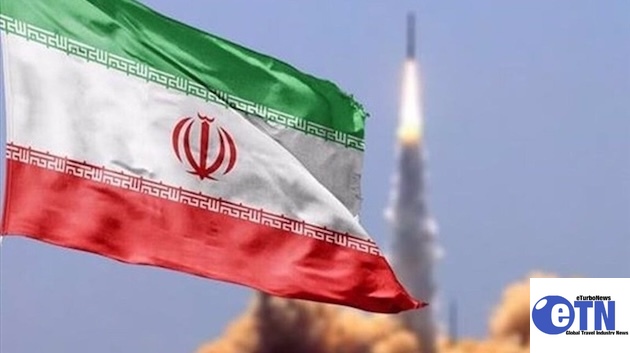
According to Al Jazeera, Iran said it attacked sites linked to the US military in Kuwait, Bahrain, and Qatar after US forces bombed targets in Iran. Al Jazeera also reported that the two sides had traded attacks for a second day, further weakening a ceasefire after US President Donald Trump said the truth was “over.”
For the Gulf’s aviation and tourism industries, the immediate concern is not only whether airports remain open but also whether passengers continue to trust the region as a safe and reliable hub.
Dubai International Airport, Hamad International Airport in Doha, Abu Dhabi’s Zayed International Airport, Bahrain International Airport and Saudi Arabia’s emerging aviation sector have spent years positioning themselves as global connectors. The latest escalation threatens that perception.
Airlines Focus on Operations Rather Than Politics
The first public responses from major Gulf airlines have remained operational rather than political.
Emirates, Etihad and Qatar Airways have directed passengers to flight-status tools, travel updates and booking-management channels, rather than issuing broader geopolitical statements. That reflects the standard practice of major airlines during security crises: communicate schedule changes, rerouting and passenger guidance, while avoiding political commentary.
This leaves travelers with practical updates, but little broader reassurance about how long the disruption risk may last.


US, Iran launch more attacks as mediators urge warring sides to uphold MoU
Iran says it attacked sites linked to the US military in Kuwait, Bahrain and Qatar after US bombed targets in Iran.
Tourism Boards Largely Silent
Equally significant is what has not been said.
So far, there has been no clear, coordinated public reassurance campaign from the tourism authorities of Dubai, Abu Dhabi, Qatar, Bahrain, or Saudi Arabia specifically addressing the renewed escalation and its implications for international visitors.
That silence may become part of the story. For destinations built on confidence, connectivity, and high-spending international travel, official reassurance can matter almost as much as operational continuity.
Arabian Travel Market Faces Fresh Pressure
The renewed conflict also arrives at a sensitive moment for the Gulf’s travel trade calendar.
Arabian Travel Market Dubai, part of the World Travel Market portfolio, has already faced repeated postponement concerns and is now under fresh scrutiny as buyers, exhibitors, and tourism boards reassess travel risk to the region.
Even if the event proceeds, the question is whether international delegates will feel confident enough to commit. Large exhibitions depend on forward planning, corporate travel approvals, insurance cover and perceived destination stability.
Riyadh Air’s Launch Meets a Geopolitical Test
The timing is also important for Saudi Arabia.
Riyadh Air is entering the international market as Saudi Arabia seeks to build Riyadh into a major global aviation hub. But new regional conflict risks complicating that launch narrative.
Even if Saudi airports are not directly affected, the perception of Gulf-wide instability could influence traveler decisions, corporate travel policies, and investor confidence. Riyadh Air joins Emirates, Etihad and Qatar Airways in facing a challenge that is not only operational, but reputational.
Civil Aviation Again Becomes a Strategic Issue
The Gulf aviation model depends on open airspace, predictable schedules and safe overflight corridors. When conflict intensifies near the Strait of Hormuz, civil aviation becomes part of the strategic equation.
Longer routings, changing airspace restrictions, insurance concerns, and passenger anxiety can quickly affect airline costs and traveler behavior. The Gulf’s hubs are built for scale and efficiency; Prolonged instability would test both.
Social Media Amplifies Traveler Anxiety
Social media is also shaping the travel-risk narrative.
Posts on X, Instagram, Reddit, and aviation forums have amplified concerns about possible diversions, cancellations, and airspace closures. Some posts provide useful real-time information, while others increase confusion or spread unverified claims.
For travelers, this creates a difficult information environment: official airline updates may be accurate but limited, while social media may be faster but less reliable.
An Industry at a Strategic Crossroads
A question now being asked privately by aviation executives, tourism investors, and event organizers is how resilient the Gulf’s travel economy would be if the current escalation developed into another full-scale regional conflict.
No one can predict whether that scenario will materialize, but the possibility itself has become a significant business risk.
The Gulf’s aviation model depends on open airspace, reliable flight schedules and the confidence of millions of transit passengers who choose Dubai, Doha, Abu Dhabi, Bahrain and, increasingly, Riyadh as global connecting hubs.
A prolonged conflict could pressure airline profitability, airport operations, travel insurance costs, conference attendance, hotel occupancy and tourism investment. Unlike short disruptions measured in days, an extended regional war could affect route planning, aircraft deployment, fleet growth and long-term destination confidence.
The region has repeatedly shown resilience after crises, from the pandemic to previous geopolitical shocks. But each new escalation tests the confidence that underpins its status as one of the world’s leading aviation and tourism centers.
The question is no longer simply whether Gulf airlines and airports can keep operating. It is whether governments, carriers, airports, hotels, tourism boards, and investors can sustain international trust if the region faces another prolonged conflict.
The Bigger Challenge
For now, Gulf airlines continue flying, airports remain open and tourism authorities remain largely cautious.
But the renewed US–Iran escalation has created a critical new situation for Dubai, Doha, Bahrain, Abu Dhabi, and potentially Saudi Arabia.
Keeping airports open is only part of the equation. The bigger challenge is restoring and maintaining traveler confidence.
If the ceasefire becomes obsolete and the region moves toward a wider conflict, the Gulf’s aviation and tourism industry may face one of its most serious tests in years: not merely moving aircraft safely, but convincing the world that it remains safe to travel through the Gulf.