




Only rarely can Apple CEOs act as sole decision-makers
First of all: The daily business of an Apple CEO does not consist of sketching out the next iPhone design in the morning or defining individual functions for iOS – unless your name is Steve Jobs and you even personally influence the design of the Apple Cafeteria menu. There are influential department heads for hardware, software, services, marketing, finance, legal, retail and operations who prepare and make decisions, develop options and are responsible for the specific processes. Big questions, on the other hand, are then brought to the top of the company, although there is no approval or rejection stamp from the CEO, but rather executive meetings, often with the involvement of the Board of Directors. These meetings take place almost daily and are an integral part of everyday working life, alongside briefings on sales figures, the supply chain situation, regulatory issues, legal proceedings and press and market reactions.
Prioritization? Definitely CEO
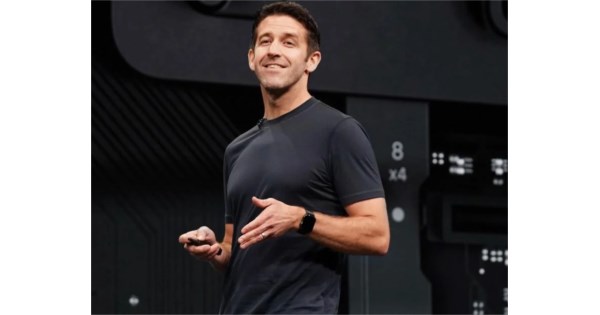
This is exactly where the real power of the CEO begins. He decides which projects receive priority or become a top priority, which teams receive more resources, which compromises are acceptable – and when a project/product is not yet good enough. This is exactly where there are likely to be differences between a Cook and a Ternus, because the two managers have different perspectives. Ternus is likely to intervene in hardware matters and demand changes much more often than the very operations-oriented Cook. At the same time, one can assume that product reviews and the assessment of prototypes at Ternus are considerably more intensive and occur more frequently than at Cook, who is not particularly interested in hardware.
Specifically: priorities under Cook or under Ternus
If hardware wants a thinner device, but software needs more space for the battery or cooling, services want to implement new subscription models or if an experimental product costs billions, then a technical question becomes a management question. The CEO cannot resolve such conflicts alone, but he provides direction as to which objectives are considered particularly important. At Cook, one can reasonably assume that the demands of the services team are set high, whereas Ternus certainly does not ignore such suggestions, but may take hardware aspects more seriously.
Under Cook’s leadership, Apple became an even more efficient, profitable, and globally secure machine. Supply chains, margins, services, data protection positioning, political relationships and long-term stability were heavily emphasized. Cook wasn’t a product romantic like Steve Jobs, but he was probably the right CEO for a phase in which Apple had to master enormous volumes, complex supply chains and ever larger platforms.
It depends on the questions
Ternus comes from a different place. As a long-time hardware boss, he is closer to product development, which is why day-to-day business could change which arguments are heard particularly early on. A CEO with a hardware background is likely to ask different questions than a CEO with an operations background: Is the product really better? Is the technology ready? Is the form factor convincing? Have we just built a more efficient version of the old or actually something new?
It is considered very likely in the industry that Ternus will act more visibly, especially when it comes to major product issues. “How aggressive is Apple with foldable devices? How much risk is allowed with new Mac form factors? How much does Apple have to integrate its own AI functions into hardware and operating systems instead of relying on partners? Which projects will be accelerated and which will be quietly ended?” – these are all challenges that a Ternus certainly views somewhat differently than Cook.
A short-term change of course is more than unlikely
Nevertheless, Ternus does not rule alone – especially since he certainly does not come to the post to turn Apple into a different company. The roadmap for the next two to three years is also likely to be largely in place, which is why the change in leadership will only become noticeable in the longer term. However, which projects are allowed to reach the home stretch and how much energy is devoted to the “Next Big Thing” is clearly something in which the CEO has a lot of weight. When Ternus, as CEO, frequently asks “Is this really a better product?” Instead of “How does this affect margins and the supply chain?”, meetings change because of that – and this is exactly where the power and importance of the CEO of a large corporation like Apple lies.