As global tensions rise, concerns are growing over the limited visibility and communication of UN Tourism’s new Secretary-General, Shaikha Al Nowais. While the organization highlights long-term initiatives, stakeholders question its responsiveness to immediate threats facing international tourism and call for more transparent, proactive leadership.
At a time when global tourism faces mounting geopolitical uncertainty, questions are emerging about the visibility and responsiveness of the new leadership at UN Tourism.
Secretary-General Shaikha Al Nowais of the United Arab Emirates took over the helm of global tourism as the UN Tourism Secretary General on January 1.
She started out well, when, on the day she took over, UN-Tourism made a timely statement about the tragedy surrounding the Crans-Montana fire in Switzerland.
Media shyness is an understatement
But after this, she maintained a necessarily low media profile—declining or avoiding engagement with major international outlets, including CNN, as well as industry-specific platforms such as eTurboNews. This lack of accessibility and transparency has been raising concerns among tourism stakeholders seeking clarity, reassurance, and direction amid an increasingly fragile period for the sector.
Tourism, long regarded as a driver of peace and economic development, is once again confronting external pressures. Heightened tensions in the Middle East, including threats attributed to Iran targeting global tourism hubs, have underscored vulnerabilities within the industry. These developments come at a time when the United Arab Emirates itself has faced security challenges, further raising expectations for strong, visible leadership from the head of a UN-affiliated tourism body.
UN Tourism – UNESCO
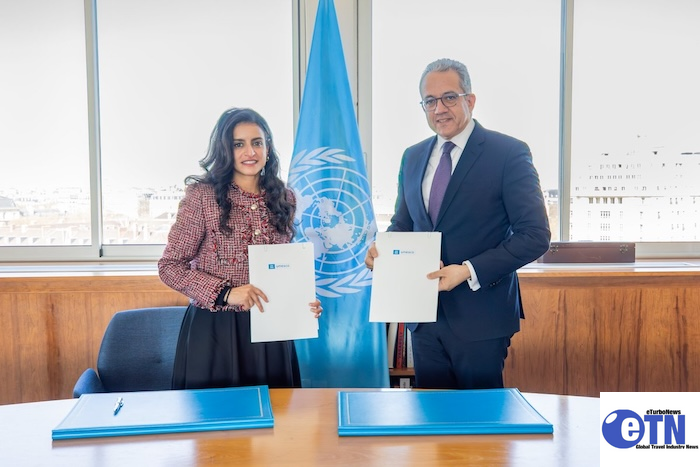
Yet, instead of direct engagement or crisis-oriented messaging, recent communications from UN Tourism have focused on long-term institutional initiatives. A statement released today highlighted a newly signed memorandum of understanding between UN Tourism and UNESCO. The agreement aims to strengthen cooperation for “sustainable, inclusive, and resilient tourism worldwide,” emphasizing cultural exchange, economic development, and community impact.
While such frameworks are essential for long-term growth, critics argue they fail to address the immediate concerns facing global tourism. The absence of open dialogue, press briefings, or direct responses to unfolding risks has led some observers to question whether the organization is adequately aligned with current realities.
The transition in leadership had initially sparked hope for a reset within UN Tourism, following the controversial tenure of former Secretary-General Zurab Pololikashvili. Many in the industry anticipated a shift toward greater transparency, inclusiveness, and responsiveness. However, early impressions suggest continuity rather than change, with much of the existing internal structure and team remaining in place.
Destination Reputational Resilience
The only time the concept of resilience has been publicly linked to the Secretary-General appears to have been shortly after her appointment, when she signed the foreword to the book “Destination: Reputational Resilience,” Authored by the Hon. Edmund Bartlett, Minister of Tourism for Jamaica, and Professor Lloyd Waller of the Global Tourism Resilience and Crisis Management Center in Jamaica. Beyond this contribution, stakeholders note a lack of visible emphasis on resilience in current communications despite escalating global risks.
UN Tourism Secretary General Election Questions
Speculation has also surfaced regarding the circumstances surrounding her election as Secretary-General, with some industry voices pointing to the significant influence and financial backing of her home country. While such claims remain unverified, they contribute to a broader narrative of concern about governance and accountability within the organization.
Credible, visible, and proactive leadership at UN Tourism is missing
As global tourism navigates one of its more uncertain chapters, the need for credible, visible, and proactive leadership has never been greater. Stakeholders across the public and private sectors are increasingly calling on UN Tourism to step forward—not only with strategic agreements, but with clear communication, accessibility, and a demonstrated understanding of the urgent challenges at hand.
For now, the silence at UN Tourism is being noticed.
eTurboNews will continue to monitor developments and invites UN Tourism leadership to engage in an open dialogue with the global tourism community.