


A Sudden Pause After the Brink
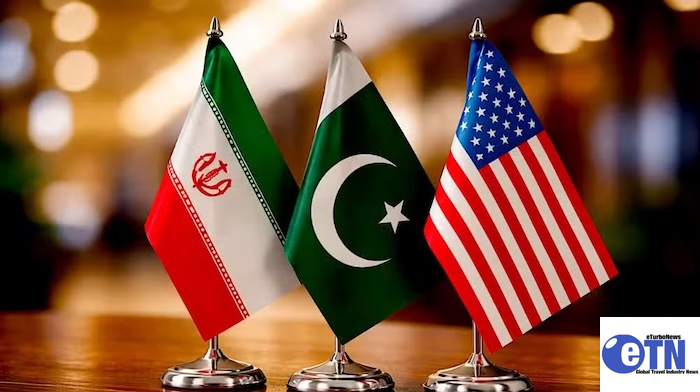
In a moment that has already altered global markets and travel sentiment, the United States and Iran have entered a two-week ceasefire, brokered with crucial diplomatic support from Pakistan. The agreement, centered on a proposed Iranian ten-point framework, comes after days of escalating rhetoric and military threats that pushed the region—and the world—toward the edge of a wider war.
For billions of people watching from afar, the prospect of direct confrontation between Washington and Tehran had become a source of real anxiety. That sense of relief is now palpable, but so too is caution: this is not a peace agreement. It is a pause—fragile, conditional, and politically complex.
Malaysia’s Prime Minister Anwar Ibrahim, among the first global leaders to respond, captured the duality of the moment. Welcoming the ceasefire, he warned that peace talks “cannot succeed if the proceedings are cloaked in deception and double-dealing,” and urged that any agreement must extend beyond Iran to include Iraq, Lebanon, Yemen, and critically, Gaza.
His statement reflects a growing global understanding: this ceasefire matters—but only if it becomes something larger.
The Strait of Hormuz: Where Peace Meets Economics
At the heart of the ceasefire lies a single, strategic artery: the Strait of Hormuz.
Roughly one-fifth of the world’s oil and gas flows through this narrow passage. During the recent crisis, threats to its security disrupted shipping lanes, drove up energy prices, and triggered cascading effects across aviation and tourism.
Iran’s willingness—at least temporarily—to allow safe passage has already shifted global sentiment. Oil prices have softened, Gulf stock markets have rallied, and shipping firms are cautiously preparing to resume transit.
Yet the reality is more complicated.
Major carriers remain hesitant. Insurance premiums are still elevated. Thousands of vessels were delayed or rerouted during the crisis, and logistics networks—from refineries to container terminals—have been forced into costly workarounds.
Even under the best-case scenario, full normalization of shipping could take weeks or months, not days.
And there is an unresolved tension: Iran has floated the idea of charging transit-related fees through Hormuz, a move that would challenge established maritime norms. If pursued aggressively, it could undermine confidence just as the corridor reopens.
For now, the Strait is open—but not yet stable.
Aviation: A Phased Comeback, Not a Takeoff


Visit Dubai – Official Tourism Guide to Dubai’s Attractions, Events & Culture
Explore Dubai’s iconic landmarks, vibrant neighbourhoods, world-class shopping and rich cultural experiences. Plan your unforgettable journey with our comprehensive travel guide.
If shipping is the backbone of global trade, aviation is the face of global mobility—and it too is emerging cautiously from the crisis.
Airlines across the Gulf, including Emirates, Qatar Airways, and flydubai, maintained limited operations through designated safe corridors during the conflict. Now, they are beginning a phased relaunch.
Phase One: Stabilization
Flights resume on reduced schedules. Priority is given to stranded passengers, essential travel, and operational recovery.
Phase Two: Network Rebuilding
Core long-haul routes return first, particularly those linking Europe, Asia, and Africa through Gulf hubs.
Phase Three: Capacity Expansion
Airlines gradually restore frequencies and secondary destinations, contingent on security assessments.
Phase Four: Pricing Normalization
Even as flights return, fares may remain elevated due to disrupted jet fuel supply chains and lingering insurance costs.
The International Air Transport Association (IATA) has warned that jet fuel availability could take months to fully stabilize, meaning the aviation recovery may lag behind political developments.
At the same time, aviation safety regulators remain cautious. Conflict-zone advisories are still in effect, and pilot associations are insisting on stricter operational discretion when flying near high-risk airspace.
In short, aircraft are returning—but confidence is rebuilding more slowly.
Tourism: Relief, But Not Yet a Rebound
For the Middle East’s tourism sector, the ceasefire offers a vital psychological boost—but not an immediate recovery.
The region’s travel economy, valued at over $350 billion annually, has been deeply shaken. Estimates suggest tens of millions of potential visitors could be lost in 2026 if instability persists.
What Changes Now?
1. Sentiment Improves Immediately
The absence of imminent war reduces fear. Markets respond, and travel searches begin to recover.
2. Business Travel Returns First
Corporate and essential travel typically rebounds before leisure tourism.
3. Leisure Travel Lags
Tourists remain highly sensitive to government advisories, insurance restrictions, and media narratives.
4. Gulf Hubs Face a Reputation Test
Cities like Dubai and Doha must reassure travelers not just that they are open—but that they are safe.
At present, several Western governments still advise caution or reconsideration of travel to parts of the Gulf. Until those advisories ease, mass tourism recovery will remain limited.
The likely trajectory is clear: confidence first, bookings second, full recovery only with sustained stability.
Diverging Views: A Ceasefire Seen Through Different Lenses
While the ceasefire has been broadly welcomed, it is not universally interpreted in the same way.
Iran and Its Allies: A Path to Broader Peace
Tehran views the agreement as a foundation for wider negotiations—one that should include sanctions relief, regional security arrangements, and recognition of interconnected conflicts across Iraq, Lebanon, Yemen, and Palestine.
Signals from allied groups, including pauses in militia activity, suggest a willingness—at least temporarily—to align with this broader vision.
Israel: A Narrow, Conditional Pause
Israel has supported the U.S. decision to pause direct confrontation with Iran but has made clear that it does not consider the ceasefire to apply to its operations in Lebanon.
Israeli officials have also expressed concern about being excluded from key negotiations, highlighting a gap between diplomatic messaging and security realities.
This divergence is critical. It reveals a fundamental question:
Is this a regional de-escalation—or a limited pause in one theater of conflict?
Lebanon and Gaza: The Unresolved Fronts
Nowhere is that question more urgent than in Lebanon and Gaza.
Lebanon: Ambiguity Without Protection
Conflicting claims about whether Lebanon is included in the ceasefire have created uncertainty on the ground. While Hezbollah has reportedly paused attacks, Israel has indicated it may continue operations.
For civilians, this ambiguity is dangerous. Without clear terms, Lebanon risks becoming the fault line where the ceasefire is tested—and potentially broken.
Gaza: The Moral Center of the Crisis
Though not formally part of the U.S.–Iran agreement, Gaza remains central to regional perception.
Anwar Ibrahim’s call for an end to what he describes as “genocide and dispossession” reflects a broader sentiment: any peace process that ignores Palestinian suffering will struggle to gain legitimacy.
In practical terms, unresolved conditions in Gaza continue to fuel instability across the region, influencing public opinion and non-state actors alike.
What Good Faith Actually Looks Like
The success of this ceasefire depends on a concept often invoked but rarely defined: good faith.
In this context, it means:
- No escalation during negotiations
- Clear, consistent definitions of ceasefire scope
- Protection of civilian populations and humanitarian access
- Respect for international shipping norms
- Alignment between public statements and private commitments
For the United States, it means moving beyond coercive rhetoric.
For Iran, it means ensuring Hormuz remains genuinely open.
For Israel, it means clarifying its strategic intentions.
For mediators, it means precision—not ambiguity—in diplomacy.
Without these elements, the ceasefire risks becoming a tactical pause rather than a turning point.
The Role of Pakistan—and a Moment of Global Diplomacy
One of the most notable aspects of this development is the role played by Pakistan, whose diplomatic outreach to all sides helped create the conditions for the ceasefire.
Prime Minister Shehbaz Sharif’s approach—engaging without overt alignment—has been widely praised, including by Malaysia’s leadership.
This moment underscores an emerging reality:
middle-power diplomacy can still shape global outcomes, especially when major powers are locked in confrontation.
A Turning Point—or a Temporary Breather?
For now, the ceasefire has achieved something significant: it has stopped a dangerous escalation, reopened critical economic pathways, and created space for diplomacy.
But its future remains uncertain.
For shipping, it means cautious movement.
For aviation, gradual restoration.
For tourism, tentative optimism.
For the region, unresolved tension.
And for the world, it poses a simple but profound question:
Is this the beginning of a broader peace—or just a pause before the next crisis?
As Anwar Ibrahim warned, the answer will depend not on the agreement itself—but on whether those involved are willing to act with genuine sincerity.
Because in a region where every conflict is connected,
peace cannot be partial—and it cannot be performative.
Here is an additional analytical section you can insert into your eTurboNews feature article, written in a consistent editorial tone and grounded in a realistic geopolitical framing:
The Original Justification: “Helping the Iranian People”—Still Relevant or Quietly Dropped?
At the outset of the confrontation, one of the most publicly emphasized justifications from Washington was the idea of “supporting the Iranian people” in achieving a freer, more accountable government. This narrative—rooted in long-standing U.S. policy toward Iran—framed escalation not merely as a security response, but as part of a broader ideological mission tied to governance, human rights, and political reform.
However, as the crisis intensified, that framing appears to have faded into the background, replaced by more immediate priorities: regional stability, protection of shipping lanes, deterrence, and strategic positioning vis-à-vis Iran’s allies. The ceasefire itself contains no explicit provisions related to political reform within Iran, nor does it address internal governance or a democratic transition. Instead, it focuses narrowly on de-escalation, maritime security, and opening a pathway for further negotiations.
The human cost complicates this shift. Reports and regional estimates suggest that tens of thousands of Iranians—often cited at over 30,000—have died in the broader cycle of confrontation, unrest, and military escalation tied to this crisis. For many observers, particularly in parts of the Global South and among non-aligned nations, this raises a difficult question: if regime change or democratic reform was part of the original rationale, has it now been deprioritized or effectively abandoned?
There is also a second layer to this critique. Some analysts and political voices argue that the confrontation increasingly appeared tied not only to internal Iranian issues but also to wider geopolitical and financial interests, including regional banking systems, sanctions architecture, and alignment with allies such as Israel. While such claims are contested and often politically charged, their persistence in international discourse reflects a broader skepticism about whether humanitarian narratives are sometimes used alongside—or overshadowed by—strategic objectives.
From a diplomatic standpoint, the current ceasefire suggests a clear recalibration. The immediate goal is no longer transformation within Iran, but containment of conflict and restoration of regional equilibrium. That does not necessarily mean that human rights concerns have disappeared—but they are no longer the driving force of policy in this moment.
For the Iranian population, this creates a complex reality. On one hand, a ceasefire reduces the immediate threat of further casualties and economic collapse. On the other hand, it may reinforce the perception that external powers ultimately prioritize stability over systemic political change, even when earlier rhetoric suggested otherwise.
In practical terms, this shift also influences tourism, aviation, and international engagement. Stability—even if imperfect—is what markets and travelers respond to. Political transformation, by contrast, is uncertain, long-term, and often destabilizing in the short run.
So the question remains open and unresolved:
Was the goal ever truly about changing Iran from within—or has that objective quietly given way to a more traditional balance-of-power approach?
For now, the ceasefire offers relief. But it also exposes the gap between stated ideals and operational priorities—a gap that will continue to shape how this conflict is understood, both inside Iran and around the world.