
Turkish Airlines Becomes Global Aviation Lifeline After Emirates, Qatar, Etihad Halt Operations

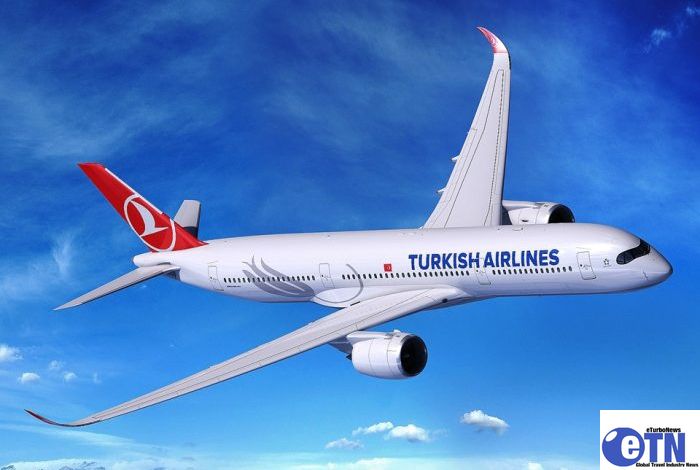
ISTANBUL — When three of the world’s most influential long-haul carriers — Qatar Airways, Emirates, and Etihad — abruptly suspended operations, the shockwaves rippled far beyond the aviation industry. Within days, global air travel patterns were upended, supply chains strained, and millions of passengers left searching for alternatives.
At the center of the disruption, one airline has moved quickly — and, in many cases, decisively — to fill the void: Turkish Airlines, a member of Star Alliance.
For example, Istanbul-Seychelles is now replacing several Gulf carriers, but Seychelles reacted by adding its own national airline to come to the rescue, together with Turkish Airlines.
Already known for flying to more countries than any other carrier, the Istanbul-based airline has found itself thrust into an unprecedented role as the primary connector between continents. From Europe to Asia, Africa to Australia, its network is now bearing a level of global dependence few airlines have ever experienced.
“We are seeing demand levels that exceed even our most aggressive forecasts,” a senior company official said, speaking on condition of anonymity due to the sensitivity of ongoing operational adjustments. “This is not normal growth. This is a systemic shift.”
A Sudden Vacuum in the Skies
The suspension of Gulf carriers — long considered pillars of global aviation — has left major transit hubs such as Doha, Dubai, and Abu Dhabi eerily quiet. For years, those airports served as critical interchange points linking East and West, North and South.
Their absence has forced airlines, governments and passengers alike to reroute.
Turkish Airlines, whose geographic position straddles Europe and Asia, was uniquely positioned to respond. Istanbul Airport, already one of the largest in the world, has rapidly evolved into the primary transit hub for long-haul international travel.
Flight boards that once displayed a mix of global carriers are now increasingly dominated by departures from Turkish Airlines.
Expansion at Speed
The airline has accelerated expansion plans that, under normal circumstances, would have taken years to implement.
This week, Turkish Airlines announced the addition of London Stansted as its third airport in the British capital, complementing existing service to Heathrow and Gatwick. The move brings its total number of UK destinations to six and increases its combined weekly frequencies across the United Kingdom and Ireland to 168 during the summer schedule.
Executives framed the expansion as both strategic and necessary.
“The United Kingdom continues to be one of our key markets,” said Fuat Fırat, Vice President for Sales in Middle and Northern Europe. “This addition strengthens connectivity and provides greater flexibility for passengers accessing our global network.”
Industry analysts, however, see the move as part of a broader and more urgent repositioning.
“This is not just market growth — it’s capacity substitution on a global scale,” said an aviation consultant based in London. “Turkish Airlines is stepping into routes that were previously dominated by Gulf carriers. The speed is remarkable.”
Opportunity Meets Strain
The airline’s rapid ascent has brought significant advantages.
Passenger numbers have surged, particularly among premium travelers and frequent flyers who previously favored Gulf carriers. Cargo operations have also expanded sharply, as businesses scramble to maintain disrupted supply chains.
Yet the strain is equally evident.
Airport infrastructure, while vast, is being tested. Crews are operating at high intensity. Aircraft utilization rates have increased, leaving little margin for delays or maintenance disruptions.
“There is a real risk of operational fatigue,” said a European aviation regulator. “Scaling this quickly is extraordinarily complex.”
Employees describe longer shifts and tighter turnaround times. Recruitment drives are underway, but training new pilots and crew members takes months — time the airline does not necessarily have.
A Strategic Balancing Act
To manage the surge, Turkish Airlines has begun implementing a series of measures:
- Increasing aircraft orders and accelerating delivery timelines
- Expanding code-sharing agreements to extend network reach
- Deploying advanced scheduling systems to optimize routes and capacity
- Exploring the use of secondary Turkish airports to relieve pressure on Istanbul
The airline is also under growing geopolitical pressure. Governments have quietly urged it to maintain key routes critical for trade, tourism and diplomatic travel.
“This is no longer just about commercial aviation,” one European official said. “There are national and international interests at stake.”
On Uncertain Horizon
For now, Turkish Airlines stands alone at the center of global connectivity.
Whether this position becomes permanent remains unclear. Much depends on if — and when — Gulf carriers resume operations. Their return could rapidly rebalance the market, restoring competition and redistributing passenger flows.
Until then, Turkish Airlines faces a defining test.
“It’s a moment of extraordinary opportunity,” said the London-based analyst. “But also one of extraordinary risk. Few airlines have ever been asked to carry this much of the world’s traffic so suddenly.”
Back at Istanbul Airport, the pace shows little sign of slowing. Aircraft continue to depart in steady succession, bound for cities across six continents.
In a world suddenly missing some of its biggest aviation players, one airline has become indispensable — not by design, but by necessity.