When I look at my first travel photos, I see one thing above all: a lot of enthusiasm, little plan. I photographed everything that came in front of my lens. Food, every house wall, the same church ten times. It was beautiful, but it was also incredibly random.
Over the years I’ve realized that it’s not about taking photos as much as possible, but rather consciously. And that travel photography is something different than just “taking vacation pictures.” With your photos you tell how you see the world. And that’s exactly what this guide is about.
If you are looking for specific motif ideas, you are welcome to take a look at my older posts, for example BLOGGER TIPS: How do I take beautiful vacation pictures? or 5 tips for travel photos – this will make your vacation photos unique. This is about how you approach travel photography a little more consciously right from the start.

Step 1: Stop wanting “perfect” travel photos
Especially at the beginning, demands often block you. The pictures should look like those in glossy magazines. Or like some travel influencers who spend their day producing exactly these photos.
The truth is: you are on vacation. You are tired, hungry, maybe you have children with you or you are in a bad mood. And you still want to take good photos. This only works if you take the pressure off yourself.
Instead, ask yourself some real questions:
- What do I want to capture from this trip?
- What mood should you feel later when you look at the pictures?
- What motives do I personally associate with this place?
If you start with questions like these, you automatically take different pictures. Instead of wanting “beautiful,” you look for honest. And honestly, it’s much more likely to be exciting.

Step 2: Travel photography for beginners means: learning to observe
The most important skill for travel photography is not technique, but patience. Many of my favorite pictures were taken because I stopped somewhere for a few minutes longer.
Typical situations:
- You see an interesting facade, but a delivery truck is currently parked in front of it.
- A place looks boring until someone walks through the picture with a red umbrella.
- The light is actually beautiful, but there is still a person, a bike, a movement missing.
A beginner’s mistake is often: take a photo, move on, check it off. What I’m doing today: I’m standing still. I’m watching. I’m waiting. And only then do I take photos.
If you only take one thing with you: Travel photography has a lot to do with patience. Not with equipment.
Step 3: Technique without panic – what you really need to understand
Yes I know. Aperture, exposure time, ISO, RAW, JPEG. You can learn everything by heart. Or you can roughly understand what it’s about and then stop driving yourself crazy.
Enough to get started:
- Light is more important than anything else. If the light is bad, even the best camera won’t save you much.
- An open aperture (small number, for example 1.8) blurs the background. This immediately looks more “photographic”.
- Too long an exposure time causes camera shake. If you’re shooting handheld, it’s better to use something shorter.
If you take photos with your smartphone, you can now even control a lot of it directly in the app. And honestly: it’s completely okay to start with your cell phone. The important thing is that you learn to look. You can upgrade the camera later, but not so easily.
Step 4: Get inspiration – find artistic photography online
What helped me the most was not another technical tutorial, but looking at good pictures. Not that polished Insta stuff that makes everything look the same, but photos that look like art.
This is worth its weight in gold, especially if you’re starting out with travel photography. You see:
- How others work with light
- How motifs are structured
- How proximity or distance is used
- How colors, emptiness, shadows are used as stylistic devices
You don’t have to go to a gallery for this. You can easily find artistic photography online and click through projects and series from young talents. I find it particularly exciting to look at students’ work because they are often bolder, rawer and more experimental. It’s less about likes and more about expression.
Important: This is not a call to copy. It’s about developing your own taste. What triggers something in you? Which images make you look longer? These are exactly the questions that change how you later photograph yourself.

Step 5: People, movement, everyday life – away from the pure postcard view
Everyone knows the typical tourist photos. You in front of the sight, looking head-on into the camera. You can do it. But it’s rarely exciting.
When I travel today, I think in terms of situations rather than postcards:
- I walk down a street and have my photo taken from behind.
- I’m carrying my child in my arms and someone takes a photo of us as we pass.
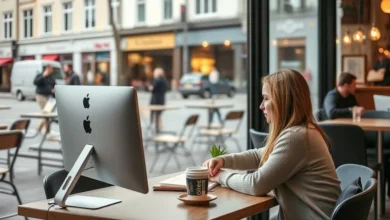
- I sit in a café and look out the window as life happens outside.
Travel photography for beginners also means having the courage not to just show yourself and others “perfectly”. A photo in which your hair is disheveled, your jacket is askew and the sun is shining can look a thousand times more real than a perfectly staged selfie.
Especially with a baby or child, the pictures quickly become chaotic. But that’s exactly what makes them so valuable later on. You don’t have to smooth everything out. You can show what it was like.
Step 6: Closeness and sensuality – what I learned from erotic art
One area that has changed my view of photography again is sensual and erotic photo art. Not because I do permanent nude shoots, but because it becomes very clear how light, bodies and suggestions are worked with.
Often enough:
- the back of a hand in the backlight
- a silhouette behind a curtain
- bare shoulders on which the light breaks
- Fabrics that only partially cover something
Such images do not thrive on bare skin, but on mood. And you can also take this with you for travel photography. You don’t have to undress anyone to photograph intimate or close moments. Details are enough.
If that appeals to you, it’s worth taking a look at real photographic art. For example, on platforms like the Student Art Market you can find erotic art on the Student Art Market. It’s less about the quick effect and more about how bodies are used as shapes, lines and shadows. You can see exactly these things when you travel: hands on the railing of a bridge, bare feet in the sand, hair in the wind.
Step 7: Series instead of individual images – this is how you tell a story
I used to try to take the one perfect photo of a place. Today I think more in series. A journey is not a single moment, it consists of many small scenes.
A simple exercise:
Find three types of images for each day:
- A picture showing the place
- An image that shows a person (you, friends, strangers, whatever you’re comfortable with)
- A detailed image (food, hands, pattern, shadow, room, door, sea, beach, platform)
If you do this, you won’t end up with a loose collection, but rather a story. The images are connected. And this feels a lot more like travel photography than random snapshots.
Step 8: Selection and Editing – the real magic
The truth is: Nobody only takes good pictures. Me neither. The difference is always what’s left at the end.
After a trip I sort out:
- Anything that is double flies.
- Anything that is just “yeah, totally okay” flies.
- I look at which images work together and which only have meaning for me personally.
Then I edit the images so that they fit together. That doesn’t mean everything has to look the same, but a certain mood doesn’t hurt. A warmer look for a summer trip, a little cooler for the north, maybe black and white for a specific series.
Conclusion: Travel photography for beginners is not a technical degree
If there’s one thing I wish I had understood sooner, it’s this: travel photography is not a competition. You don’t have to prove to anyone how good you are at taking photos. It’s about capturing your view of the world.
To get started you need:
- a little patience
- Desire to look
- Openness to inspiration through photographic art
- and the courage to throw away images that tell no story
Everything else comes with time. Camera, technology, editing. Start documenting your travels the way they feel for you. The rest grows with you. In this post are some pictures that I took on a short trip to Valencia. How do you like them?