


Ten centimeters of soil is all that many flat bowls provide. To the eye they are a piece of jewelry on the terrace, balcony or grave – for the roots of most potted plants they are a dead end. The same geraniums that grow in the deep pot will die in the shallow bowl after a few weeks. With the right plants for shallow bowls, however, such a container will remain densely planted and healthy all year round.
What’s important can be summed up in a nutshell: choose shallow-rooted species, ensure good drainage and only combine plants with similar requirements. If you leave a few basic evergreen plants and only replace the bloomers seasonally, you have little work and still have something to see at any time of the year.
Why shallow bowls need different plants than containers
A bucket provides the roots with a depth of 20, 30 or more centimeters. A shallow bowl often only has a hand’s breadth of substrate – and that’s exactly what determines whether it thrives or dies. Deep-rooted species immediately hit the ground and dry out because the small volume of soil barely retains moisture.
The solution is shallow rooters: plants that send their roots flat, wide instead of deep. They get by with little soil and still form dense cushions. The following have proven particularly useful:
- Blooming classics – horned violets, pansies, daisies (bellis) and primroses.
- Undemanding thick-leaved plants – Houseleek and sedum, which can also withstand dry phases.
- Structure and green – Dwarf grasses and low cushion perennials for the frame.
The second point is drainage. Water quickly accumulates in a shallow bowl, and wet roots rot even faster than dry ones dry out. A layer of expanded clay or gravel at the bottom catches the excess. Thirdly, only plants that have the same location and care requirements belong together – a sun-hungry sedum next to a shade-loving primrose rarely turns out well. If you are unsure how the species get along, you will find good clues on how to combine planting partners correctly.
Pro tips
- Less is more: It’s better to have three to five strong plants with room to grow than a dozen densely packed plants – crowded roots compete for the scarce water.
- Drainage from below: 3-5 cm of expanded clay or gravel on the ground, then a plant fleece on top, then the soil.
- Loosen soil: Mix some sand or broken expanded clay into the potting soil so that it doesn’t compact and excess runs off.
- Improve individually: If a bloomer dies, just replace it and leave the neighbors standing.
Spring: bulbous flowers and delicate bloomers for the shallow bowl
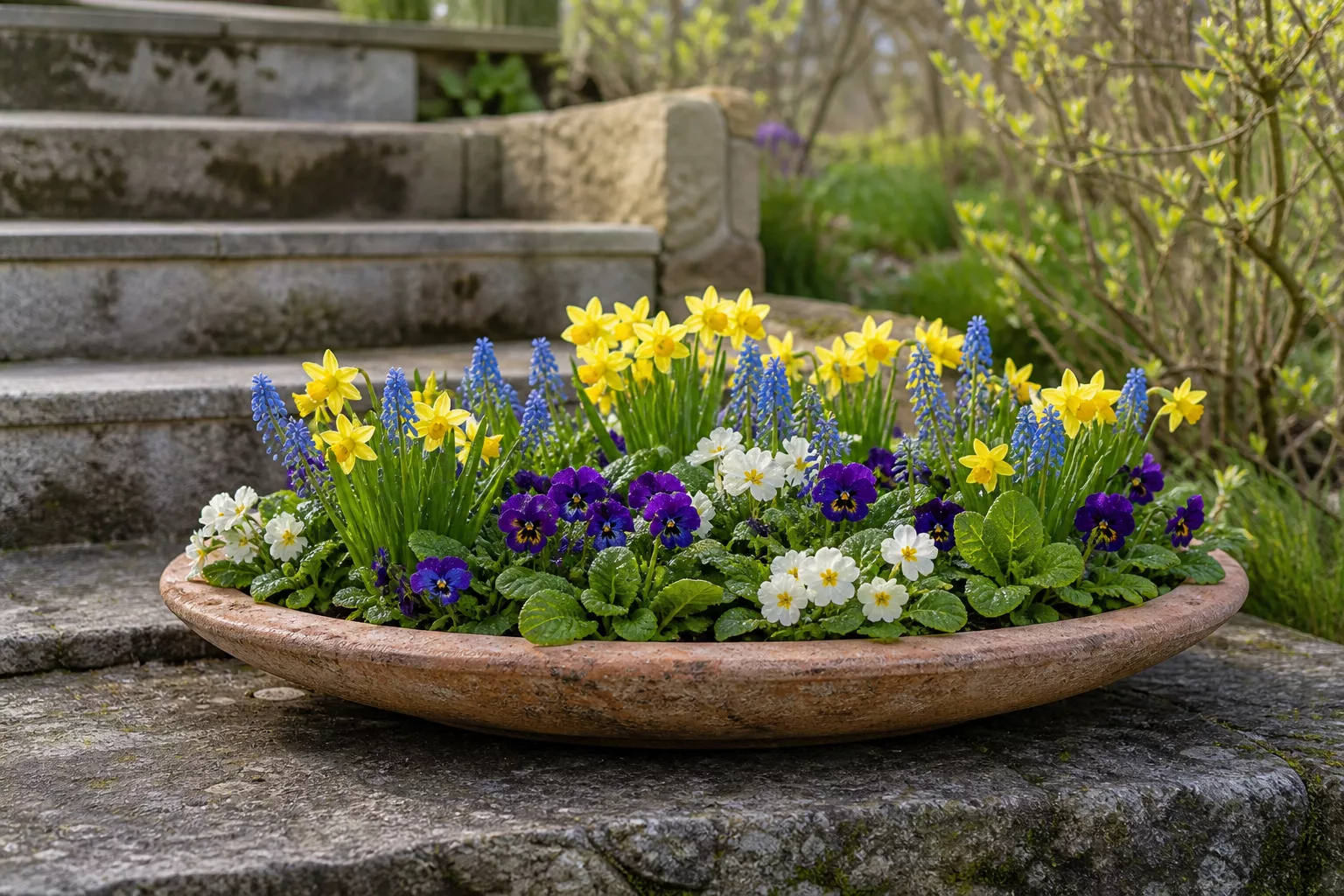
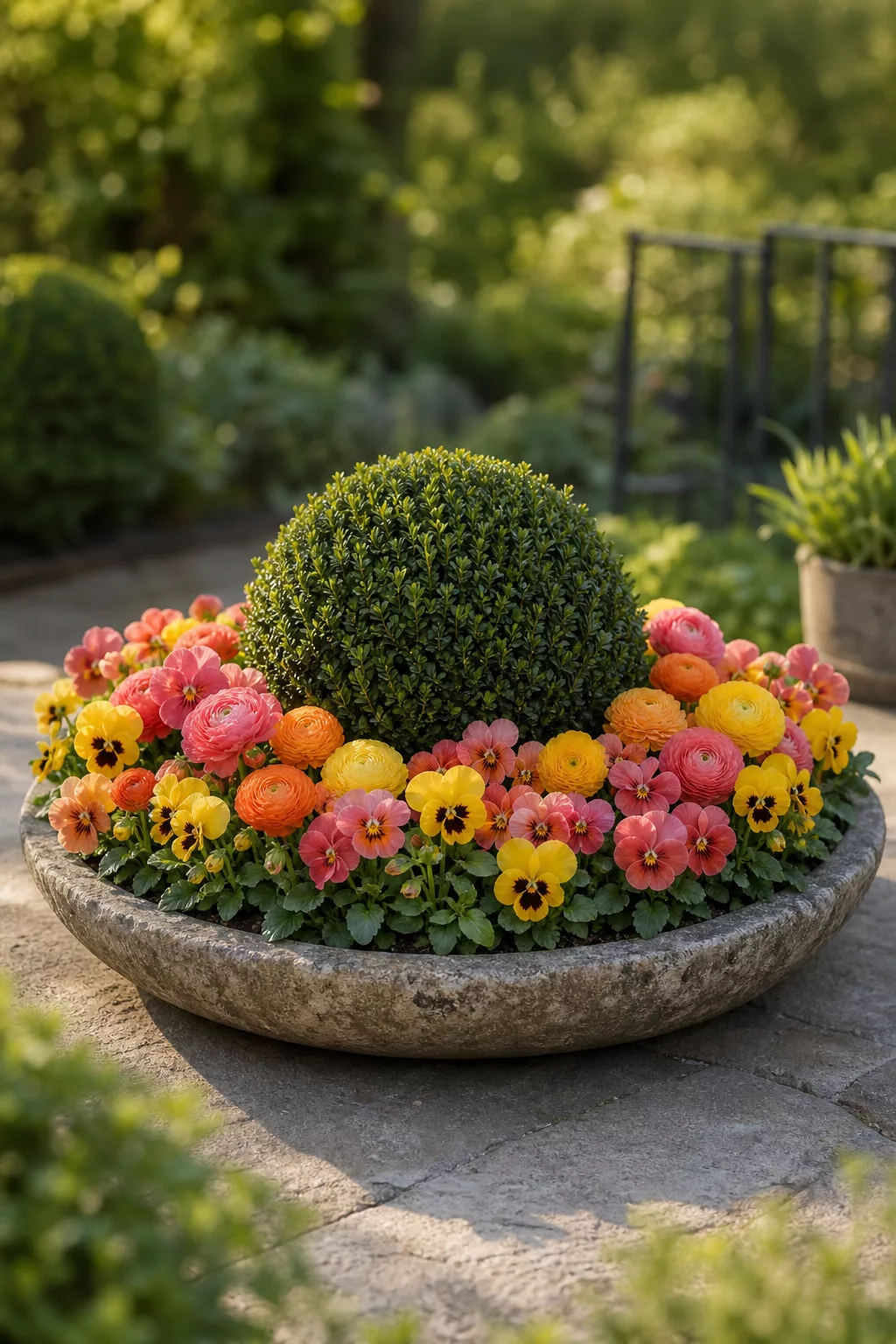
As the days get longer, bulb flowers move in. Low crocuses, small daffodils, grape hyacinths and early blooming tulips add the first height and color. In between, bellis, horned violets, primroses, ranunculus, alyssum, violets and forget-me-nots close the gaps. If a bare spot remains, a cushion of moss fills it with green until the flowers grow back.
A simple combination of three has proven successful for a grave bowl in spring: horned violets as a flat base, a few small onion flowers for height and climbing ivy that falls softly over the edge.

Summer: heat-tolerant splashes of color for balconies, terraces and graves
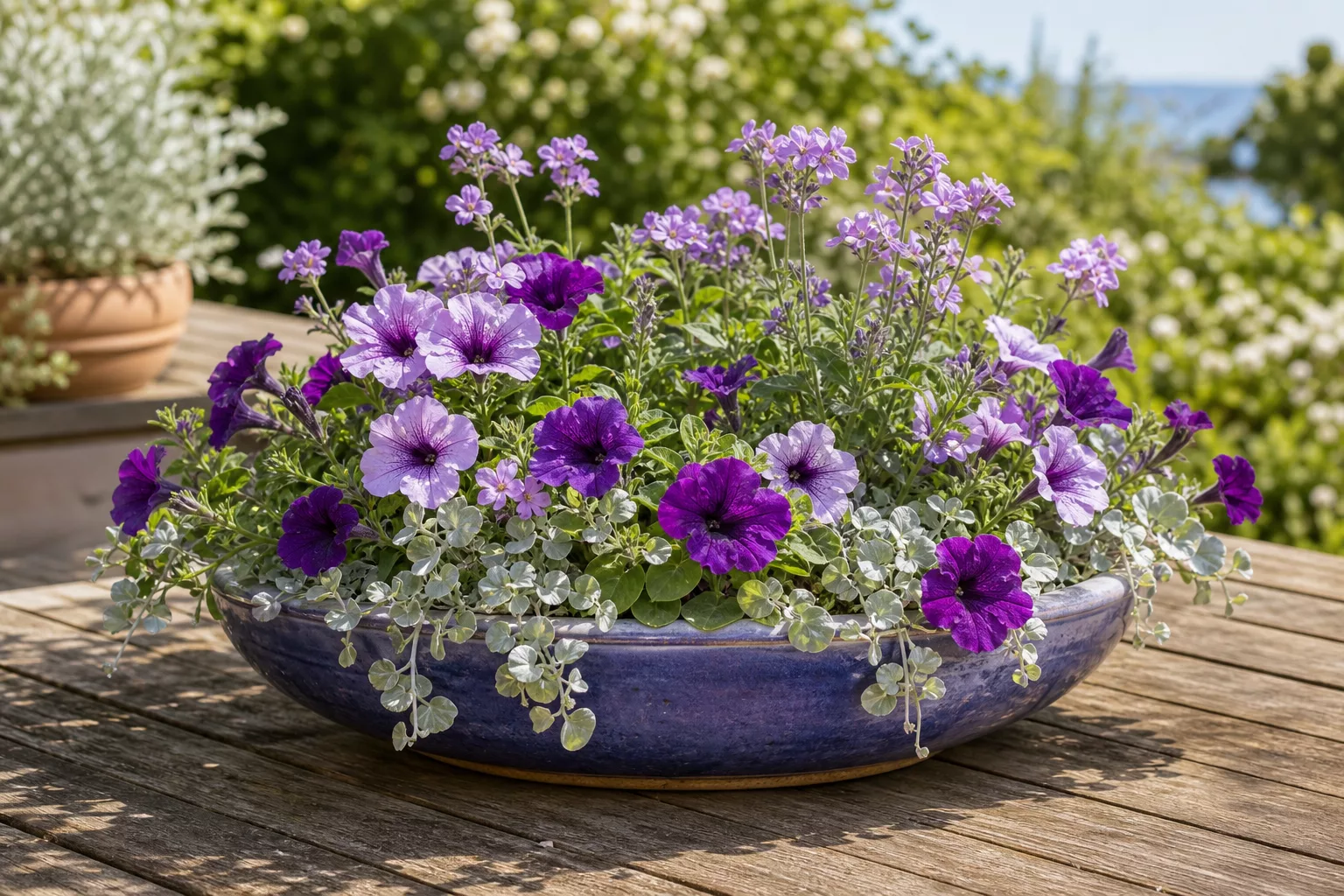
The selection is greatest in summer. Begonias, geraniums, petunias, fuchsias, lobelias and cranesbills provide color for weeks, but need reliable water on hot days. If you like it quieter, work with a fixed color concept: white-green looks cool and elegant, purple-silver looks elegant and tolerates the sun. Both combinations are currently on trend and make a small bowl appear larger. Almost everything goes well with geraniums, taking a look at which companion plants go well with geraniums helps with fine-tuning.
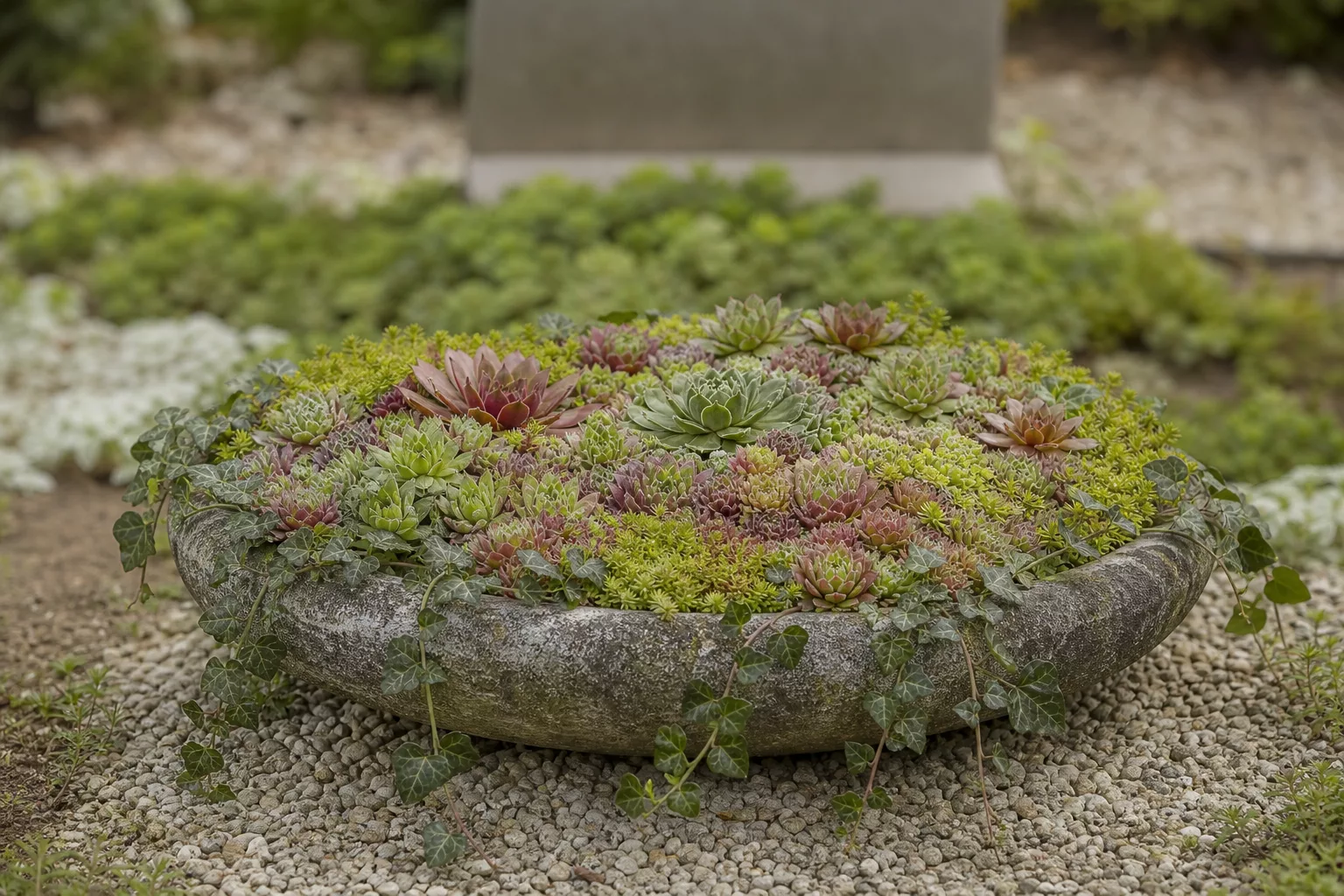
A separate paragraph belongs to succulents. They store water in their fleshy leaves and forgive any missed watering – ideal for a sunny, shallow bowl. Hardy species such as sedum and houseleek even make the container usable all year round and turn reddish in autumn. The easy-care Kalanchoe with its dense flower umbels is also suitable for pure summer joy; However, it is not hardy and needs to be brought in before the frost.
Autumn: frost-tolerant bloomers until the first frost
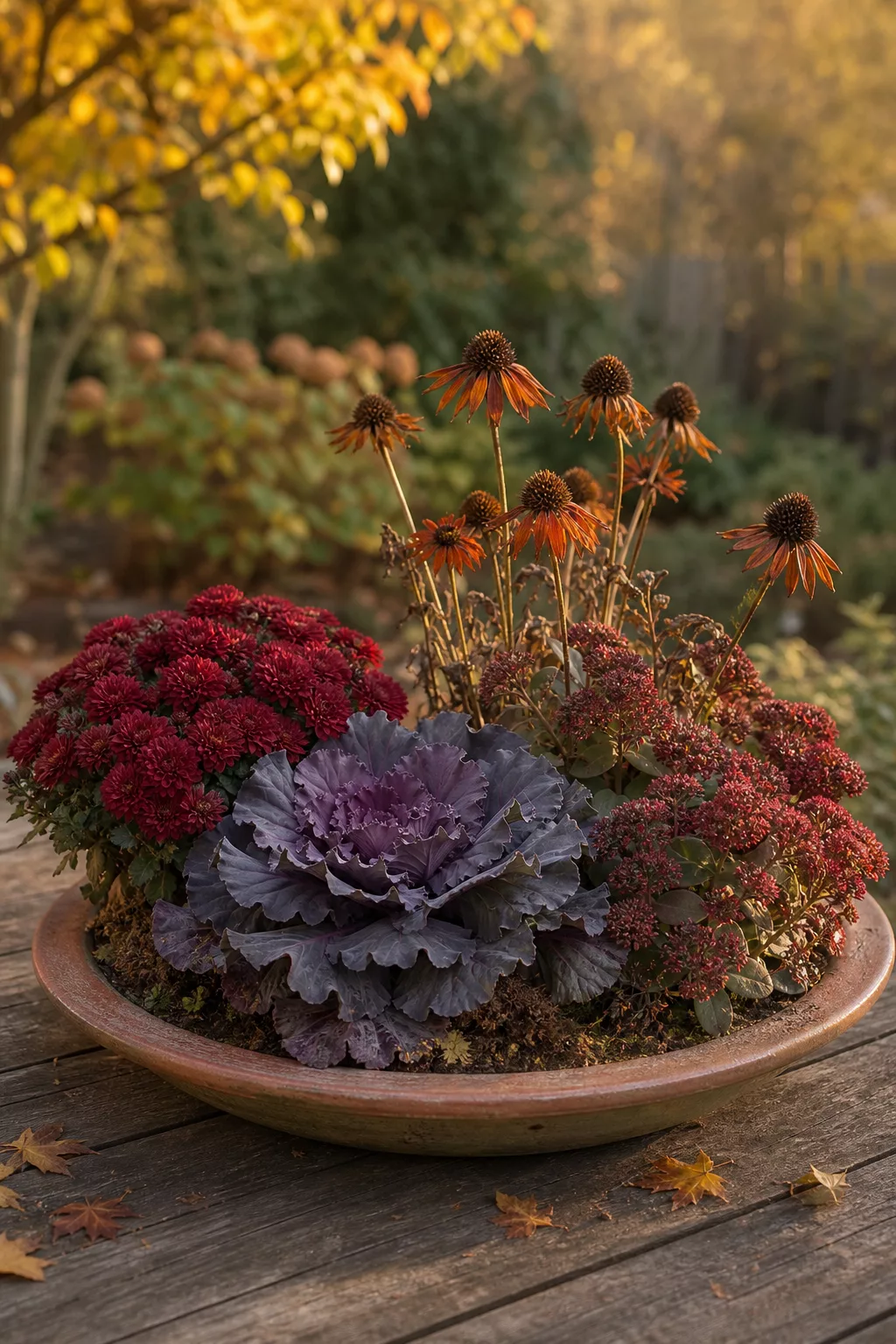
When the nights get cooler, more robust varieties take over. Chrysanthemums, common heather, mock berries and mock strawberries provide strong accents, as well as ornamental grasses, purple bells and pansies. A gray-purple ornamental cabbage gives the bowl structure, red sedum fills the area. The first frost falls in October in most regions – an autumn bowl will last reliably until then, and many of these plants can even tolerate the first light night frosts without damage.

Winter: hardy planting with Christmas roses, heather and conifers
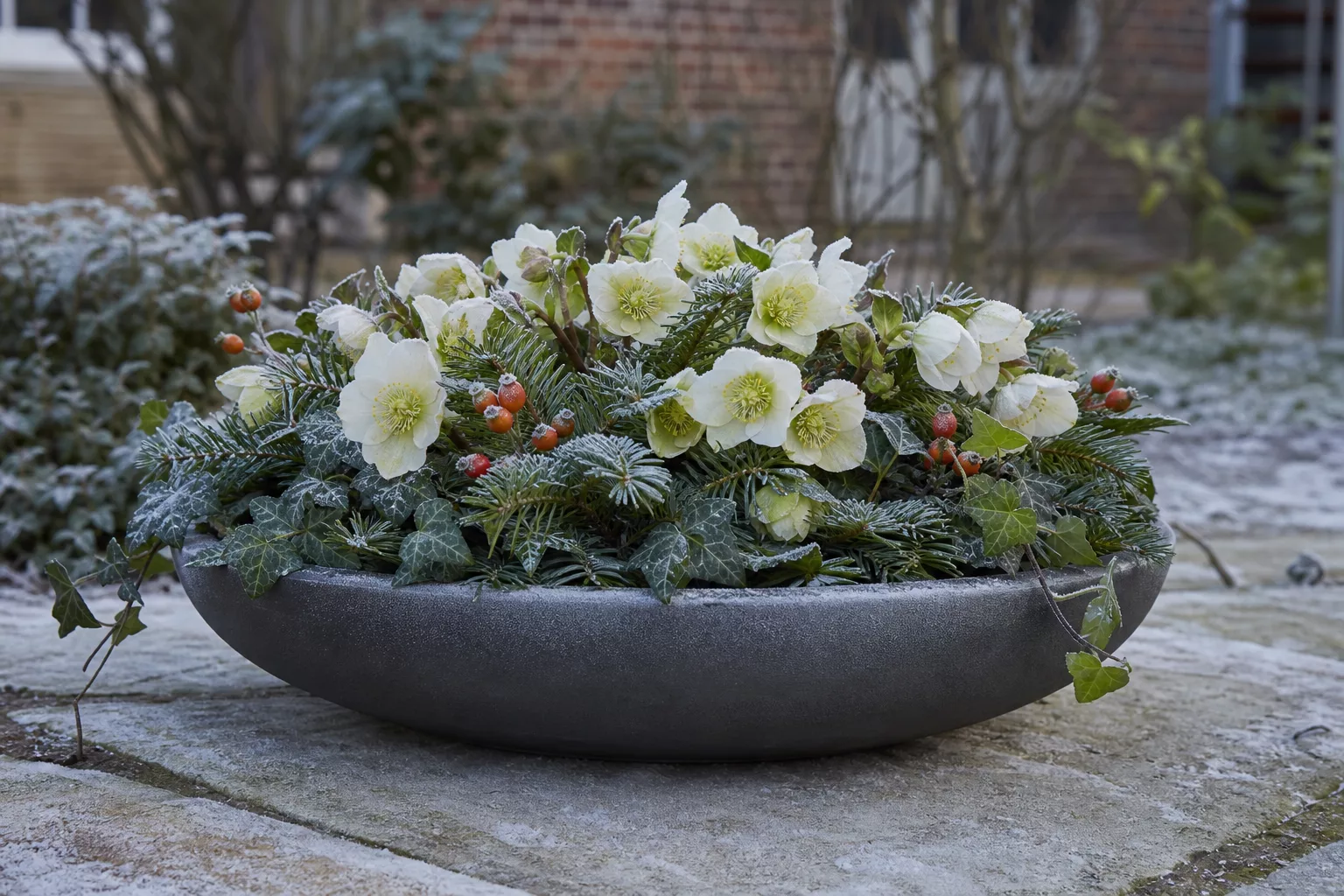
The bowl doesn’t have to stay empty even in winter. Christmas rose, winter heather (Erika), skimmia, gaultheria, dwarf conifers, star moss, autumn gentian and winter aster survive the cold, complemented by evergreen ivy. But what counts most now is the container: Only frost-proof material made of frost-proof clay, concrete, stone or thick-walled plastic can survive the winter without cracking. A drainage layer made of expanded clay prevents freezing water from bursting the roots. In the event of permanent frost, a fleece or jute mat protects around the bowl.
The Bavarian Garden Academy (LWG) explains why a pot plant needs more protection than the same species in a bed: With potted plants, the cold penetrates the root ball from all sides, while the garden soil warms the roots from below. The specialist authority’s recommendation is to leave the vessels protected outside for as long as possible, cover them with fleece or brushwood mats and keep them relatively dry before putting them away.
In winter, bare spots are concealed with fir greenery, a few decorative stones or pieces of bark – it immediately looks full, even though hardly anything is in bloom.
Plant all year round: basic plants plus seasonal changes
If you don’t want to completely replant four times a year, work with a solid base. Evergreen structural plants such as a small boxwood ball, a dwarf conifer or a cushion of ivy remain permanently standing; only the bloomers around it are replaced seasonally. This means the shell never remains bare and the effort is halved. If the container is in the shade, it is worth taking a look at the right choice of variety in advance, as is also the case with flower boxes for shady locations.
By the way, you can also eat it: lettuces deliver fresh leaves directly to your doorstep for weeks, and edible flowers such as those of pansies add color to your plate. A shallow bowl with herbs and salad on the balcony table is decorative and practical at the same time.
What’s Hot

Garden and plants
White flakes on the boxwood reveal the pest
For the cemetery: what needs to be taken into account when planting graves in the bowl
The same basic rules apply on the grave, only the conditions are harsher. Basically, all of the plants mentioned so far are suitable for digging – from horned violets in spring to Christmas roses in winter. What matters is how often you come to water. If the journey is long or visits are infrequent, succulents are the easiest choice to care for: houseleeks, stonecrops and relatives can survive two dry weeks without dying.
From the outset, choose a frost-proof container for the grave that can be left outside over the winter and a low, wide shape that suits the gravestone. Then the shell will endure the cold season instead of having to be replaced every spring.
Before you next plant a bowl, give it a once over. If there is no drainage hole, drill one or create a thick drainage layer. These two minutes save the planting more often than any plant choice.
Frequently asked questions
How often does a shallow planting bowl need to be watered?
Much more common than a deep bucket because the small volume of soil dries out quickly. In summer, check with your finger every day whether the top two centimeters are dry – if so, water it, including in the morning and evening on hot days. In winter, if there is no frost, a small sip every one to two weeks is usually sufficient.
What to do if you have a bowl without a drainage hole?
Add a 3 to 5 cm layer of gravel or expanded clay before adding the soil – it will catch excess water. In general, water more sparingly and tilt the bowl briefly after heavy rain so that water does not collect at the bottom. The safest permanent solution remains a self-drilled hole in the ground.