


A single cucumber plant grows meter-long tendrils in just a few weeks and, if cared for well, bears twenty fruits or more. This performance takes energy: cucumbers are heavy feeders and draw an enormous amount of nutrients from the soil in a short time. When fertilizing cucumbers, expensive special products are less important than the right time. With ripe compost, worm castings and some coffee grounds, you can cover your needs completely organically – from the planting hole to the last harvest in late summer.
The right starting conditions
No fertilizer in the world will compensate for a bad location. Cucumbers want full sun, loose, well-drained soil and a pH between 6.0 and 6.8. Only put the young plants in the bed when the daily average is stable at around 20 degrees – cold feet cause cucumbers to stop growing. In cool springs, a black mulch film that warms the ground by three to four degrees helps.
The planting distance in the bed is 36 to 60 centimeters; around 30 centimeters is sufficient on a trellis. A wire cage 30 to 45 centimeters in diameter supports two to three tendrils and keeps the fruit clean and even. Our instructions show how you can put together such a climbing aid in one afternoon. You can use these instructions to build a climbing aid for cucumbers yourself.
Water is just as important as nutrients. Cucumbers need about an inch per week, evenly distributed. If the supply constantly fluctuates between dry and wet, the fruits become bitter or crooked.
Fertilizing cucumbers: an overview of the three times
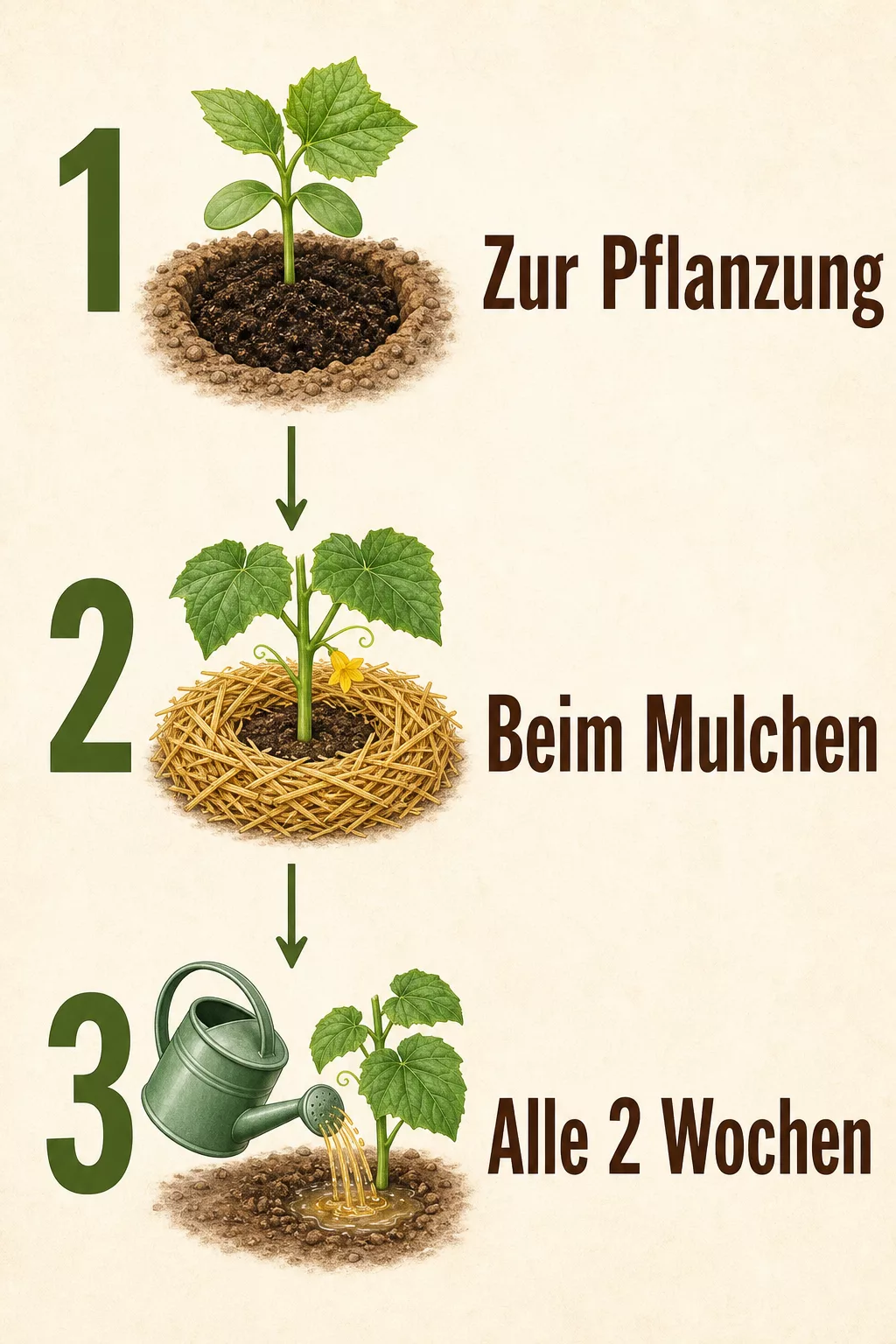
You don’t fertilize cucumbers based on how you feel, but at three fixed points in the season. The dates build on each other:
- For planting: Compost and worm castings directly into the planting hole – the basic supplies for the first few weeks.
- When mulching: a compost-worm castings ring around the plant just after the soil has warmed up.
- Every two weeks: a light application of liquid fertilizer throughout the remainder of the season.
The most important moment is planting. What goes into the ground now accompanies the roots through the strenuous starting phase – this is where you save yourself the most rework later.

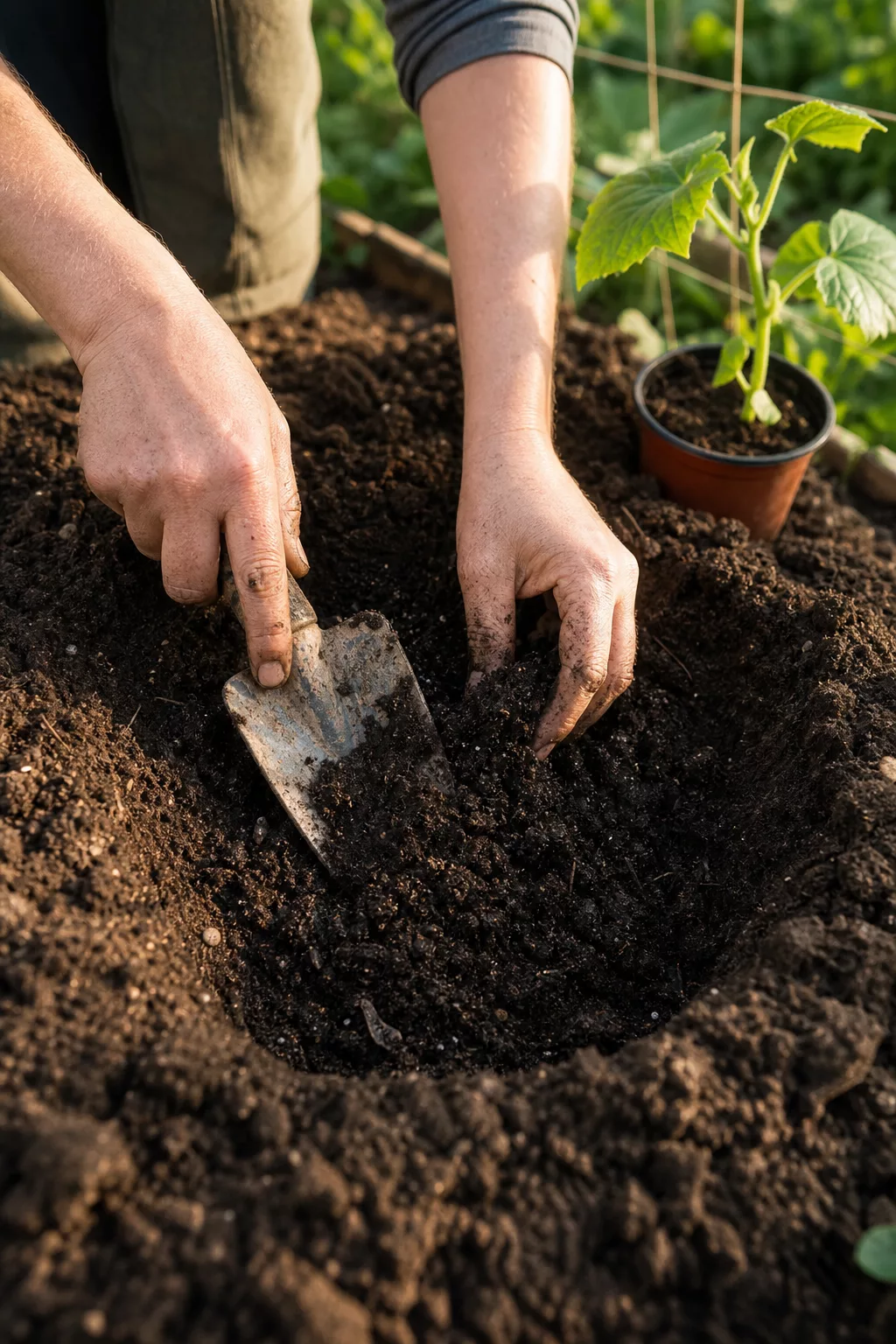
For planting: compost and worm castings in the planting hole
Dig a planting hole that is about three times the size of the root ball. Fill it half with garden soil and half with mature compost. For purchased or pre-grown young plants, add half a cup of worm castings; If you sow directly into the bed, leave out the worm castings – the compost is completely sufficient for the seedling.
Worm castings are the most uncomplicated fertilizer in the bed: 100 percent organic, practically impossible to overdose and effective for six to eight weeks. It also loosens the soil and improves the soil structure. The only important thing is that the compost is really ripe. Fresh manure or half-rotted material will burn the fine roots. If you don’t have good compost on hand, you can easily make your own compost with a little advance notice.
The compost worm castings mulching ring
Once the soil is warm, each plant receives a ring of nutrients. To do this, pile a layer of compost about five centimeters thick and around fifteen centimeters in diameter around the stem and mix in half a cup of worm castings. Add a layer of classic mulch on top – straw, chopped leaves or pine needles.

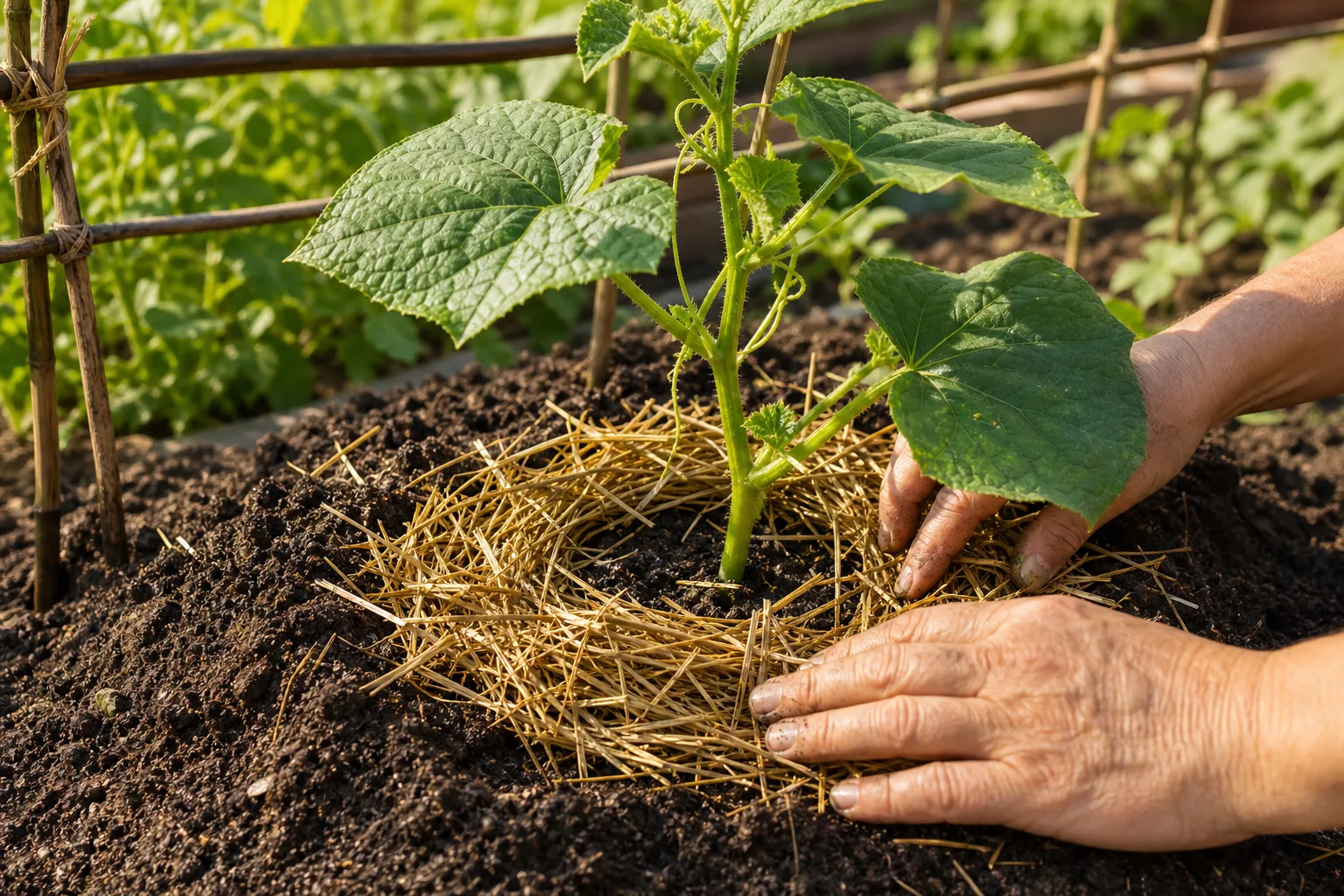
This ring works double. The mulch suppresses weeds, keeps the soil temperature even and slows down evaporation, so you have to use the watering can less often. And every time you water, a little of the nutrients from compost and worm castings wash down to the roots. This creates a long-term fertilizer that replenishes itself every time it rains.
Dose coffee grounds correctly
Coffee grounds are the most popular kitchen fertilizer – and the most commonly used incorrectly. It provides additional nitrogen and improves the nitrogen to carbon ratio in the soil. The catch: It forms thick, moist clumps that cover the earth’s surface like a crust. Therefore, collect the residue, dry it and only spread it in a thin layer – ideally in the mulch ring or on the compost, never as a wet chunk directly on the stem.
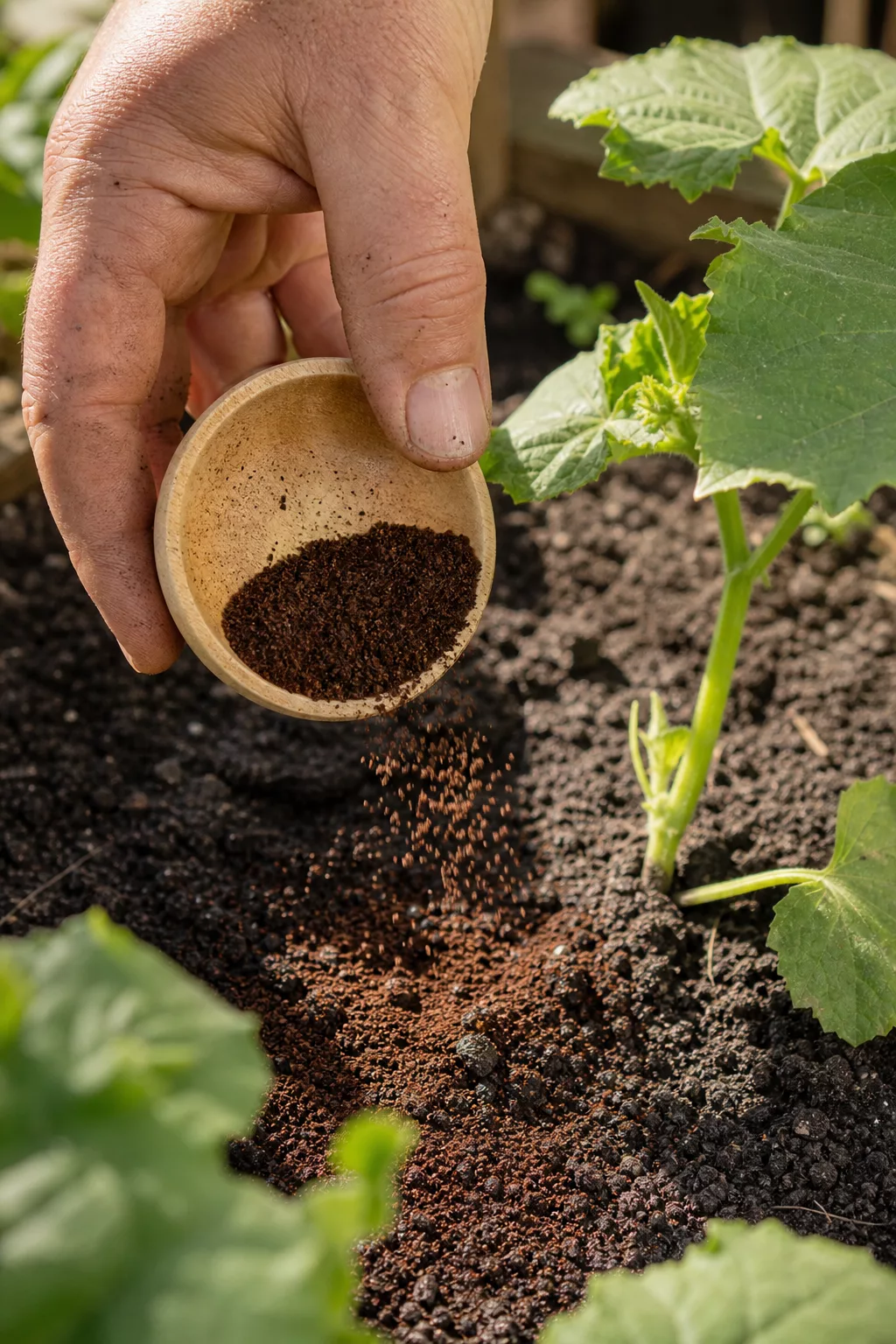
However, coffee grounds are not suitable as a sole fertilizer. If you only give coffee grounds, you will grow lush foliage – the plant will be green and powerful, but hardly produce any fruit. The set hardly provides the potassium that the cucumber needs to set fruit.
Ongoing care: every two weeks and in a bucket
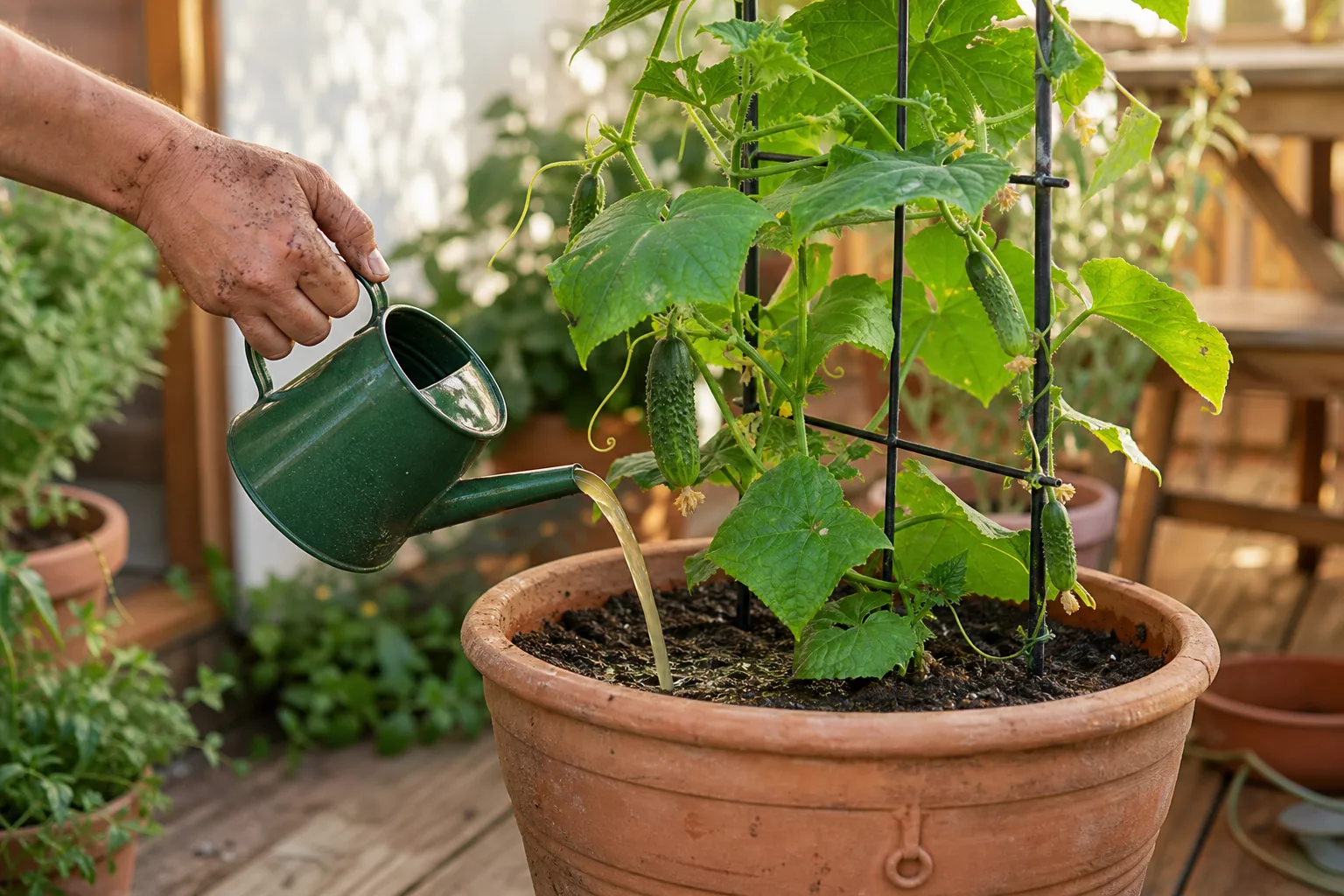
From the time of flowering, the third fertilization regime starts: an application of water-soluble organic fertilizer every two weeks. Algae preparation, compost tea or home-made nettle manure are suitable – always very diluted. It is better to give a weak solution more often than a concentrated one rarely, then nothing can burn.
The bucket has its own rules. Choose a container with a volume of at least twenty liters, otherwise the soil will dry out too quickly and the nutrients will quickly be used up. When planting, mix an organic long-term fertilizer into the pot soil and then add a diluted liquid fertilizer such as seaweed extract or compost tea every three to four weeks. In mid-summer at the latest, it is also worth taking a look at cucumber care in late summer, when the first leaves are aging.
What’s Hot

Garden design
Climbing aid for cucumbers in the bucket: 3 simple DIY variants
Be careful, over-fertilization: Too much nitrogen tilts the nutrient ratio. The plant then forms a dense canopy of leaves, but hardly any flowers or fruit. If your cucumber is bursting with vigor and still doesn’t take root, reduce the nitrogen doses and switch to a potassium-based fertilizer.
Which fertilizer and when? The overview
| fertilizer | time | Duration of effect | Special feature |
|---|---|---|---|
| Mature compost | for planting, 50/50 into the hole | several weeks | Basic supplies, improves the soil |
| worm castings | Planting hole and mulching ring | 6-8 weeks | cannot be overdosed, loosens the soil |
| coffee grounds | running, just thin and dried | Weeks to months | Nitrogen booster, only as a supplement |
| Liquid fertilizer (algae, compost tea, manure) | every 2 weeks | short term | give very diluted |
| Seaweed / compost tea in a bucket | every 3-4 weeks | short term | for pot culture from 20 liters |
One thing many fertilizer plans overlook is that cucumbers are real potassium lovers. Potassium controls fruit set and flavor, but compost and worm castings alone provide only small amounts of it. If your plants grow vigorously but the fruits remain small and bland, add an organic vegetable fertilizer with a high potassium content – then noticeably more cucumbers will be hanging on the vine at the end of the season.
Frequently asked questions
Are coffee grounds alone sufficient as fertilizer for cucumbers?
No. Coffee grounds provide mainly nitrogen, but hardly any potassium and phosphorus – exactly the nutrients that flowers and fruits need. As a sole fertilizer it leads to a lot of leaves and poor harvests, which is why it should always be combined with compost or worm castings. Its plus point: It revitalizes the soil and attracts earthworms, which quickly incorporate the mixture.
Why do cucumbers need a lot of potassium?
Potassium regulates the plant’s water balance and controls how many flowers actually become fruit – the requirement is correspondingly high for heavy feeders such as cucumbers. You can recognize a defect by yellowish, inwardly rolled leaf edges and small, poorly formed fruits. Good organic sources of potassium include comfrey manure, compost made from banana peels or a potassium-rich tomato and vegetable fertilizer.