


Our Family’s Favorite Shortcut Apple Pie
The kitchen currently smells like a crisp October afternoon in the Blue Ridge Mountains, even though it’s just Tuesday. Sebastian is meticulously lining up LEGO stormtroopers on the counter, creating a perimeter around the cooling rack that I suspect is more about quality control than Imperial defense. It’s that time of year again, when the air in South Carolina finally loses its oppressive humidity and the oven becomes the heart of our home. This apple pie, more than any other recipe, is our official signal that fall has arrived.
My wife says my love for this pie is deeply tied to nostalgia, and she’s not wrong. It reminds me of my first real autumn after moving south. The days were still warm, but the nights carried a chill that demanded a flannel shirt and something warm from the oven. The sound wasn’t the crunch of leaves underfoot, but the sharp crackle of the crust as a knife went through it. The smell was a potent mix of cinnamon, bubbling butter, and tart apples, a fragrance that could probably sell a house in under ten minutes. While waiting for my n8n workflow to update our family grocery list based on this very recipe, I can’t help but get lost in that memory. It’s a feeling of comfort, of things being exactly where they should be. And of course, there’s Pretzel, our 70-pound Border Collie mix, who is currently lying on the cool kitchen tile with his head on my feet, emitting the occasional heavy sigh to remind me that apple peels are a recognized form of currency in this household.
This isn’t just any pie; it’s our go-to, the one we make when friends are coming over, the one that disappears in a day. It’s a family favorite in the fall because it delivers everything you want from a classic American apple pie without the multi-day project of making dough from scratch. It’s our perfectly engineered solution for maximum flavor with minimum fuss.
The Apples, The “Dough,” and The Magic
Let’s get one thing straight: the soul of an apple pie is, unsurprisingly, the apples. You need a mix. Using only one type of apple is like building a LEGO creation with only 2×4 bricks—functional, but lacking imagination. My non-negotiable duo is Granny Smith and Honeycrisp. The Granny Smiths provide that essential, mouth-puckering tartness and hold their shape beautifully, so you don’t end up with apple mush. The Honeycrisps bring the sweetness, a wonderful crisp texture, and a flood of juice that helps create the syrupy filling. Sliced about a quarter-inch thick, they create the perfect structure, allowing the cinnamon, nutmeg, and a hint of lemon juice to seep into every layer.
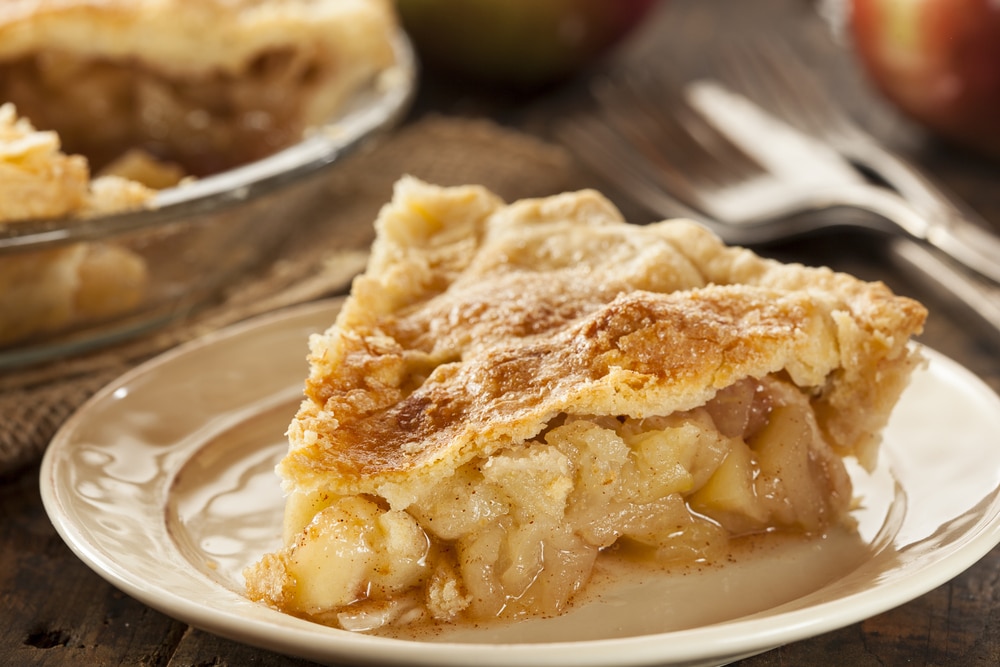
Now, for the part where I might lose some purists, but will gain the trust of every busy parent on the planet. The crust. We are not making dough today. We are outsourcing that job to the professionals. The secret to the impossibly flaky, layered crust you see in the photos is not some long-lost German grandmother’s recipe; it’s a high-quality, all-butter, store-bought puff pastry. Yes, puff pastry. It’s the ultimate hack. When it bakes, the hundreds of paper-thin layers of butter and dough puff up and separate, creating a texture that traditional pie dough can only dream of. It’s what gives you that incredible, shattering crunch with every single bite. The butter melts, the water in it turns to steam, and that steam pushes the layers apart, resulting in a light, airy, and profoundly crispy home for those tender apples.
Don’t just grab any box from the freezer aisle. Look for one that lists butter as the first or second ingredient in the fat category. It makes a world of difference in flavor and texture. If, for some reason, you’re in a pinch and can’t find puff pastry, a good quality, all-butter refrigerated pie crust will do the job. But don’t tell my grandma; she believes anything that easy must be a sin.
Technique, Temperature, and Troubleshooting
Baking is just science you can eat, and getting this pie right involves understanding a few key principles. It’s not about being a professional baker; it’s about respecting the physics of fat, heat, and sugar.
Pro tip: Bake your pie on a pre-heated baking steel or pizza stone. Place the steel on a lower-middle rack and let it get screaming hot with your oven, at least 400°F. When you place your pie directly on that hot surface, it immediately begins to cook the bottom crust, preventing the dreaded soggy bottom. It’s a game changer.
The Why: Why the high initial temperature? That blast of heat does two things. First, as mentioned, it sets the bottom crust. Second, it kickstarts the “puff” in the puff pastry. The sudden temperature shock causes the water in the butter to flash into steam, aggressively separating the dough layers for maximum flakiness. We then lower the temperature after about 20 minutes to allow the apple filling to cook through gently without burning the magnificent crust we’ve created.
And why chill the dough? Keeping your puff pastry cold, right up until it goes into the oven, is critical. Cold butter melts more slowly. If the butter melts before it has a chance to create steam, it will simply soak into the dough, leaving you with a greasy, dense crust instead of a light, flaky one. Cold fat is the key to flaky layers.
Common pitfalls:
- A Runny Filling: You didn’t let the pie cool for long enough. The filling needs at least 3-4 hours to set up as it cools. Slicing into a hot pie is a recipe for an apple lava flow. A bit of cornstarch in the filling also helps it gel beautifully.
- The Dreaded Gap: You know that sad-looking gap between the top crust and the shrunken filling? To avoid this, pile your apples high in the pie plate—higher than you think you need to. They cook down significantly, and a tightly packed pie is a happy pie.
- A Pale, Sad Crust: If your crust isn’t browning, it’s likely your oven temperature is off, or you skipped the final, crucial step: the egg wash. A simple whisked egg brushed over the top is what gives the pie its glossy sheen and deep color.
The Hero Shot: A Study in Brown and Gold
When this pie comes out of the oven and has had time to cool, it’s a thing to behold. It’s not perfect in a sterile, machine-made way. It’s rustic, confident, and unapologetically homemade. The crust boasts a magnificent, unevenly distributed toasted golden-brown hue, a complex color that looks like a sunset over a wheat field. It ranges from a lighter, buttery tan at its base to a deeper, caramelized amber on its ridges and the edges of the lattice. This isn’t a single, flat color; it’s a dynamic landscape of heat and butter.
But the real star is the texture. It’s what I can only describe as ‘shattered-glass flaky,’ with visible, delicate layers that promise an incredibly crisp and tender bite. You can see the striations, the thin, almost translucent sheets of baked dough that have been separated and crisped up into something ethereal. There’s a subtle shimmer on the surface, a result of the egg wash and a sprinkle of coarse sugar, which catches the light and hints at the rich butter content within. To get that specific shade of golden-brown, brush the top crust with a simple egg wash (one egg beaten with a tablespoon of water) and then sprinkle generously with turbinado or demerara sugar before baking. The sugar not only adds a lovely crunch but also caramelizes in the heat, deepening the color from simple yellow to that rich amber.
Keeping the Crunch: Storage & Reheating
If you somehow have leftovers, you’ll want to preserve that amazing texture. Storing the pie is simple: cover it loosely with foil and leave it on the counter for up to two days. The refrigerator is the enemy of a flaky crust; the humidity will soften it. To reheat, skip the microwave entirely. A slice in a 350°F oven or an air fryer for 5-7 minutes will re-crisp the pastry and warm the filling perfectly, bringing it right back to its fresh-from-the-oven glory.
Until Next Time
There it is. More than just a recipe, it’s a piece of our family’s rhythm, a marker of a season, and proof that sometimes the best shortcuts lead to the most wonderful places. I hope it brings as much warmth and happiness to your kitchen as it does to ours.
Happy baking,
Michael
…and a happy tail-thump from Pretzel.
Now it’s your turn! What’s a dish you’ve had while traveling that you still think about? Share your favorite food memory from the road in the comments below!