


The saved photo is ready on your cell phone: full, swinging bob, that’s exactly how it should look. But just three weeks after the appointment, the hair was hanging flat on her head again. The reason is rarely the cut name. A volume cut for fine hair over 50 succeeds or fails depending on the technique – the angle at which the cut is made and the way the ends end. Anyone who knows these steps can say in one or two sentences at the hairdresser’s chair what the hair really needs instead of hoping for the next picture.
Fine or thin hair? The difference decides the cut
Two terms are constantly confused, and it is precisely this confusion that often leads to the wrong cut. Fine hair means: They have many individual hairs, but each of them has a very small diameter. The density of hair on your head can be completely normal – the individual strands are simply delicate and give way quickly.
Thin hair describes something different: less hair overall, i.e. a lower density. Both can occur together, but they don’t have to. This makes a real difference to the cut. Fine hair usually has enough substance, it just lies flat and collapses. Here a good cut works with structure to set up the existing mass.
The practical benefit: As soon as you know that you have fine and not necessarily thin hair, you no longer ask the hairdresser for “more hair”, but rather for more movement in the existing hair. Fine hair in particular can often tolerate a lot more structure than many people think.
The technique that brings volume: layers, angles and fringed ends
Volume is not created by length, but by structure. Three techniques make the difference, and all three can be clearly stated at the appointment.
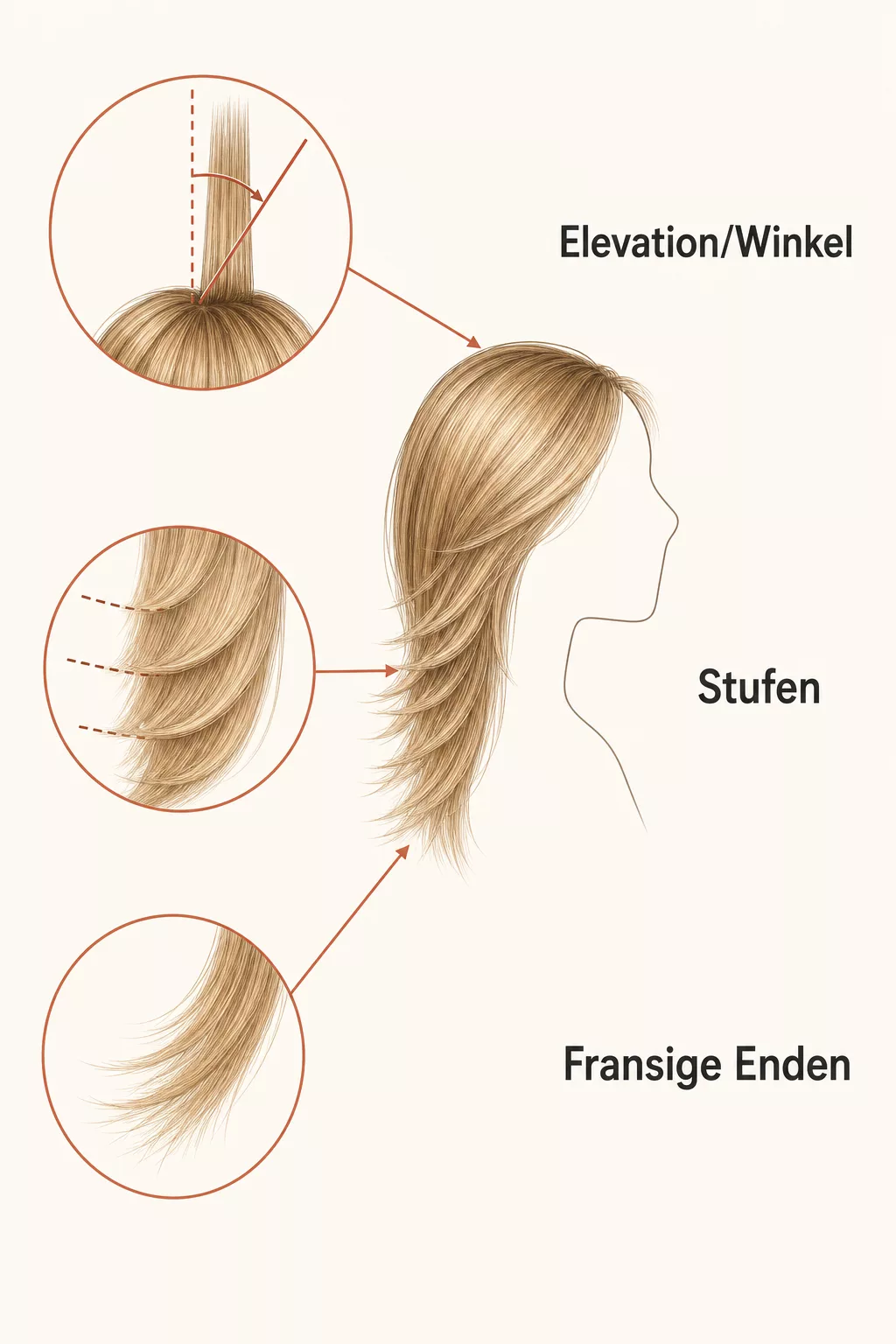
Steps take weight out of the upper parts. Shorter layers on the top of the head no longer lie flat on the longer ones underneath, but instead stand up slightly. This gives the hair height where it would otherwise sag at the roots.
The angle – Experts speak of elevation – determines how strong this effect is. If a strand is lifted high and shortened at an angle when cutting, the volume builds up above the roots, not just at the tips. This is exactly where a cut that brings fullness separates from one that only changes the length.
Frayed ends ultimately make the hair appear more lively than a heavy, bluntly cut line, which quickly sags on fine hair. If the tips are slightly jagged or cut at an angle, it creates more visual fullness. A principle that the Calligraphy Cut for fine hair uses consistently.

5 volume cuts for fine hair over 50 that use this technique
Of the many variants that are currently being traded as volume cuts, five work particularly reliably – because they incorporate steps, angles and texture. Whether bob, shag or pixie: what matters is how the levels are set.
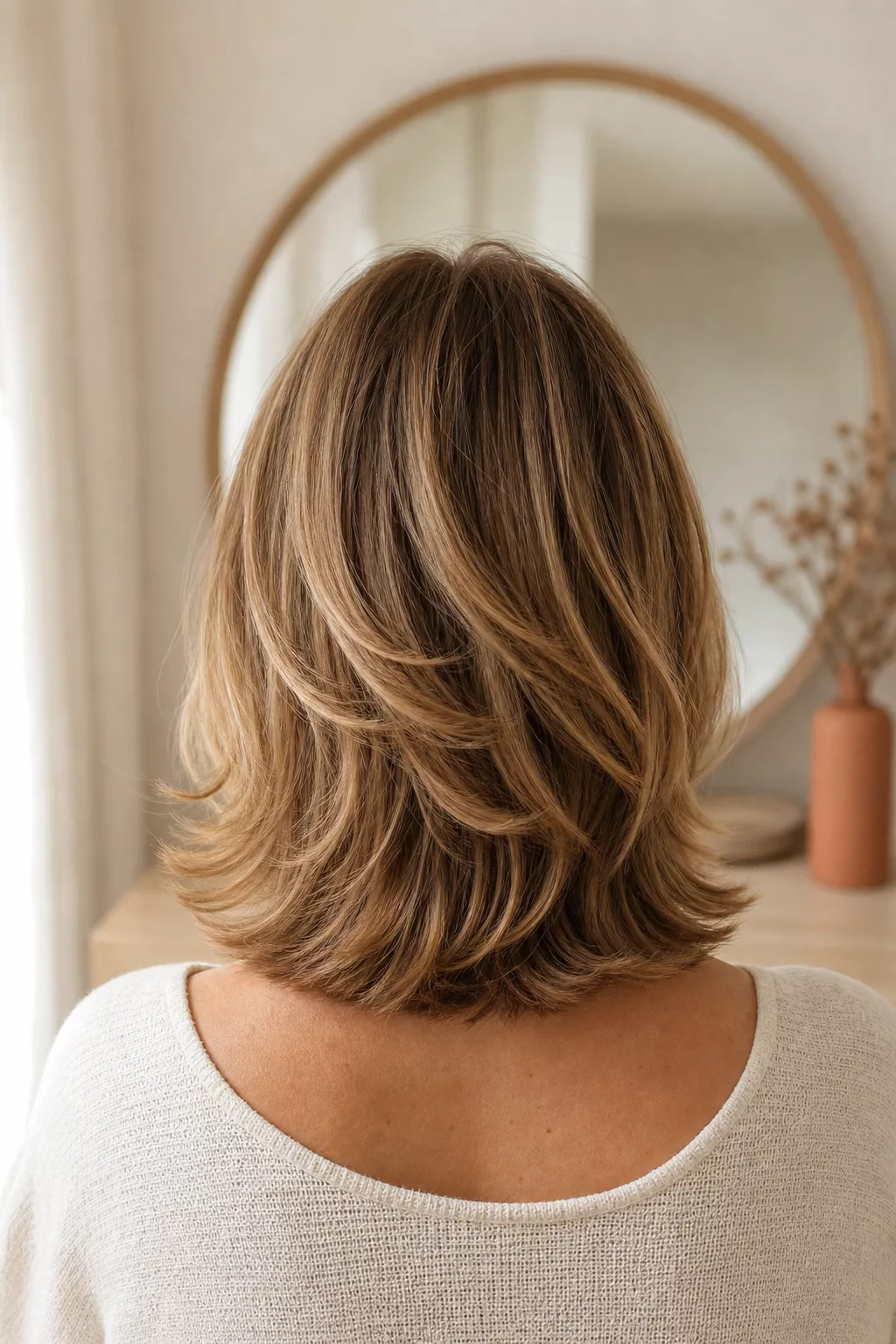
Layered Long Bob (Lob)
The shoulder-length bob with soft layers is the easiest way to start. The layers take weight out of the lengths, the ends swing slightly outwards and give movement. Because it gently caresses the face, it also appears younger. If you like it a little longer, you will find further variations under Bob for fine hair over 60.
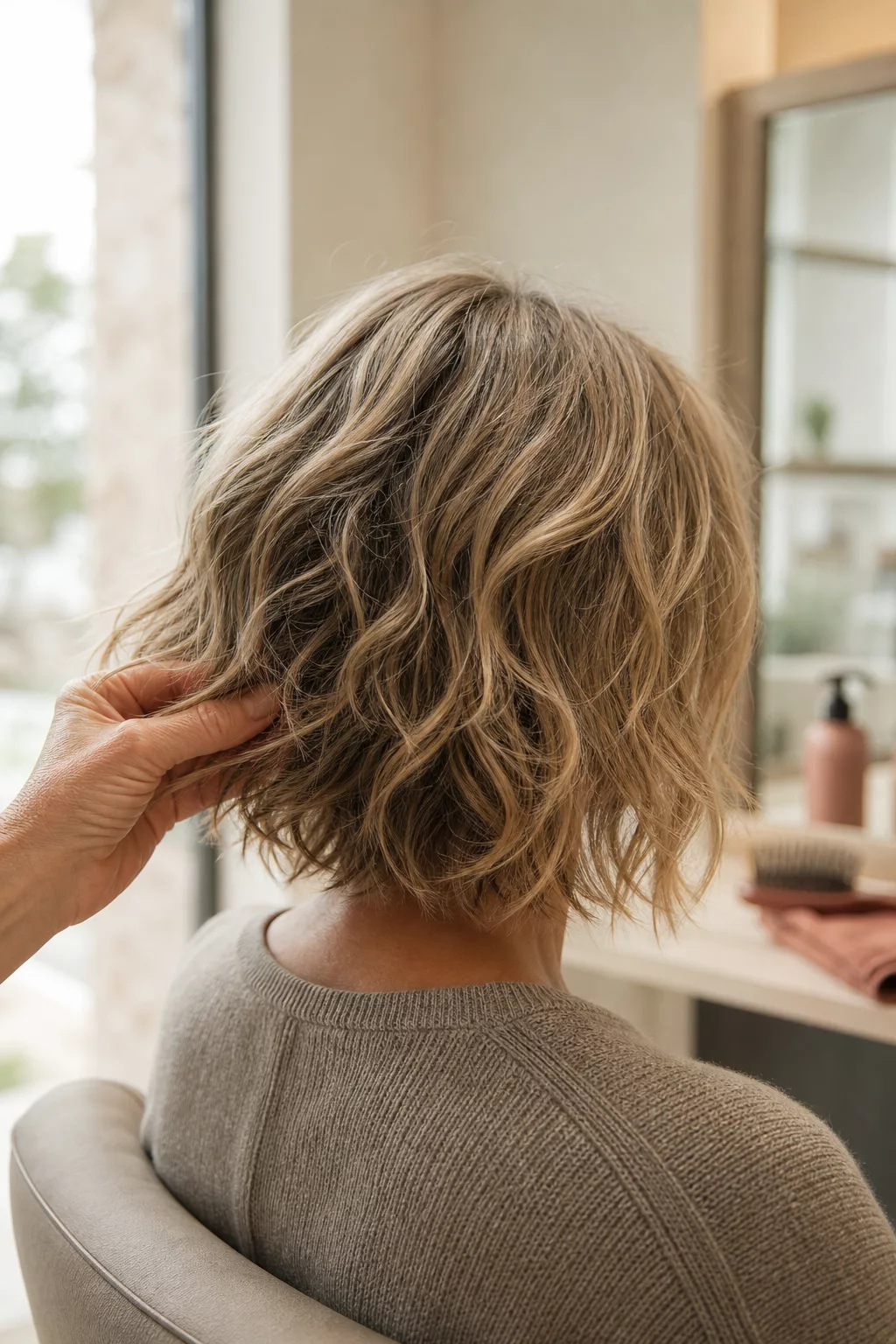
Chin-length shag cut with beach waves
The shag thrives on choppy, fringed sections and a deliberately unstyled appearance. Combined with loose beach waves, the waves visually conceal the fine hair and make it appear fuller than it is. The chin length keeps the cut suitable for everyday use.
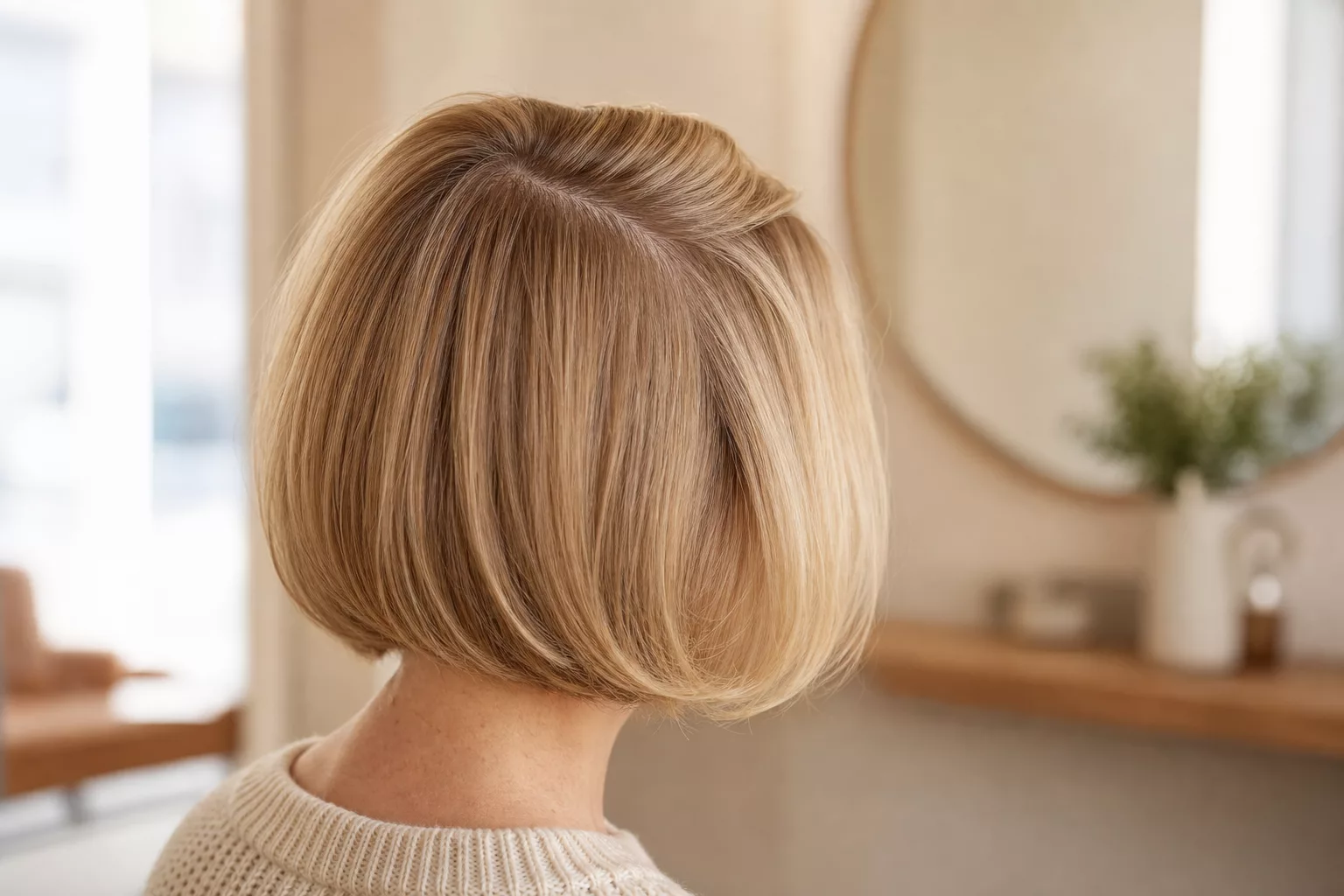
Bob with side parting
A deep side parting is one of the simplest volume tricks of all: the hair is placed over the roots on the other side and stands up there. The eye wanders to the facial features and the cut immediately appears more elegant and tidy.

Pixie cut with bangs
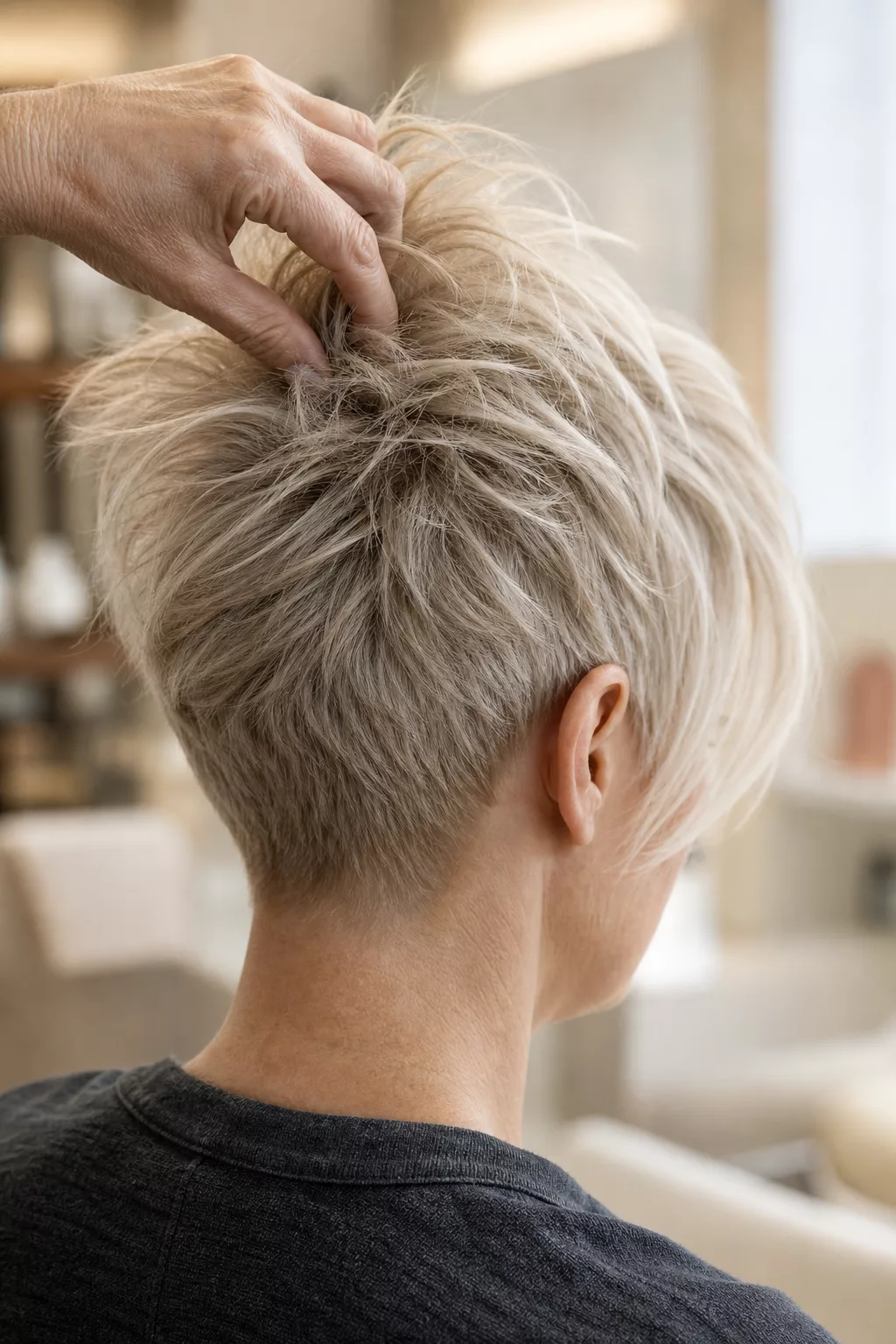
Short, thinned sides and a longer, textured top make the pixie a classic among volume cuts. The contrast between short and longer creates height and the bangs can be styled variably. The pixie cut versions over 60 with glasses show how the cut can be combined with visual aids.
What’s Hot

Short hairstyles for women
When it comes to volume cuts for fine hair over 60, the problem comes down to it
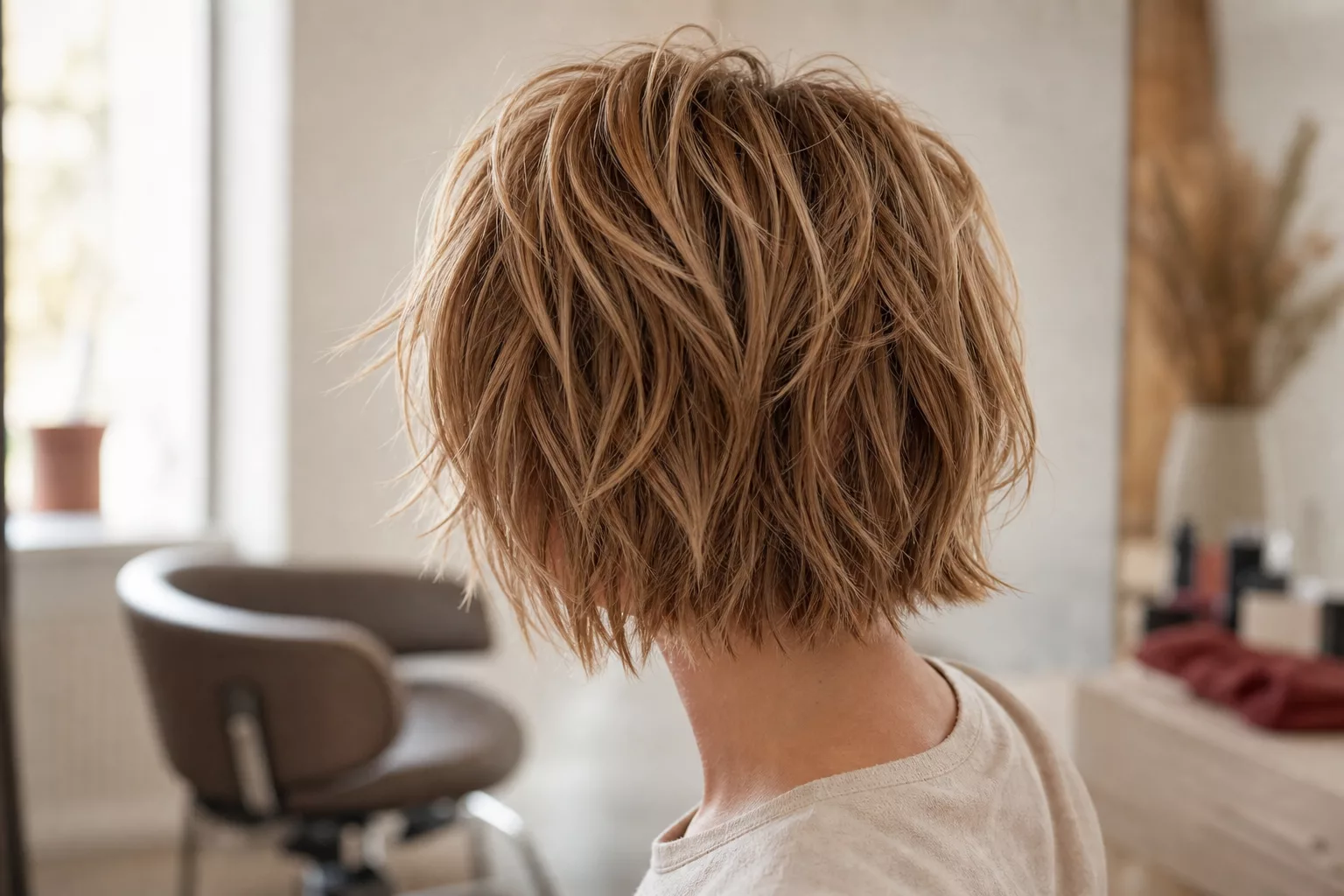
Bixie or Shaggy Bob
The Bixie is the intermediate length for everyone who fluctuates between a pixie and a bob: short, strong layers like a pixie, plus the textured fullness of a shaggy bob. The heavily frayed ends give a lot of movement. Related to this is the shixie cut made from shag and pixie.
Which hair color makes fine hair appear thicker?
Color can create the illusion of fullness when it works with contrasts. A single, flat color often looks flat on fine hair – balayage and highlights, on the other hand, create depth.
Warm tones like Honey blonde or caramel bring warmth to the hair and make it appear fuller. Silver or platinum highlights Additionally brighten the face and add fresh accents. The most effective trick is the contrast of darker roots and lighter tips: The eye reads the different nuances as multiple layers – and the hair looks thicker than it actually is.
Styling and care: more fullness in everyday life
The best cut needs the right basis. With fine hair, blow-drying often determines whether the roots stand or fall again after two hours. Less is more: Heavy products pull the delicate strands downwards, light ones provide grip.
Professional tips for more fullness
- Blow dry overhead: Let your head hang forward, blow dry the roots from below and only then straighten them up – this noticeably lifts the hair roots.
- Dry shampoo not only against fat: A thin layer at the roots, even on freshly washed hair, provides immediate grip and volume.
- Wash silicone-free: Light shampoos without silicones do not weigh down delicate hair; Rich treatments only belong in the lengths, never at the roots.
- Tips every 6 to 8 weeks: otherwise the layered effect will grow out and the hair will hang flat again.
- Volume foam or approach spray: Work a hazelnut-sized amount into towel-dried hair, only at the roots.
Care includes one point that is worth it: a light, restorative treatment only in the lengths once a week. It keeps fine hair elastic without weighing it down – so it breaks less and looks healthy for longer.
These cuts make fine hair look flat
Some things work reliably against the volume of fine hair. Long, straight hair without any layers hang down heavily without structure and cause the base to collapse. Heavy, straight-cropped bangs lie as a compact surface on the forehead and make the face appear harder. And excessive heat styling additionally weakens the already delicate strands so that they break more quickly.
What counts in the end is the conversation in the chair. Don’t just mention the name of a hairstyle, but the technique behind it: steps for movement, a little elevation on the top of the head, fringed ends. Feel free to bring one or two pictures with you as an illustration of the desired structure. Also be open about your face shape, hair structure and your everyday life. This is how your fine hair gets the cut that really stands it out.
Frequently asked questions
How often should fine hair be trimmed so that the volume cut maintains its shape?
Every six to eight weeks. With these cuts, the volume effect is in the short layers on the top of the head – the hair grows out, the layers lose their height and the roots collapse again. Fine hair shows this more quickly than strong hair because the individual strands have less strength. A quick trim is usually enough to maintain the shape without sacrificing length.
Is a pixie cut suitable for very fine hair or does it appear thinner?
It’s even a good fit if two things are right. The top of the head should remain long enough so that it can be raised up with a little elevation – if it is too close to the head, a pixie reveals every subtlety. And it needs texturizing styling instead of shiny, heavy pomade: a small amount of matte paste in the ends keeps the strands apart and makes the cut look fuller.