


The same discussion every evening: the toys are lying across the living room, the table doesn’t set itself, and no one feels responsible. A Household plan for children takes out exactly this daily petty war – not because it is strict, but because it makes it clear who is doing what. In this article you will find a ready-made to-do list sorted by age that you can read directly, photograph or print out. No download, no app, no long searches. You will also receive realistic time estimates for each task and concrete solutions for the moment when your child simply doesn’t want to participate.
In short
- Age-appropriate instead of the same – a two-year-old puts away toys, a ten-year-old cooks a simple meal; the table below assigns each task to the appropriate age group.
- Realistic time budget – most children’s tasks take 2 to 15 minutes; If you plan this, you avoid being overwhelmed and frustrated.
- Recognition beats gift – being able to choose a movie night or dinner yourself is more motivating than money.
- Hang visibly – a schedule on the fridge or whiteboard ends the “I didn’t know it was my turn” excuses.
Why a budget really helps children
A plan is not a control instrument, but a map. Children understand that a household consists of many small tasks that someone has to do – and that they are part of this team. This strengthens a sense of responsibility and independence far more than any admonition.
The second effect is practical: fewer discussions. If it is clear in black and white that Emil will set the table on Mondays and his sister on Tuesdays, there is no need for daily negotiations. Clear responsibilities create peace – for the children and for you. And at the same time, the little ones learn skills for life: structure, perseverance and the good feeling of having accomplished something themselves.
Only one rule is important: tasks must be age-appropriate and be feasible. Too hard leads to frustration, too easy to boredom. That’s exactly why sorting by age is worth it.
The task plan by age for direct reading
Here’s the gist of this article: three tables, graded by age. You don’t need to download anything – just take a photo of the appropriate table or print out the page. The minutes are guidelines from everyday family life and will help you put together a realistic daily workload. As a rule of thumb: one to three tasks per day are sufficient.
2 to 4 years: help in the game
At this age it’s not about clean results, but about participation. Every task becomes a game – and your praise is the real motivation.
| Task | Time expenditure |
|---|---|
| Put toys in the box | 5 mins |
| Put dirty laundry in the basket | 2 mins |
| Setting the table with cutlery (with help) | 5 mins |
| Feeding your pet (accompanied) | 3 mins |
| Dust surfaces with the cloth | 5 mins |
5 to 8 years: own small responsibilities
Now children can complete tasks on their own. Here it is worth assigning fixed responsibilities – for example, “You are responsible for the plants this week”.
| Task | Time expenditure |
|---|---|
| Set and clear the table | 10 mins |
| Water plants | 5 mins |
| Make the bed | 5 mins |
| Fold laundry | 10 mins |
| Cut fruit or spread butter on bread | 10 mins |
| Sort trash and take it out | 5 mins |


9 to 12 years: take on real responsibility
The fine motor skills are there and the feeling for processes is there. Children of this age can manage entire tasks independently and are allowed to try something that might go wrong.
| Task | Time expenditure |
|---|---|
| Keep your own room clean | 15 mins |
| Do small shopping | 20 mins |
| Hang and fold laundry | 15 mins |
| Caring for your pet independently | 10 mins |
| Cook a simple dish | 25 mins |
Especially when it comes to the last point, it’s worth getting started early: Anyone who learns as a child to experience cooking together with children as a matter of course will be much more relaxed in their own kitchen later on.
How to build your own plan in 10 minutes
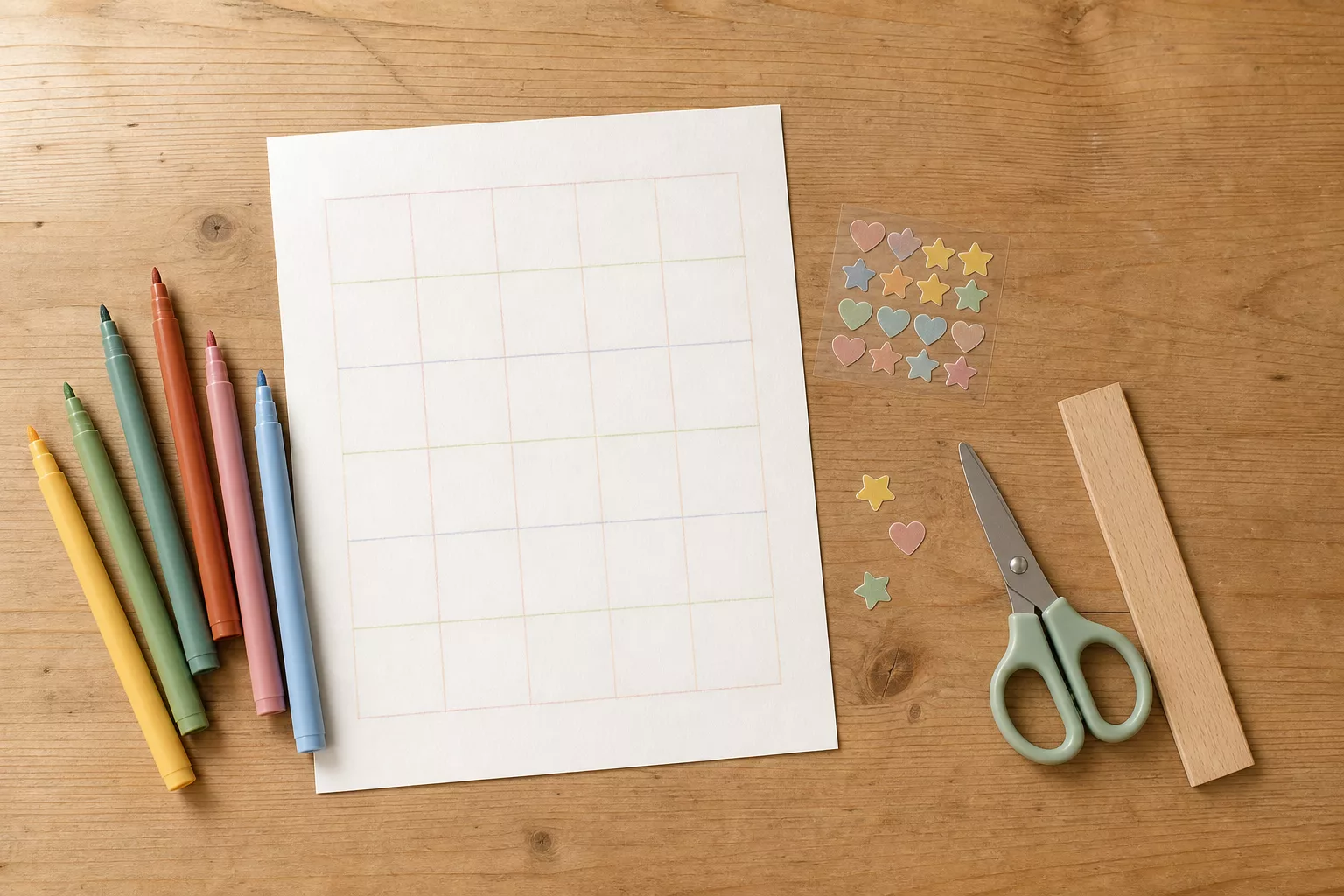
You don’t need a purchased template. A piece of paper, a whiteboard or a magnetic board on the fridge is enough. How to proceed:
- Names and days of the week Lay it out as a grid – the days at the top, the children or the tasks on the left.
- Symbols instead of words for children who do not yet read: a painted bed, a plate, a watering can. Small stickers work just as well.
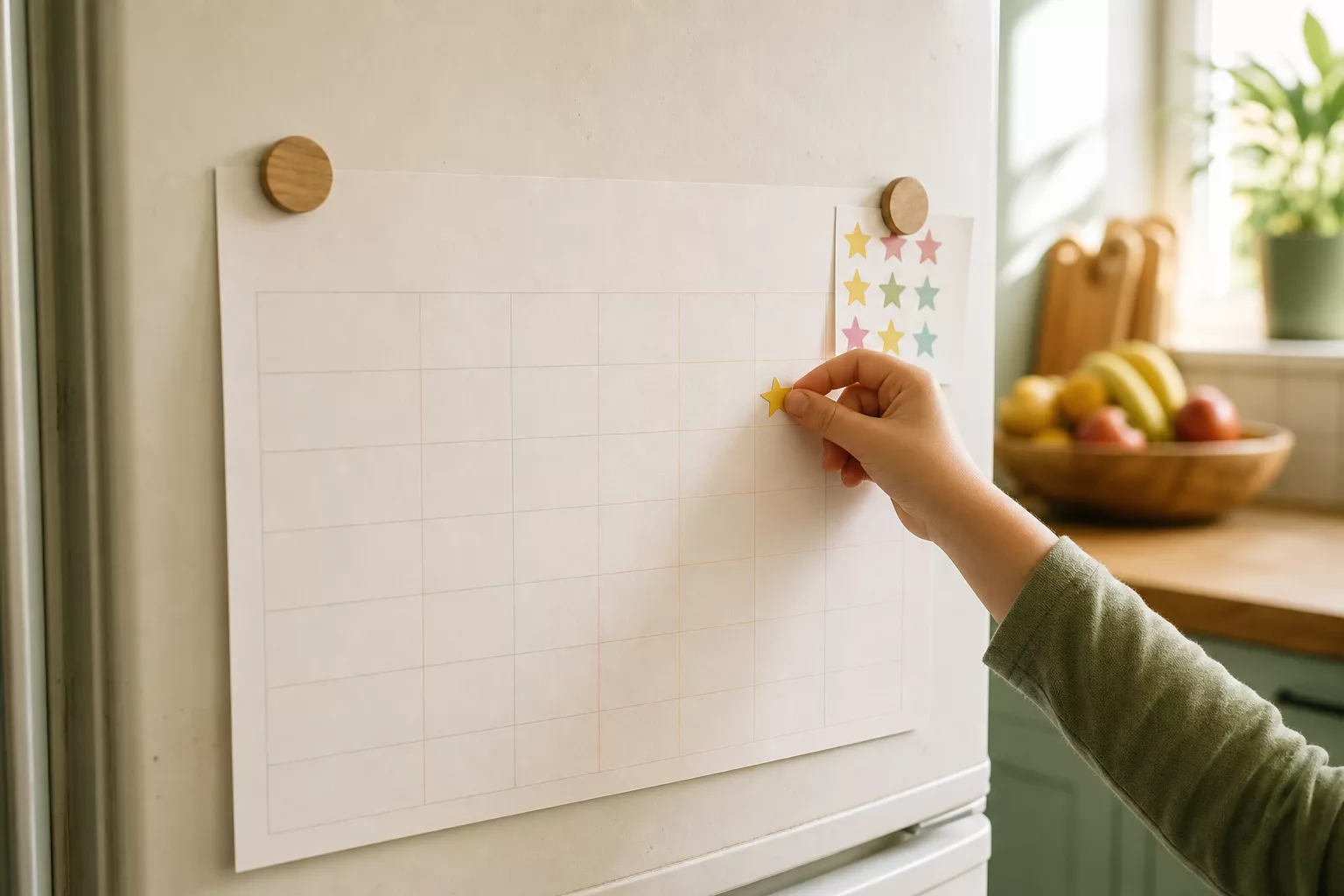
- Done field to check off or for a sticker – this little ritual is surprisingly motivating.
- Adjust weekly: What went well stays; What constantly led to arguments is exchanged.
Hang the finished plan where everyone passes by every day – the refrigerator or hallway are ideal. A plan in the drawer doesn’t work.
Rewards instead of bribes: what really motivates children
The biggest trap is to immediately associate every completed task with money or gifts. This quickly creates an attitude of “What do I get in return?” Recognition has a more lasting effect – the feeling of being needed and being part of the team.
Good rewards often cost nothing and strengthen the time spent together:
- A family movie night with a snack of your own choice.
- Extra game time or a round of your favorite board game.
- Get an ice cream together or take a trip to the park.
- Allow yourself to choose your own dinner.
- An extra bedtime story or ten minutes of extra media time.
A star system on the plan connects the two: there is a star for every task completed, and there is a common reward at the weekend. This way the incentive remains visible without money coming into play.

What to do if the child refuses?
No plan runs smoothly all the time – and that’s normal. What matters is how you react to “No, I don’t want to.” Four approaches that work in everyday life:
- Give choices: Not “Clean up now,” but “Would you like to water the plants or set the table first?” The task is fixed, the child chooses the order. This takes pressure off immediately.
- Be a role model yourself: Children join in when everyone joins in. A joint “ten-minute clean-up sprint” with music often works better than any request.
- Divide into small steps: “The whole room” overwhelmed. “First just put the books on the shelf” is a start that almost every child can manage.
- Consequence without drama: If the task is postponed, what comes next is also postponed – calmly explained, without a lecture. An easy start, such as watering a plant, makes getting back into it particularly easy.

What’s Hot


Kitchen
Using space above the fridge: ideas that really work
Pro tips
- Rotate tasks: Swap responsibilities every week so that no one has the unloved task all the time and every child learns everything.
- Create a plan together: Have the children paint symbols and hang up the plan – those who help design it feel responsible.
- Don’t compare siblings: “Your sister has been doing this for a long time” is demotivating. Praise everyone for their own progress.
- Start small: Start with a single fixed task per child and only expand once it is settled.
Frequently asked questions
At what age should children start helping around the house?
From around the age of two, children can help playfully, for example by putting away toys or putting laundry in the basket. At this age it’s not about perfection, but about experiencing helping as a normal part of family life at an early age.
Should children get pocket money for household tasks?
Everyday tasks such as setting the table or tidying your own room should be a matter of course and not paid for – otherwise children will only help in exchange for money. Recognition and shared rewards work better. For larger special tasks, however, a small bonus can be okay.
What to do if the child refuses to help?
Give choices, divide the task into small steps and participate yourself. Remain calm and consistent instead of threatening. It usually helps to make the task smaller and more specific.
How often should you adjust your budget?
A weekly look is enough: what worked remains; Whatever was constantly causing arguments or was too difficult, replace it. As the children get older, the tasks also grow.
A budget turns the daily struggle to help into a common cause. Start small, hang the plan up where you already organize your toddler’s morning and evening routine, and adapt it week by week. If you organize the children’s room correctly at the same time, many children will find tidying up much easier.