


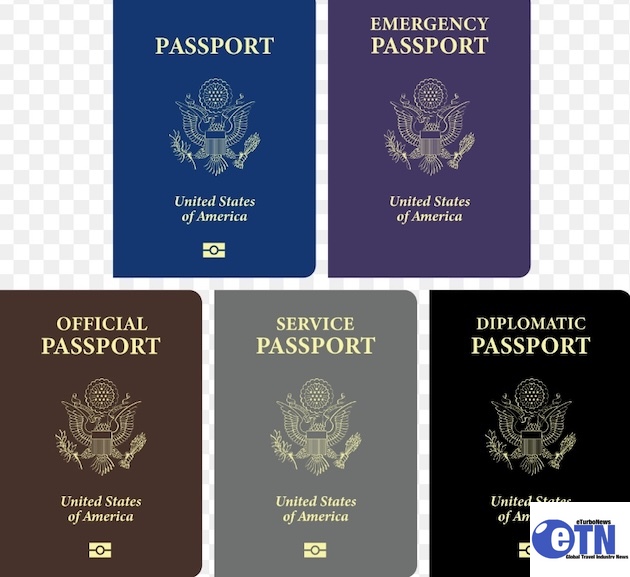
The US Supreme Court has reaffirmed birthright citizenship under the Fourteenth Amendment, preserving a constitutional principle that has defined America for more than 150 years. The landmark ruling reinforces citizenship by birth on US soil, renews debate over immigration policy, and is being hailed by many as a victory for constitutional values and American identity.
In one of the most consequential constitutional decisions in decades, the US Supreme Court has reaffirmed that virtually every child born on American soil is a citizen of the United States, rejecting efforts to narrow the Fourteenth Amendment’s Citizenship Clause.
The decision leaves intact a principle that has stood for more than 150 years: American citizenship is not based on ancestry, race, religion, wealth, or the status of one’s parents. It is rooted in the Constitution itself.
For supporters of the ruling, this is more than a legal victory. It is a victory for American values.
A Victory for Constitutional Tradition
The Citizenship Clause of the Fourteenth Amendment was adopted after the Civil War to overturn the shameful legacy of Dred Scott and to make clear that people born in the United States are citizens of the United States.
For generations, courts have interpreted that promise broadly. The Supreme Court’s decision confirms that the country’s basic rule remains unchanged: children born on US soil are citizens, with only narrow, long-recognized exceptions such as children of foreign diplomats.
The ruling also reinforces an important constitutional boundary. Presidents may shape immigration policy, but they cannot rewrite the Constitution by executive preference.
A Broader Signal About American Identity

Citizenship Resource Center
The Citizenship Resource Center has a collection of helpful resources and free study materials for a variety of users including, lawful permanent residents (LPRs) will find information about the naturalization process, eligibility requirements, and study materials to prepare for the naturalization interview and test. Educators including teachers, volunteers, and program administrators will find several resources for the classroom. Educators can also search for free USCIS training seminars designed to enhance the skills needed to teach US history, civics, and the naturalization process to immigrant students.
For many Americans, the ruling is being read not only as a legal decision, but as a moral signal. After years of political rhetoric that critics say has portrayed foreigners, Muslims, Africans, Somalis, immigrants, LGBTQ Americans, and nonwhite communities as less welcome in the national story, the Court’s decision offers a rare moment of reassurance.
To those Americans raised to believe that the United States is “the land of the free,” the ruling suggests that the Constitution still places limits on efforts to define American belonging by race, religion, ancestry, sexuality, or political preference. It does not settle every argument about immigration, equality, or civil rights. But it does say something powerful: hostility toward certain groups cannot simply erase the constitutional promise of citizenship.
That is why the decision has stirred hope among many who feared that America’s oldest ideals were becoming negotiable. Birthright citizenship has long embodied the belief that the United States is not a closed inheritance, but an open constitutional community. A child born here does not need to prove the “right” bloodline, faith, skin color, language, or family background to belong.
In that sense, the ruling reaches beyond immigration law. It renews a central American value: that freedom is not reserved for one favored group, and citizenship is not a gift handed down by political power. It is a constitutional guarantee.
What It Means for International Visitors
For tourists, students, business travelers, temporary workers, and other visitors, the practical meaning of the ruling is straightforward: the long-standing rules remain in place.
A child born in the United States generally receives US citizenship at birth. The ruling does not create a new right to enter the country, nor does it weaken the government’s authority to regulate visas or border entry. But it does preserve certainty for families, hospitals, immigration lawyers, and foreign governments.
Does This Encourage Birth Tourism?
The decision will also renew debate about so-called “birth tourism,” the practice of traveling to the United States specifically to give birth so a child receives US citizenship.
The Court’s ruling does not endorse birth tourism as policy. It simply confirms that citizenship belongs to the child when the Constitution applies. The government may still deny visas, investigate fraud, and enforce immigration law against people who misrepresent the purpose of their travel.
In other words, the ruling protects the child’s citizenship; it does not grant parents an automatic right to enter, remain, or receive immigration benefits.
Tourism and Economic Impact
The broader tourism industry is unlikely to see a major change from the decision alone. Most international visitors come to the United States for vacations, business, education, medical care, conferences, or family visits.
Some niche travel and maternity-related services may continue to attract foreign expectant mothers, but those businesses remain subject to visa rules, medical costs, and immigration scrutiny.
For mainstream tourism, the ruling mainly provides stability. It tells the world that America’s constitutional rules remain predictable, even during fierce political debate.
A defining moment
The Supreme Court’s decision settles, at least for now, one of the most emotional questions in American constitutional life: who belongs?
Its answer is deeply rooted in the nation’s post-Civil War promise. Those born on American soil are American citizens, not because of political favor, family background, or presidential approval, but because the Constitution says so.
For many, this is the heart of the American idea.