




Why these restrictions exist
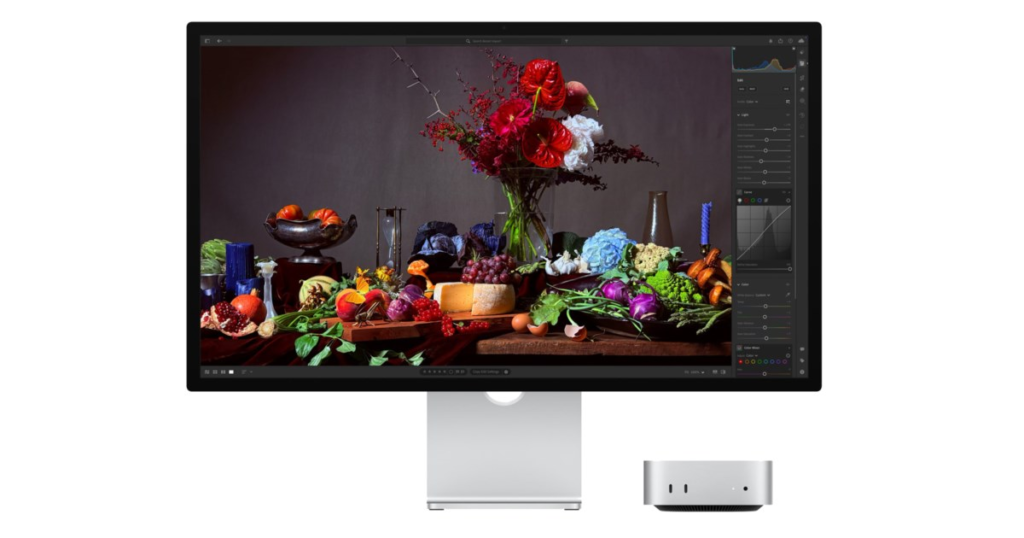
A screen like the Studio Display is much more than just a panel in a housing. Instead, it is a device with very specific signal, bandwidth and protocol requirements. Several sophisticated parameters are combined, including 5K resolution at 120 Hz, 10-bit HDR, Adaptive Sync and Mini LED with local dimming. The raw bandwidth can therefore be at values that Thunderbolt 3/4 and DisplayPort 1.4 only allow to a limited extent. There are also functions of the respective M-chips. Support for Adaptive Sync, certain HDR modes, control of local dimming and DSC streams are implemented on the hardware side of the SoC.
Apple is increasingly closing the Intel era
So if older Macs fall out of the mix, it’s less a marketing decision and more a controller issue. That’s probably exactly what hit the Intel-based devices, although it’s still very unusual in the market to produce a display that completely excludes Intel Macs. Apple may have decided that simply being able to display an image wasn’t enough – especially in light of future features that might come. At the same time, it is a clear signal that the Intel era is now truly a thing of the distant past.