

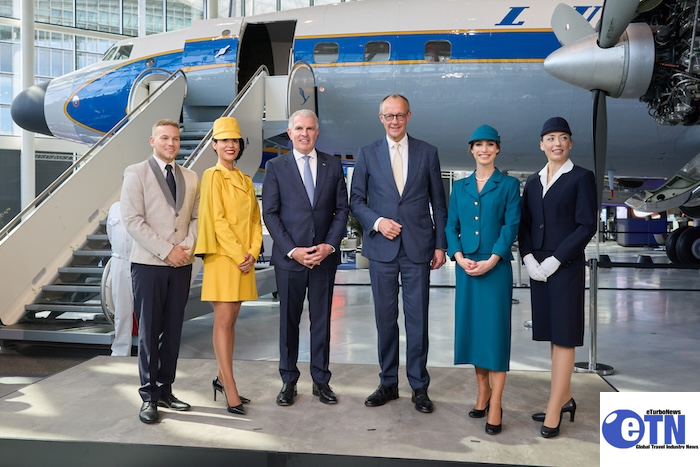
Lufthansa’s 100th anniversary, meant to celebrate a century of aviation excellence, was overshadowed by strikes that grounded flights worldwide. As a key Star Alliance carrier, the disruption triggered global travel chaos, raising concerns about reliability, reputation, and the balance between labor rights and national pride.avia
A centennial is meant to inspire pride. For Lufthansa, it should have been a moment of national celebration—an affirmation of a century spent connecting Germany to the world.
Instead, the 100th anniversary unfolded under a cloud of disruption, with grounded aircraft, stranded passengers, and a growing sense of embarrassment that extended far beyond Frankfurt.
Ceremony and Disruption
Inside Hangar One, Lufthansa’s new conference and visitor center, the tone was celebratory. Friedrich Merz praised the airline as a pillar of the Federal Republic’s economic success, while CEO Carsten Spohr highlighted its evolution into a global aviation powerhouse employing over 100,000 people.
But outside the hangar—and across airports worldwide—the reality was far less polished.
An extended strike by flight attendants, followed by a pilot walkout, led to widespread cancellations at precisely the moment Lufthansa sought to showcase its legacy and future. For many observers, the contrast was jarring: a meticulously staged celebration overshadowed by operational paralysis.
A Global Ripple Effect
This was not a localized disruption. Lufthansa is a central pillar of Star Alliance, the world’s largest airline network, linking hundreds of destinations across continents.
Every grounded Lufthansa aircraft has a multiplier effect. Missed connections in Frankfurt cascade into delays in New York, Singapore, Johannesburg, and beyond. Business travelers, families, and cargo shipments—many routed through Germany’s hubs—felt the impact.
Tens of thousands of passengers were affected over just a few days. For an airline that serves as a critical connector in global aviation, the disruption was not merely inconvenient—it was systemic.

Strain on an already stretched system
The timing could hardly have been worse. Ongoing instability in parts of the Middle East has forced airlines to reroute flights, avoid certain airspaces, and absorb longer journey times. The result is a system already operating near capacity, with limited flexibility to absorb shocks.
In such an environment, reliability becomes even more critical. When a major carrier like Lufthansa falters, the consequences are amplified across the entire aviation ecosystem.
Instead, the strikes compounded an already fragile situation—tightening capacity, increasing delays, and leaving travelers with fewer alternatives.
From Pride to Embarrassment
For many Germans, the anniversary was meant to be a moment of collective pride. Lufthansa is more than a company; it is a symbol of German engineering, reliability, and global reach.
That is why the disruption struck such a nerve.
The sight of grounded aircraft during a centennial celebration was, to some, not just disappointing but embarrassing—a public contradiction of the very values being celebrated inside Hangar One. International passengers, many experiencing Lufthansa for the first time, were left with an impression that clashed sharply with the airline’s carefully cultivated reputation.
A Question of Responsibility
Labor actions are a legitimate and often necessary part of modern economies. The right to strike is fundamental, and aviation workers operate in a demanding, high-stakes environment that justifies strong representation.
But the question raised by this moment is not about the legitimacy of strikes—it is about judgment.
To critics, the decision to stage extended industrial action during such a historic milestone, at a time of global aviation strain, appeared less like strategic negotiation and more like a misstep—one that inadvertently undermined a shared achievement. Some went further, calling the timing “less than patriotic,” arguing that it overshadowed a rare opportunity to present a united front to the world.
The Cost to Reputation
Lufthansa has built its brand over decades as a reliable, premium carrier—a standard bearer for Germany in international aviation. But reputations are fragile.
Repeated disruptions, even when justified, accumulate in the mind of travelers. For a global airline competing in an intensely competitive market, consistency is as important as quality.
Each strike, each cancellation, each missed connection adds another layer of doubt.
Looking forward
The opening of Hangar One symbolizes Lufthansa’s ambition to bridge past and future—to celebrate its heritage while embracing innovation. But the events surrounding its unveiling highlight a challenge that cannot be ignored: internal cohesion.
A century ago, Lufthansa helped define modern air travel. Its next century will depend not only on technology or expansion, but on its ability to align its workforce, leadership, and public image.
Because in aviation, as in history, success is not just about taking off—it is about staying on course together.